Contact
Audiovisual solutions

Event video recording: take control of your audiovisual project

Event video recording combines cameras, direction and recording to capture your key moments.Chroma prepares the multi-camera set-up, the live feed and the deliverables for your audiences on site, remote and on replay.

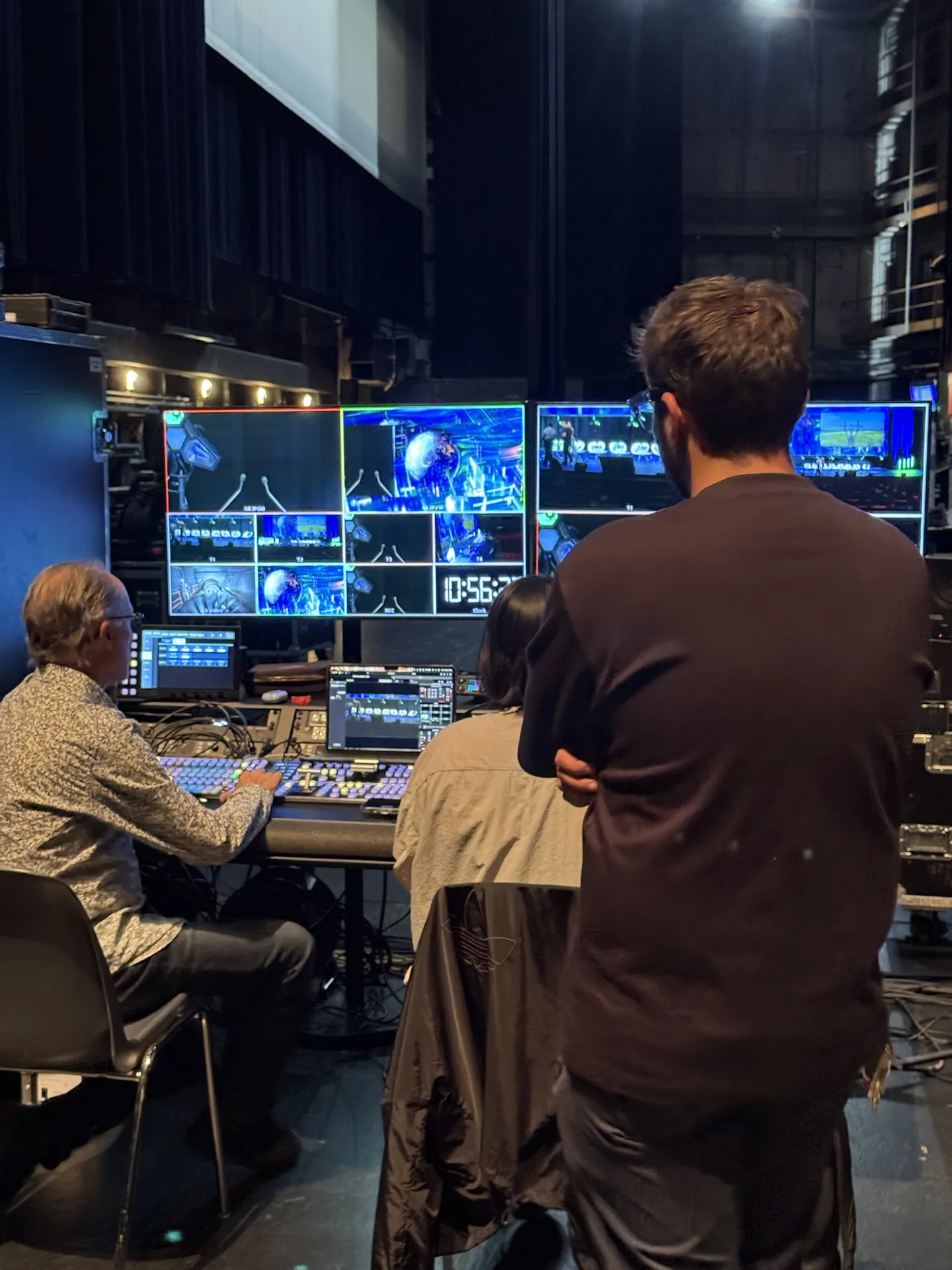
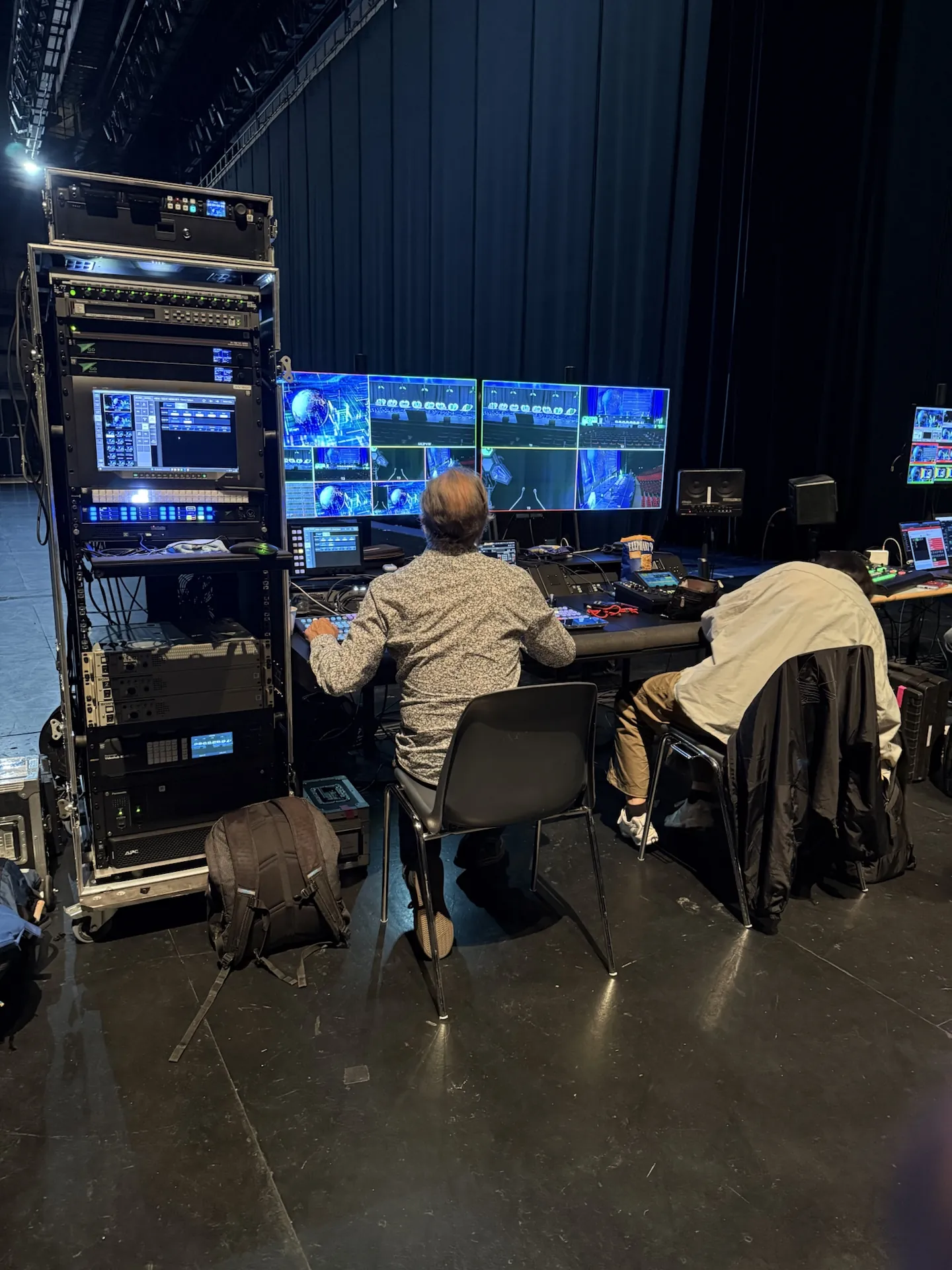
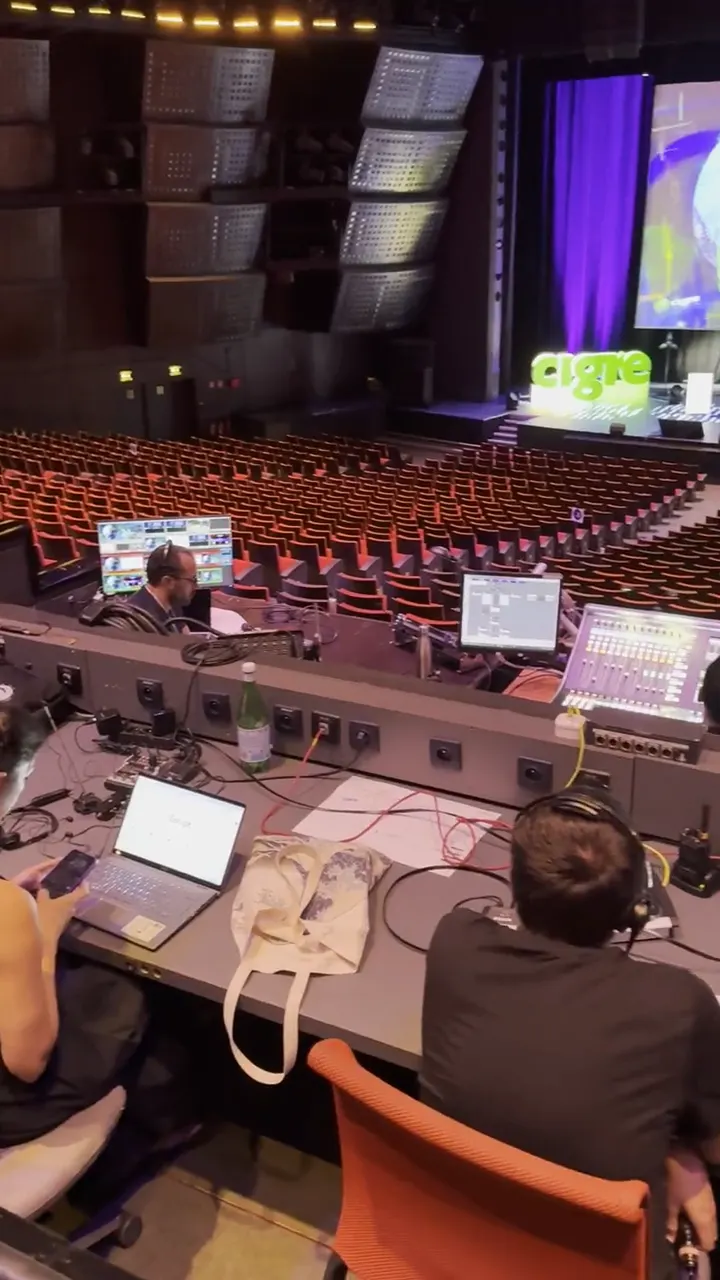
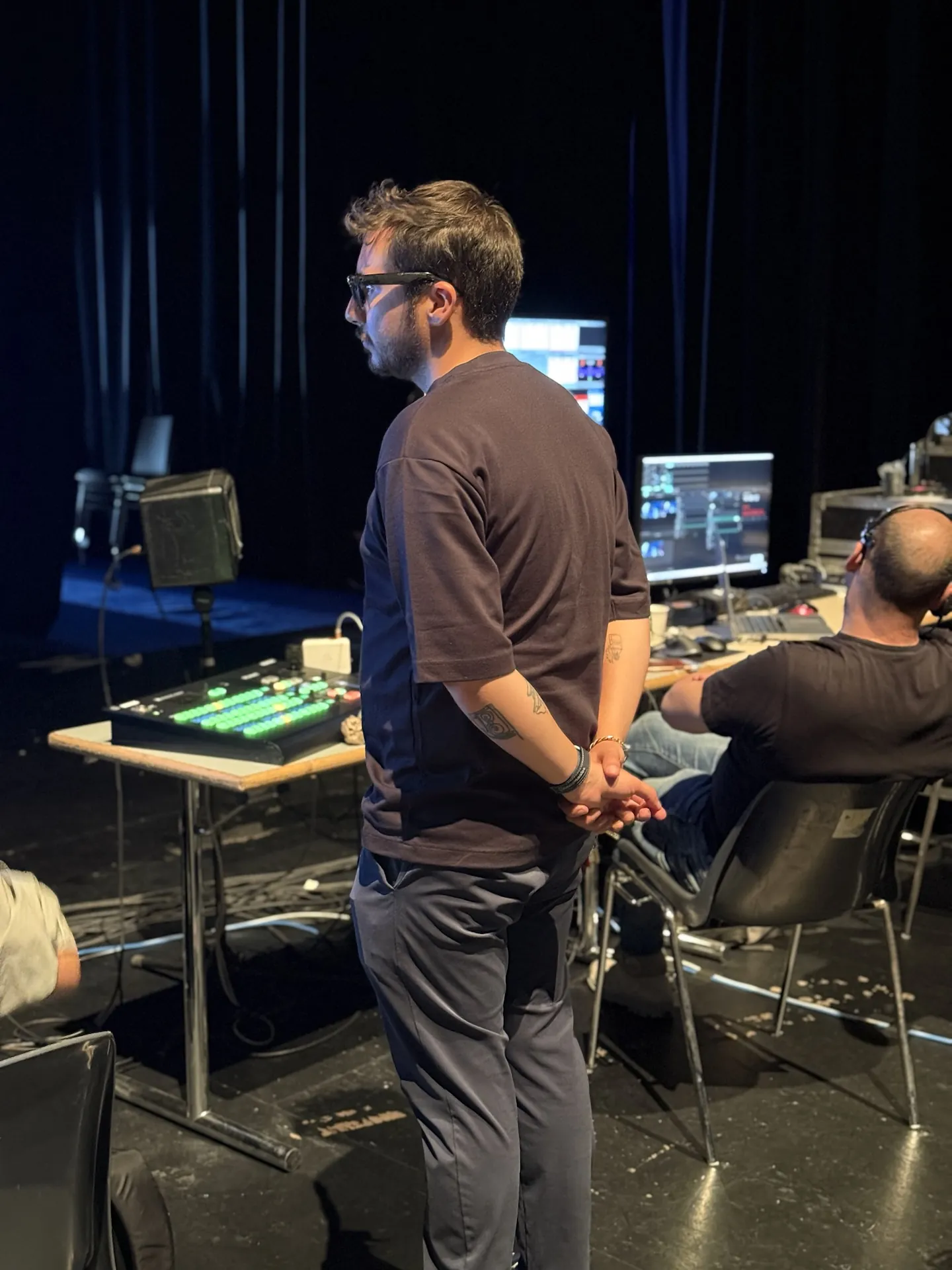
A Chroma partner at the vision mixer in the control room
Control room · vision mixer
A defined brief
needs, constraints and priorities clarified
Controlled production
technical coordination and on-site follow-up
A plan B in place
critical points anticipated in advance
Discuss your project
What we take on

What your video recording includes

From the site visit to the delivered videos, we combine preparation, multi-camera direction and post-production according to your distribution channels.

Preparation

Survey the venue and prepare the cameras, the shooting plan and the permissions.

A shoot defined in advance
  • Preparation: every recording is won in advance. Our work starts with a technical site visit and a precise editorial brief: choice of cameras, a written shooting plan, participant permissions and secured broadcast rights. We document the real constraints of the site to design a suitable set-up rather than a generic preset.
  • Technical site visit: analysis of the light, camera angles, architectural constraints and streaming bandwidth.
  • Choice of cameras and lenses: selected according to the format (conference, plenary session, concert), the distances and the expected broadcast result.
  • Formal shooting plan: written camera shot list, alternating shots and cutaways identified, briefing for the director and operators.
  • Permissions & rights: participant image rights, music rights and external speakers covered, GDPR compliance for distribution.
  • Cameras: 4K broadcast sensors, lenses suited to each shot, stabilised supports or tracking according to the shot list.
Recording

Direct the multi-camera programme and check picture and sound synchronisation.

Controlled picture and sound
  • Recording: excellence depends on command of the multi-camera control room. Our teams run the set-up live: multi-source mixing, end-to-end synchronised audio, continuous picture and sound monitoring, active redundancy on the critical links to ensure an uninterrupted broadcast result.
  • Multi-source control room: live multi-camera mixing, integration of slides and videos, management of remote speakers and graphics.
  • Coordinated multi-camera: director in the control room, briefed operators, alternating shots managed in line with the event running order.
  • Synchronised audio: 24-bit/48 kHz multitrack recording, radio mics for speakers, measured and calibrated audio-video synchronisation.
  • Live monitoring: continuous monitoring of levels, picture and sound returns, preventive action on any sign of failure.
  • Multi-source control room: live multi-camera mixing, integration of external sources (slides, videos, remote speakers) and graphics.

Post-production

Edit, grade and adapt the recordings to your channels and deadlines.

Content ready to be reused
  • Post-production: post-production turns the rushes into content usable on every channel. Multi-camera editing, colour grading, audio mixing, multi-format deliverables defined in advance: broadcast master, web versions and short clips delivered within a contractual deadline, then archived for use over several years.
  • Multi-camera editing: shot selection, continuity, colour grading, broadcast audio mixing and graphics.
  • Multi-format deliverables: ProRes 422 HQ or DNxHD broadcast master, MP4 H.264 web versions, vertical formats for social media.
  • Committed deadlines: master and web versions delivered within contractual deadlines via a secure transfer platform.
  • Long-term archiving: searchable metadata, backup formats for future migration, guaranteed use over several years.
  • Streaming: redundant encoders, simultaneous multi-platform distribution, latency controlled according to the channel (broadcast, web, WebRTC).
  • Archiving: ProRes 422 HQ broadcast master, searchable metadata and backup formats for use over several years.
  • Simple recording: a light set-up to record a talk, a conference or an internal format.
  • Multi-camera: several camera angles, live direction and a more dynamic result for the key moments.
  • Live streaming: the recording becomes a live broadcast, with network, encoding and monitoring constraints.
  • Edited replay: the content is prepared for reuse after the event: clips, replay, internal communication.
Your event, your challenges

Which events would you like to film?

Immersive recording. Picture your conference delivered in broadcast picture quality, your keynote replayed months later with the same intensity, or your convention streamed live to your entire remote audience. Event video recording turns a fleeting moment into a lasting video asset: alternating shots, synchronised multitrack sound, real-time mixing and multi-format deliverables ready to distribute.

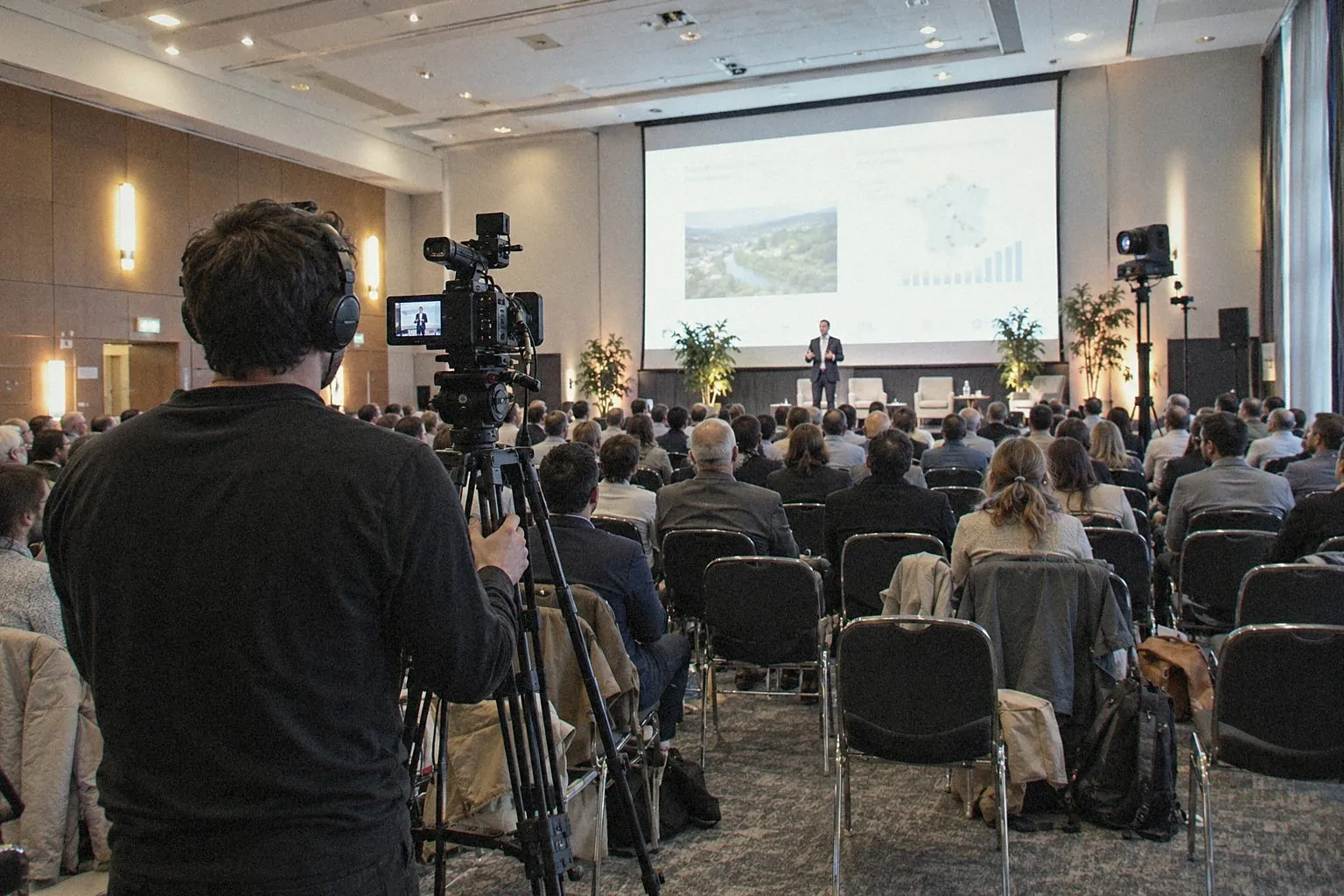
Camera and operator filming a plenary session from the back of the hallKeeping the message

Conferences & talks

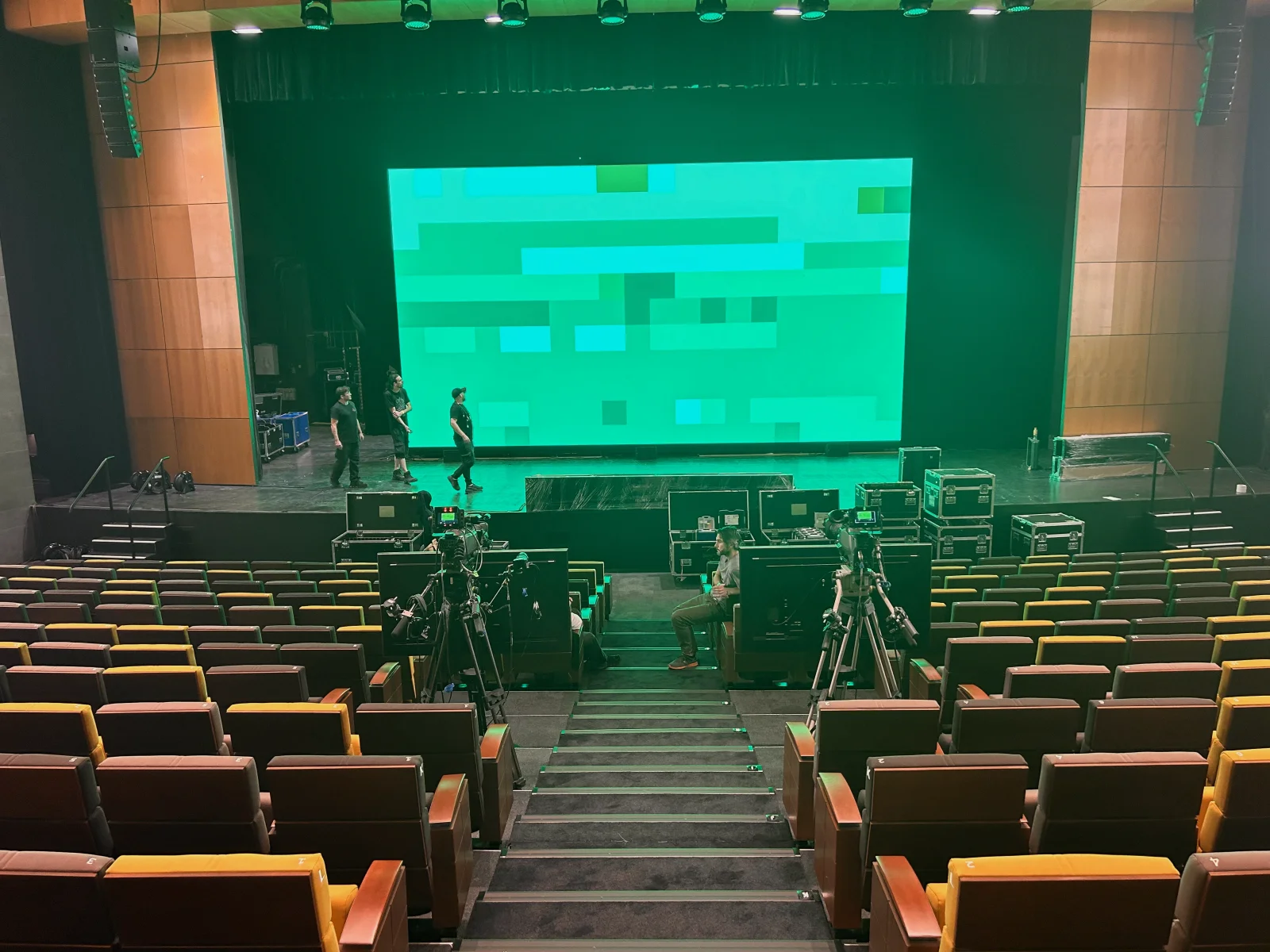
Preparing the audiovisual set-up at the Microsoft AI TourShowing the key moments

Keynotes & launches

A Chroma partner supervising the video control room during the broadcastWidening the audience

Live conventions

Recording a Paris 2024 press conferenceExtending the event

Replays & internal content

A brief to validate? Reply within 24 working hours: a tailored study and a clear proposal, with the technical constraints addressed from the start.
Request a quote
Our method

Our Video Recording Method

A proven four-phase method to coordinate the technical aspects of your video recording, from the initial brief to the delivery of the files.

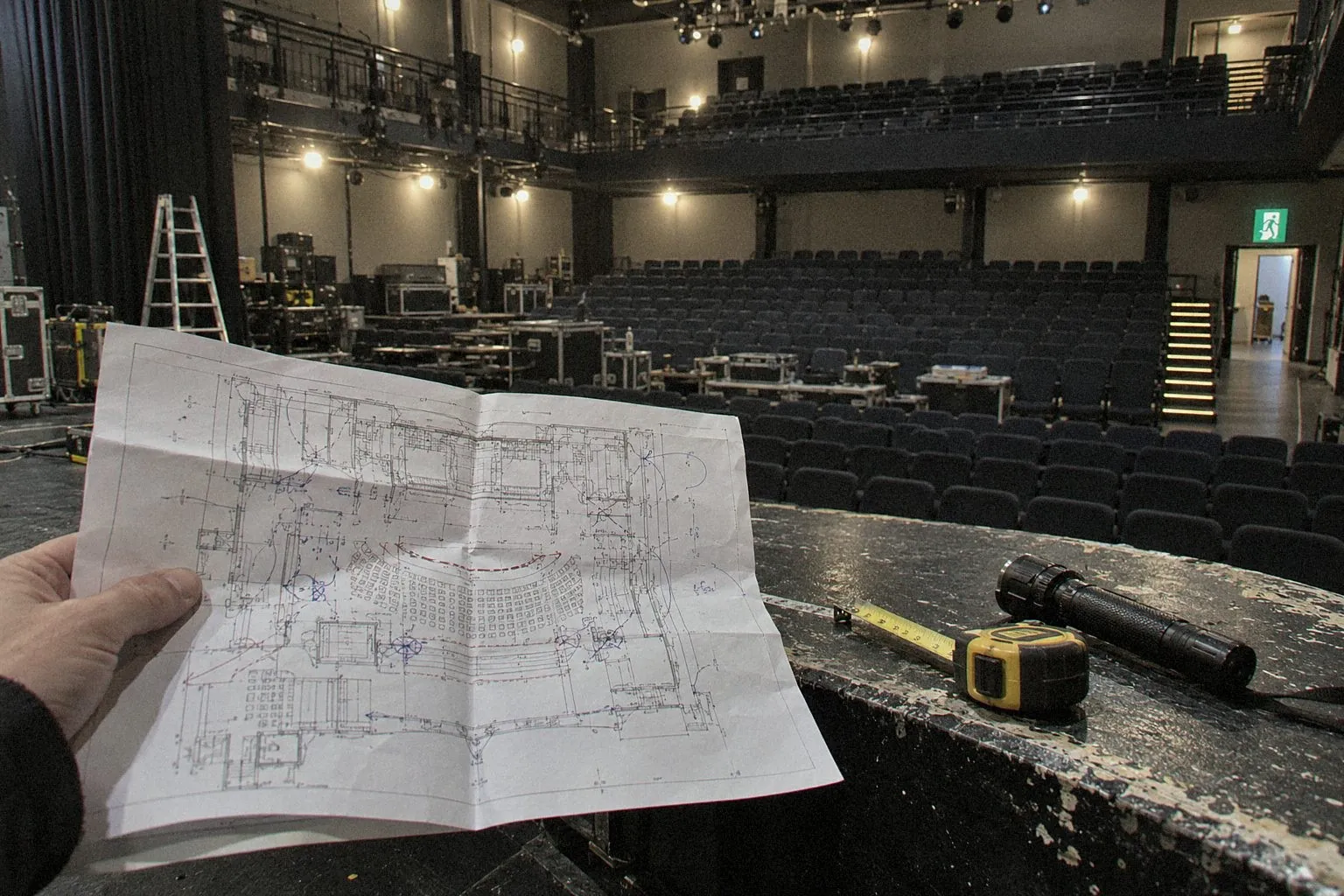
  1. Annotated floor plan, tape measure and torch on the edge of a stage
    Technical survey

    Technical audit

    Analysis of the site and the lighting constraints, identification of camera angles, assessment of streaming bandwidth and mapping of sensitive points.

    • Site visit and mapping of camera angles.
    • Lighting assessment and architectural constraints.
    • Bandwidth test and network qualification for streaming.
    • Mapping of sensitive points and risk anticipation.
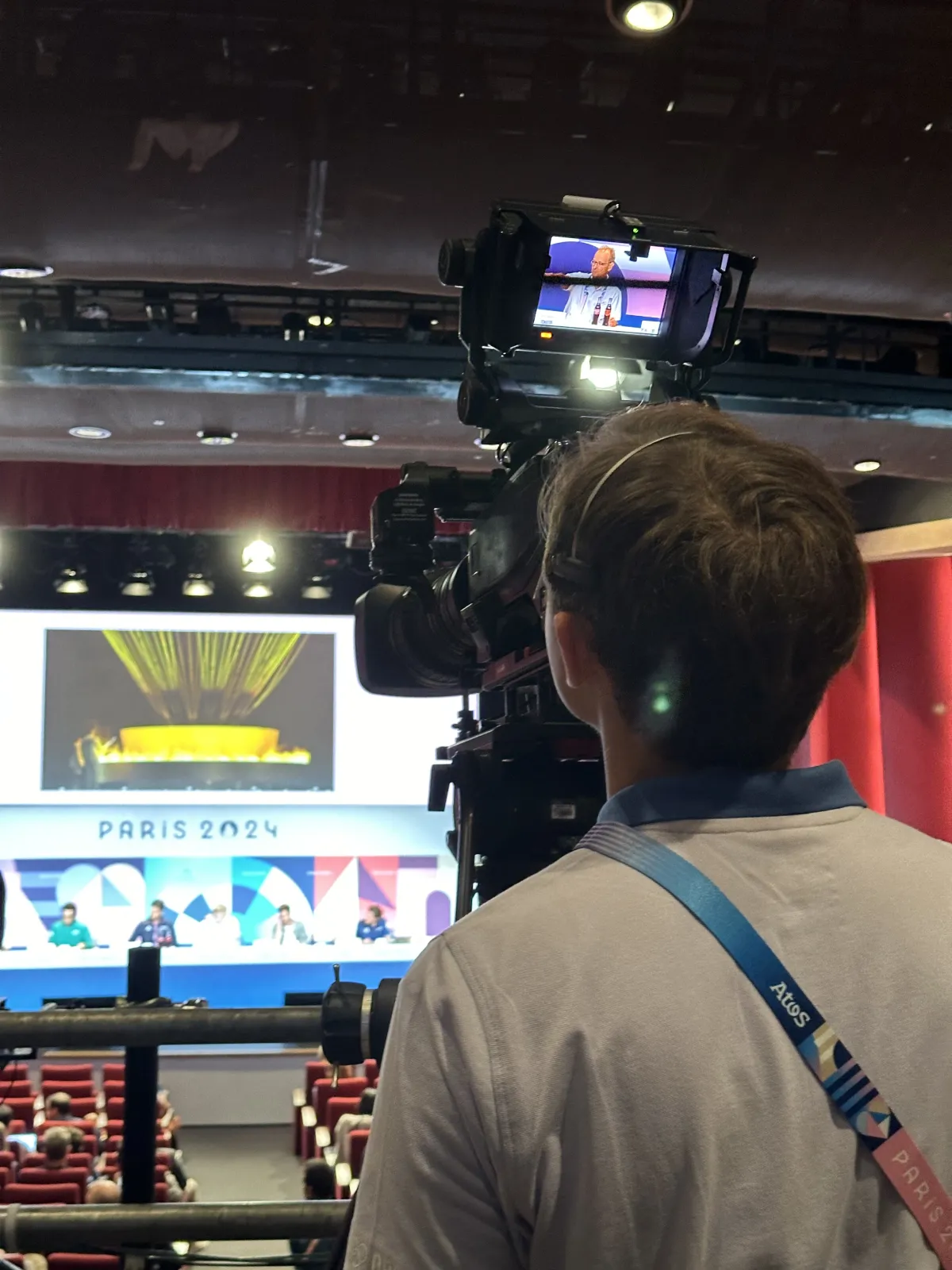
  2. Camera operator filming a Paris 2024 press conference
    Paris 2024 · recording

    Multi-camera design

    Recording architecture: shooting plan, choice of sensors and lenses, control room configuration, multitrack audio plan, master formats and web deliverables defined.

    • Written shooting plan with camera shot list and alternating shots.
    • Choice of sensors and lenses according to distances and the expected result.
    • Multi-camera control room configuration with graphics.
    • Multitrack audio and audio-video synchronisation defined in advance.
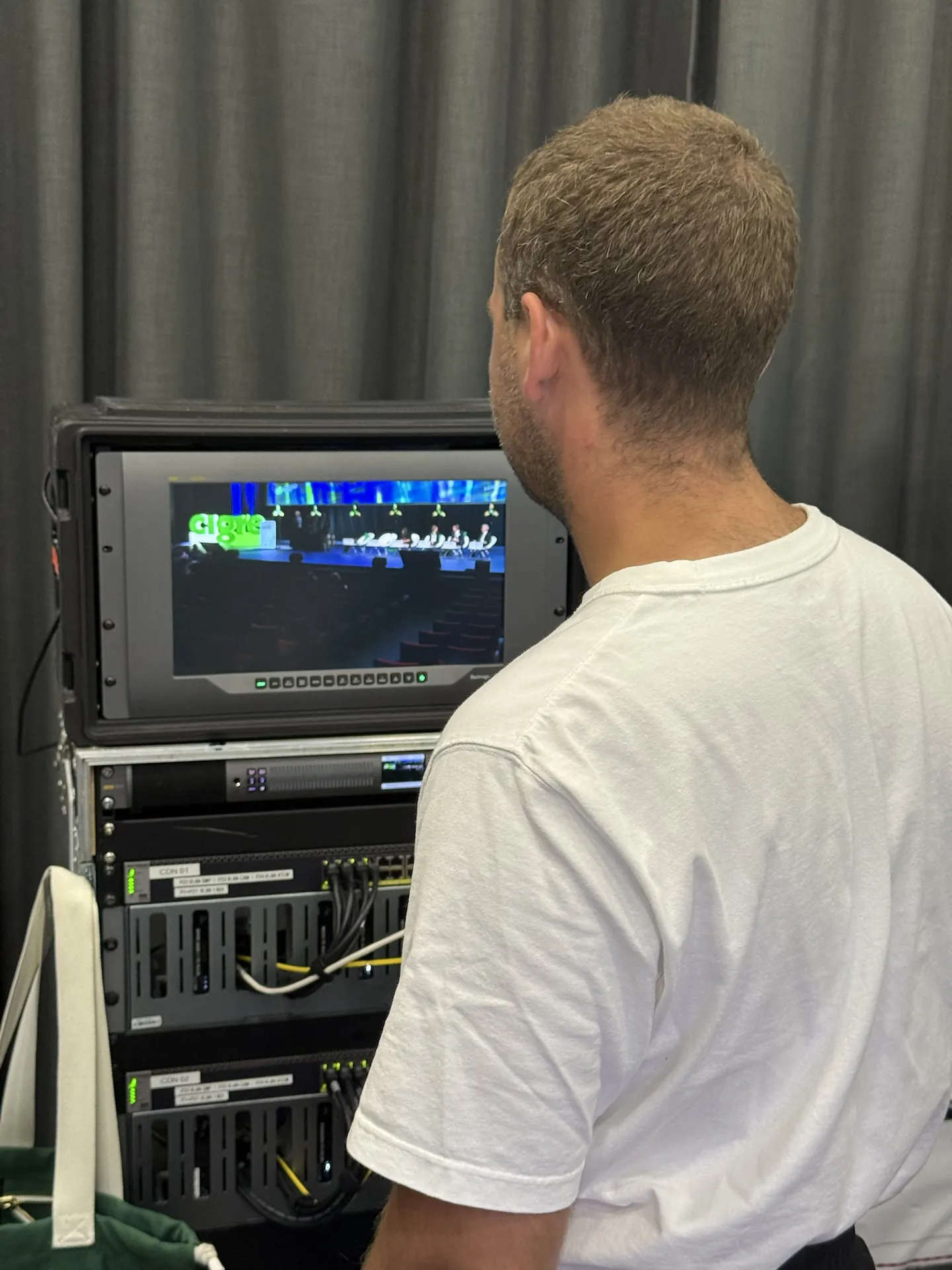
  3. Technician checking the signal on the rack monitor
    Tests · signal check

    Tests & validation

    Full technical rehearsal, tests of the links and streaming encoders, validation of deliverable formats and coordination with your event team.

    • Technical rehearsal in real conditions with the whole team.
    • Streaming encoder tests and links through to the target platforms.
    • Validation of deliverable formats and brand guidelines.
    • Event coordination with your team and the speakers.
  4. Video control room set up backstage, screens and desk
    Show day · backstage control room

    Show-day management

    Real-time monitoring of the video control room, preventive action in case of incident, recording supervision and secure backup of the rushes.

    • Control room monitoring and continuous supervision of the camera feeds.
    • Preventive action on any sign of a technical incident.
    • Recording supervision and switchover to the backup encoder if needed.
    • Secure backup of the rushes on redundant media at the end of the event.
Choosing the right supplier

The questions to ask, by pillar

  • Recording
  • Post-production

The key questions on the Preparation phase to assess how rigorous your recording supplier is.

A formal shooting plan?A written camera shot list before the event = professional. "We'll see on the day" = a sign of amateurism.
A technical site visit?A prior visit is essential to map light, angles and bandwidth. No site visit = improvisation.
Image and broadcast rights cleared?Participant permissions and speaker rights covered in advance. Otherwise = replay blocked after the event.
Codec and resolution choice justified?ProRes 422 HQ or DNxHD for the master, with the format justified according to the final distribution channel.
Testimonials

Trusted by our clients for their events

What our clients say about working with Chroma Technique and our audiovisual support.

I regularly work with Juhel and Chroma Technique on video recordings, and it is always a pleasure to collaborate with them. Reliable, responsive and professional, they adapt to the needs of each event, offering efficient, high-quality set-ups. I recommend Chroma Technique without hesitation for your events!

Agathe D.Google review

I have been working with Chroma Technique for several years on events such as the Journées Dermatologiques de Paris, the Journées Francophones de Radiologie and others… Always looking for new solutions, they support us with passion on the audiovisual technical side. A real pleasure to work together!

Fanny D.Google review

Genuine technical support and very good client relationship management. A pleasure to work with, every time.

Laurent M.Google review
A team that owns its equipmentCameras, lenses and control room operated every day by the same technicians, with no opaque subcontracting.
Deliverables within 72 hoursMaster, web versions and short clips delivered within 72 working hours.
Natively multi-formatArchiving, web, vertical formats and highlights planned from the outset.
Broadcast expertise4K cameras, synchronised multitrack audio, redundant streaming encoders.
Frequently asked questions

Frequently asked questions

Answers to the most common questions about event video recording. Our expertise at the service of your practical questions.

What is the difference between a simple recording and a broadcast production?

The difference comes down mainly to three aspects:

  • Picture and sound quality: broadcast-standard 4K cameras, controlled colour, synchronised multitrack audio recording
  • Technical resources: multi-camera control room, redundant encoding, backup infrastructure and secure links
  • Dedicated team: director, camera operators, sound engineer, control room technician and post-production editor

A basic recording delivers a raw file. A broadcast production delivers a programme ready to broadcast, with value for years.

What latency is acceptable for a hybrid event?

For a hybrid event, latency depends on the use:

  • Conventional broadcast: 5 to 30 seconds is acceptable (no real-time interaction)
  • Interactive streaming (Q&A, chat): ideally under 3 seconds to keep the exchanges flowing
  • Real-time remote conference: less than one second via WebRTC or dedicated video conferencing solutions

The technical solution is chosen according to the level of interaction expected between the in-person and the remote audience.

How many cameras should you plan for an event?

The number of cameras depends on the type of event:

  • Conference / keynote: at least 2 cameras (wide shot + close-up on the speaker), 3 for a round table
  • Convention / plenary session: 3 to 4 cameras (wide, close-up, audience, tracking or drone)
  • Concert / show: 4 to 6 cameras for a full television result

Beyond 4 cameras, a dedicated control room and a director become essential to run the live mix.

Which deliverable formats after the event?

You receive a complete package according to your needs:

  • Broadcast master: ProRes 422 HQ or DNxHD for archiving and TV broadcast
  • Web versions: MP4 H.264 optimised for streaming, websites and social media
  • Short clips: highlights of 30 s to 3 min, teasers and best-of (option to be defined in advance)

The files are delivered as soon as possible after the end of the event, via a secure transfer platform.

What affects the budget of a video recording?

The main factors are the number of cameras, the duration, the need for streaming, graphics, editing, deliverables, the team and the constraints of the venue.

Live or recorded for later?

Live serves the remote audience in real time. A recorded or edited replay is better for editorial quality, internal approval and reuse of the content.

Beyond the picture