Contact
Audiovisual Solutions

Event lighting

Event lighting makes your speakers visible and gives intent to your stage design.Chroma designs the lighting plot, programmes the scenes and operates the lighting in coordination with sound, video and filming constraints.

Fixtures · technical catwalk
A defined brief
needs, constraints and priorities clarified
Production under control
technical coordination and on-site follow-up
Plan B in place
critical points anticipated in advance
Discuss your project
What we handle

What your event lighting includes

We link lighting design, programming and live operation to adapt angles, intensities and transitions to your event.

Lighting design

Translate your message and your stage design into choices of sources, angles and intensities.

Lighting that serves the message
  • Lighting design: everything starts with an intent. Our work begins with understanding your message and your stage design, to translate your world into a lighting plot: choice of sources, colour temperatures, angles, intensities. The equipment plan is only a consequence of the artistic direction agreed with you in advance, not a generic starting point.
  • Creative intent developed with your teams
  • Detailed lighting plot (sources, angles, temperatures)
  • Equipment chosen to suit the room and the broadcast
  • Lighting design: creative intent developed with you, a detailed lighting plot and equipment chosen to suit the room.

Programming & tests

Programme the scenes, test the transitions and check synchronisation with video.

Sequences validated before going live
  • Programming & tests: excellence relies on advance programming. Our lighting operators programme the scenes on grandMA / Avolites / ETC desks, calibrate the dimming and test every cue before show day. Each transition is validated in rehearsal so that nothing unexpected happens live, and broadcast synchronisation is measured end to end.
  • Desk programming and scene storage
  • Systematic testing of every cue before the event
  • DMX / Art-Net / sACN broadcast synchronisation validated
  • Programming: desk programming in advance, stored scenes, controlled dimming and systematic tests before the event.

Show day coordination

Operate the lighting live and adjust settings with the sound, video and stage management teams.

Lighting that follows your event
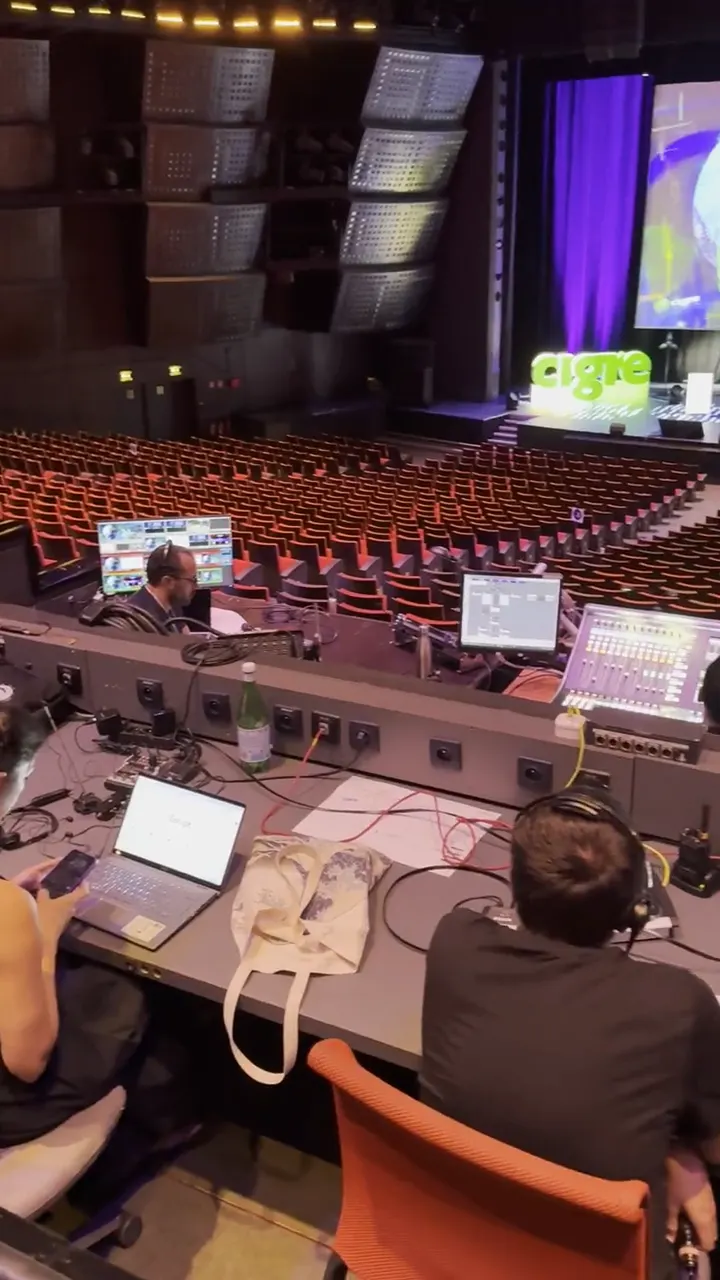
  • Show day coordination: the coordination phase turns programming into execution. Our dedicated lighting operator runs the lighting live, fine-tunes settings to the attendance and the reality of the room, and handles the unexpected with pre-wired backup equipment. All in constant dialogue with the sound, video and Event Production Management teams.
  • An experienced lighting operator at the desk throughout
  • Live settings and adjustments to suit the room
  • Pre-wired backup equipment, response time under 2 min
  • Synchronisation: DMX / Art-Net / sACN protocols coordinated with broadcast, filming and sound for a consistent result.
  • Show day coordination: dedicated lighting operator, live adjustments, pre-wired backup equipment and guaranteed response times in case of an incident.
Your event, your challenges

Lighting for every key moment

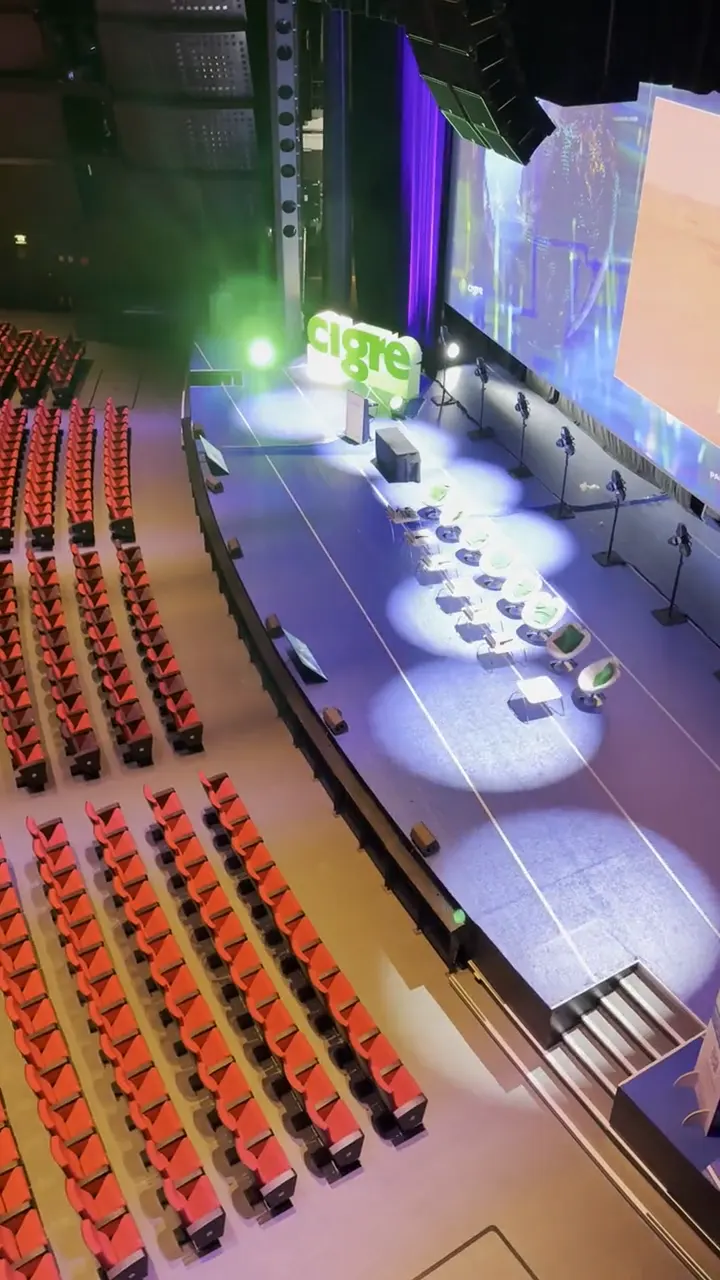
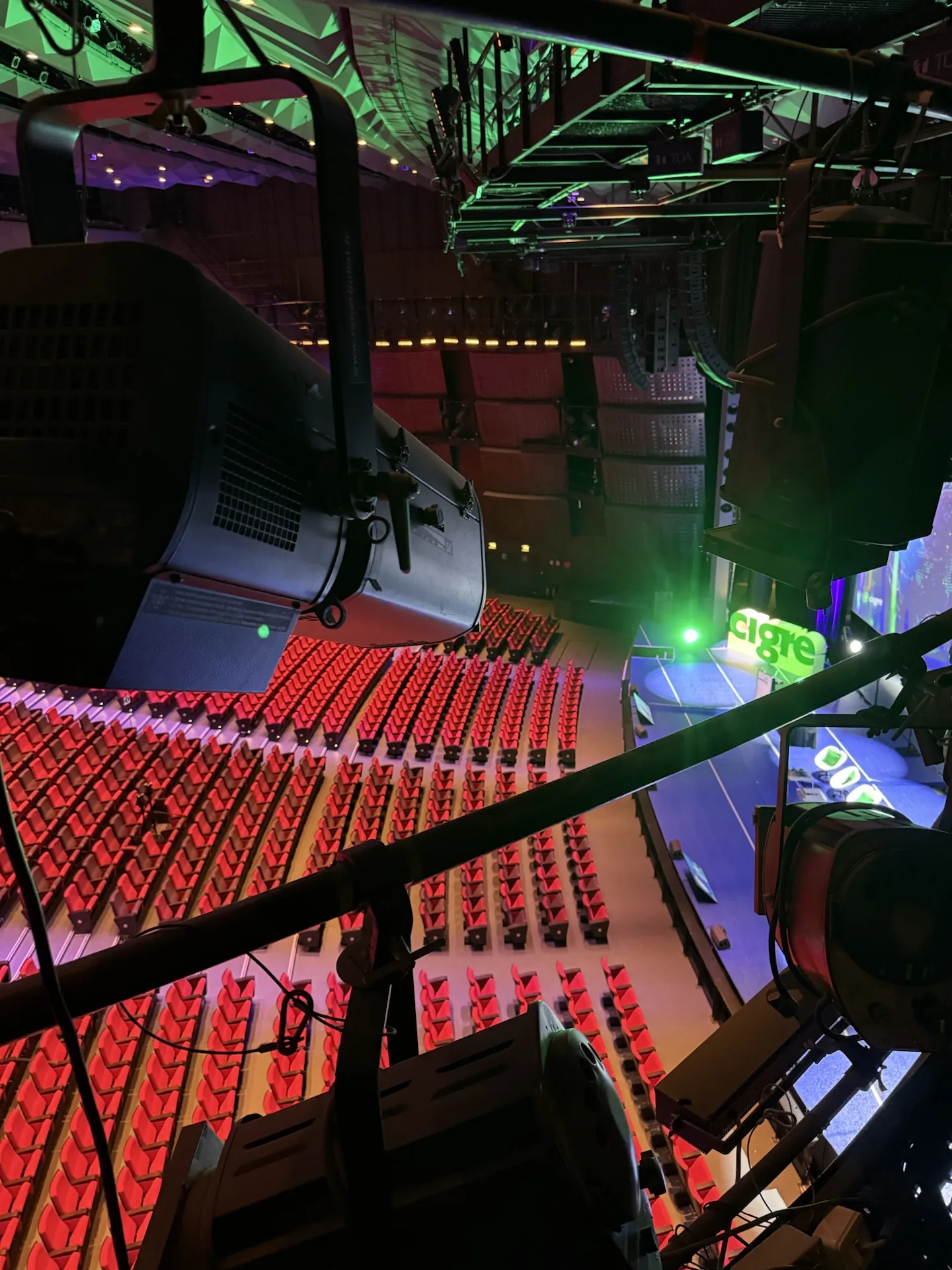
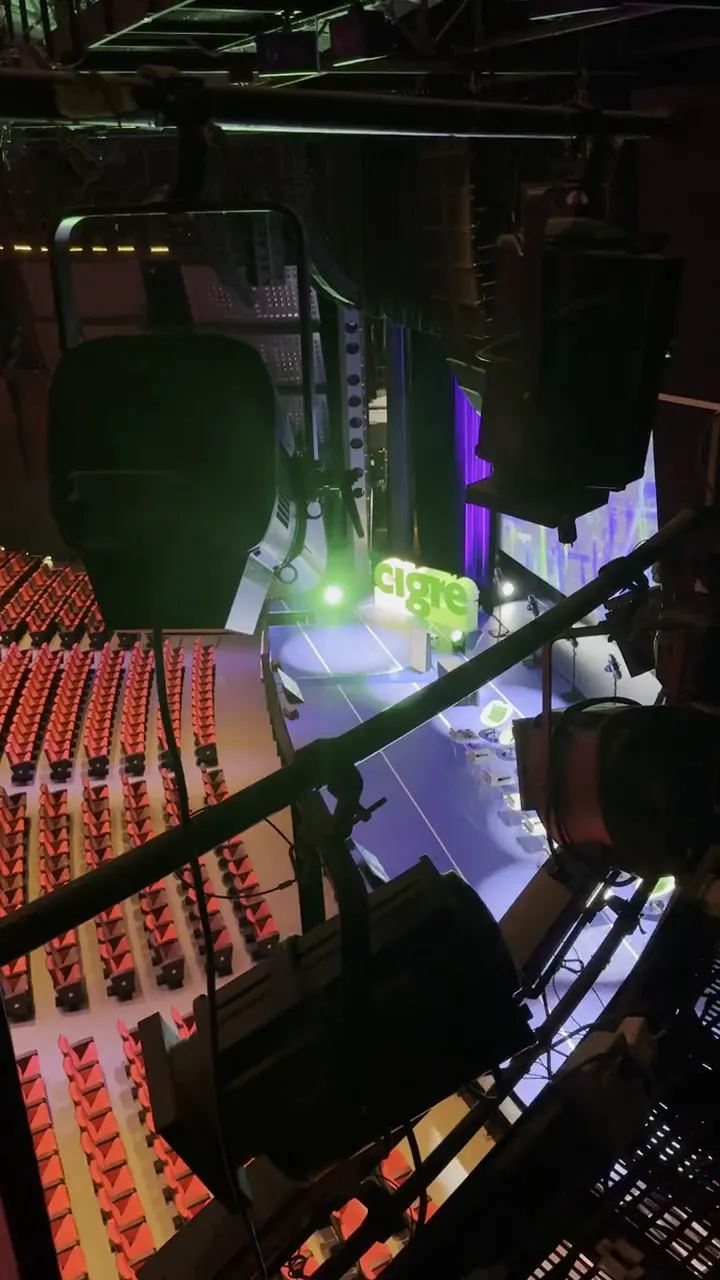
Stage seen from above, from the catwalks, with fixtures litSeeing the speakers clearly

Conferences & plenary sessions

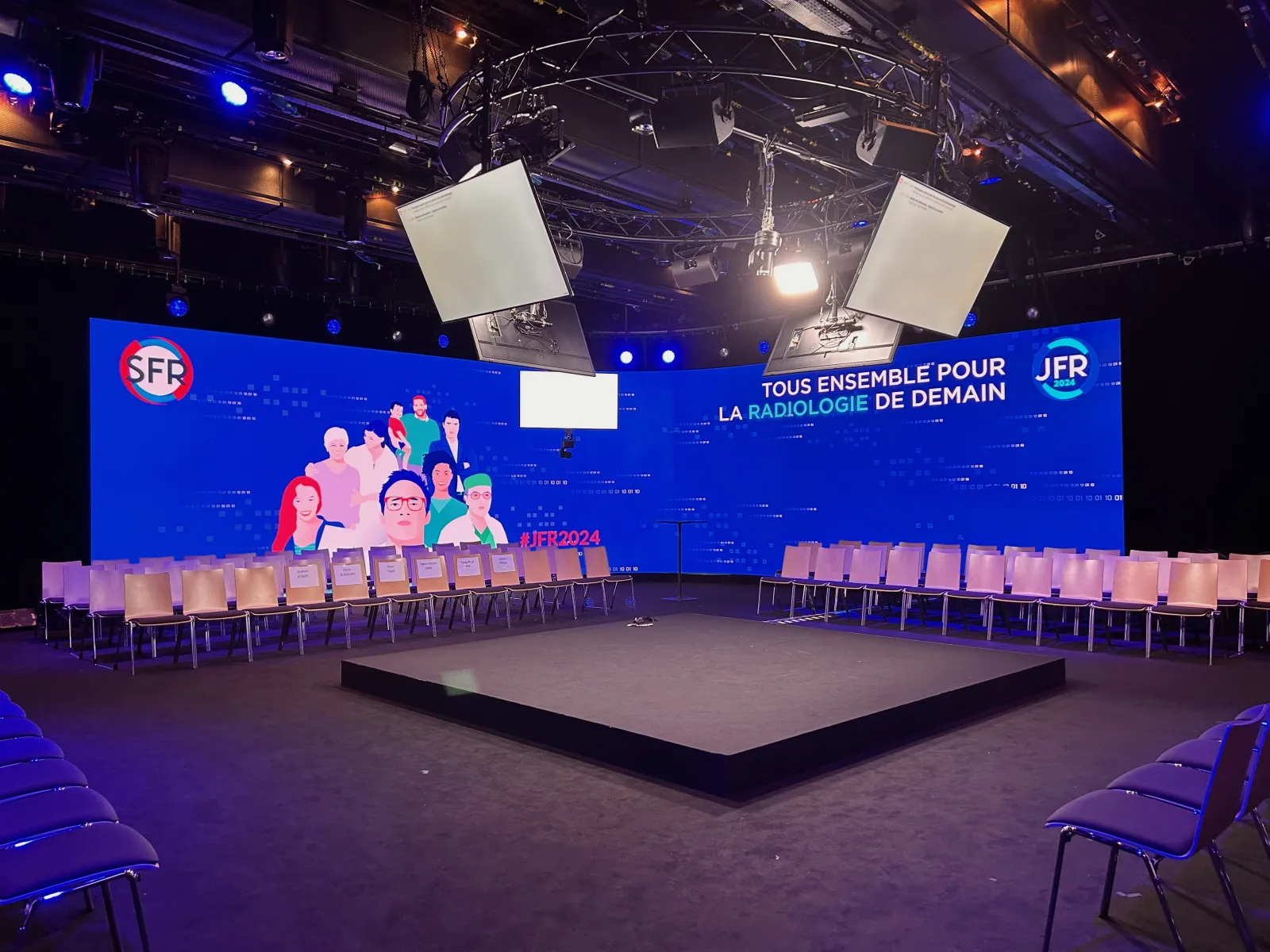
JFR stage with flown lighting and screensA result designed for the picture

Filmed sets

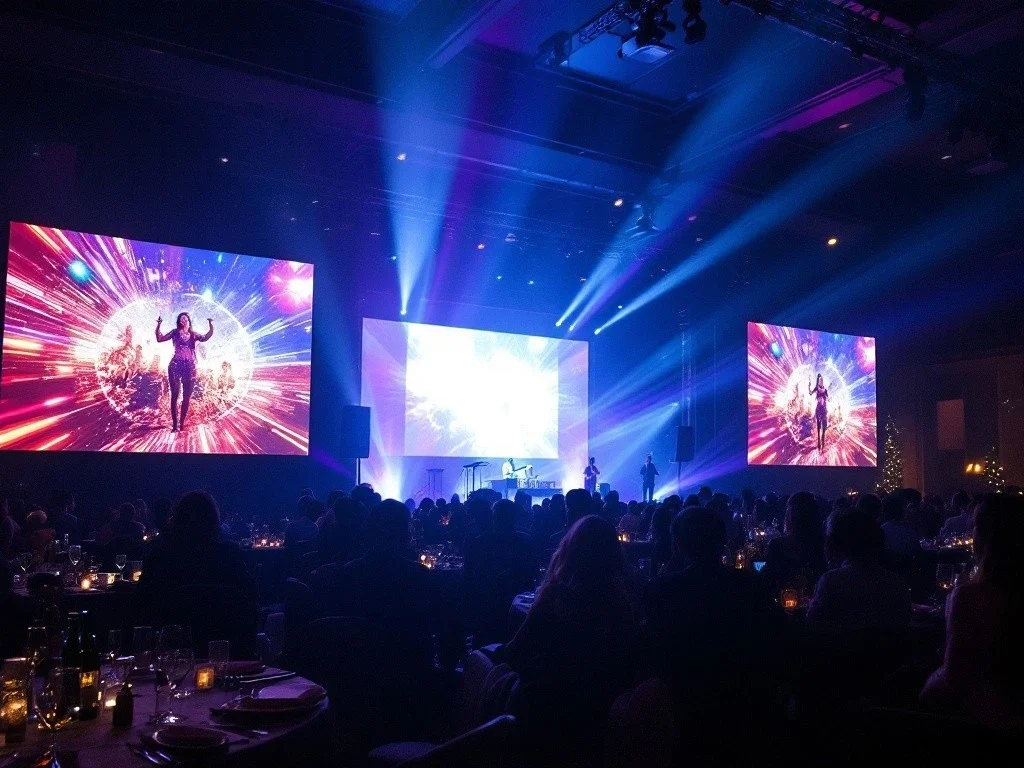
Illustration of an evening event with tables and a lit stageChanging the atmosphere

Parties & galas

JFR stage with fixtures, structures and flown screensA synchronised set-up

Conventions & stage design

A brief to validate? Reply within 24 working hours: a tailored study and a clear proposal, with technical constraints addressed from the outset.
Request a quote
Our method

Our Event Lighting Method

A proven methodology to design, programme and operate your lighting set-up in 4 structured phases, from the site audit to show day coordination.

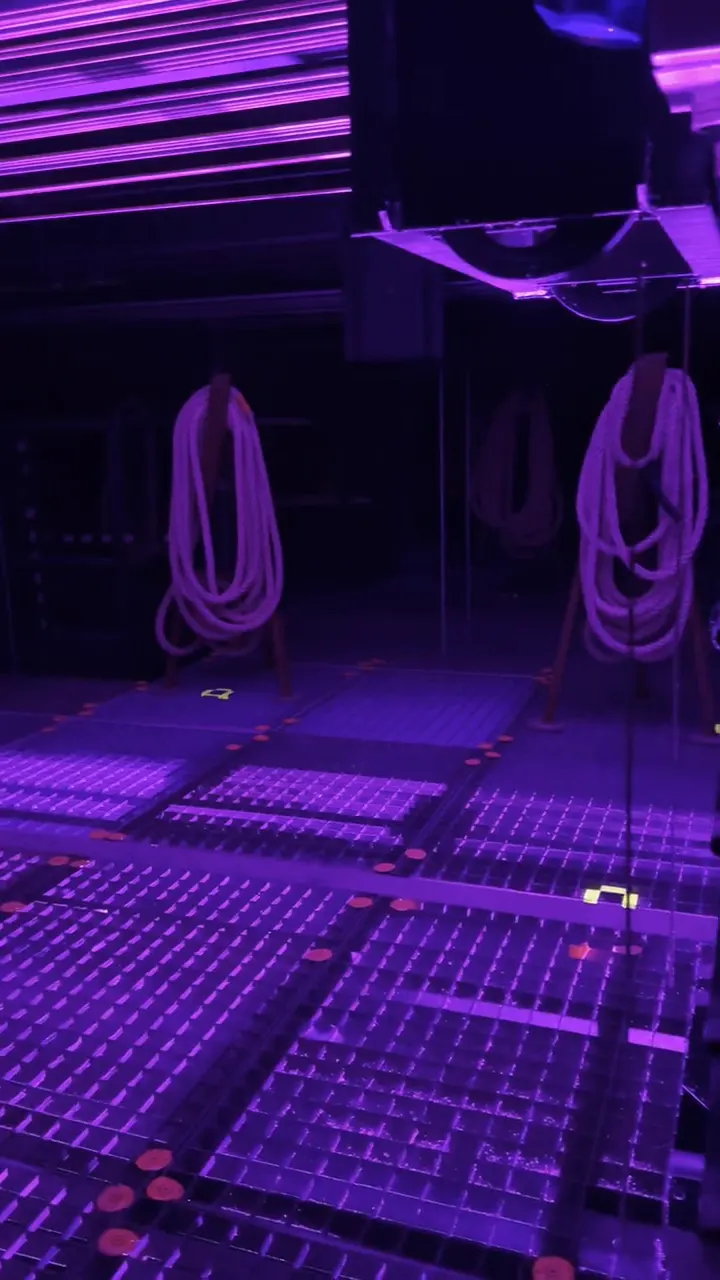
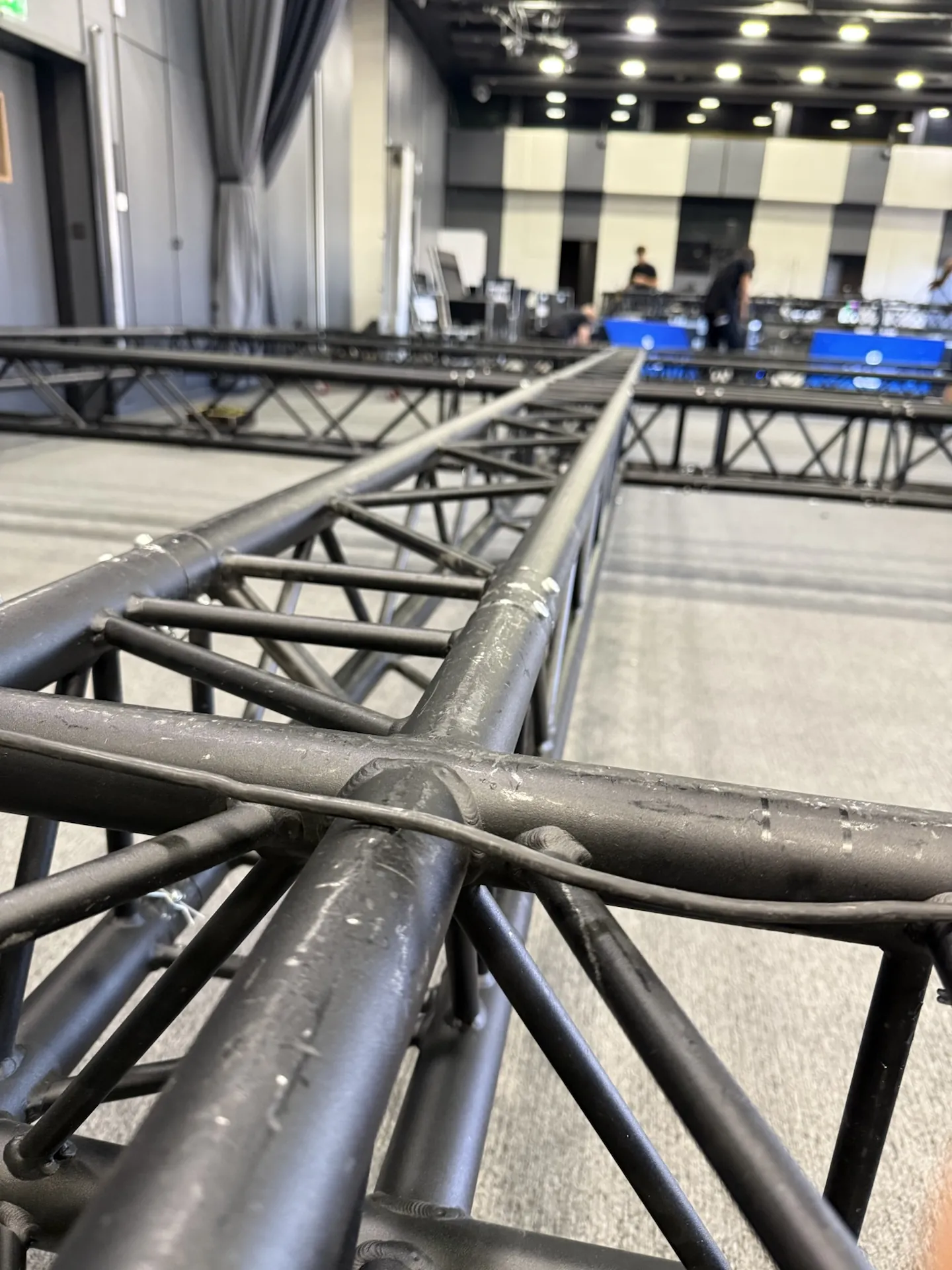
  1. Technical grid and rigging above the stage
    Audit · technical grid

    Site & Needs Audit

    Analysis of the electrical infrastructure, existing protocols, broadcast and architectural constraints. A full audit of your site and your creative needs.

    • Analysis of the electrical infrastructure and calculation of power requirements.
    • Audit of existing protocols and equipment compatibility.
    • Study of architectural constraints and the stage design.
    • Definition of the creative intent, developed with your teams.
  2. Fixture installed on the catwalk, room below
    Design · fixture layout

    Design & Architecture

    Integrated system design: lighting plot, choice of protocols, load calculations, optimised layout plan, coordination with sound and video.

    • Detailed lighting plot with sources, angles, temperatures and intensities.
    • Unified network architecture for DMX / Art-Net / sACN with a central node.
    • Energy calculations including peaks, losses and control systems.
    • Broadcast coordination with the video and sound teams from the design stage.
  3. Programming · focusing at the ceiling

    Programming & Tests

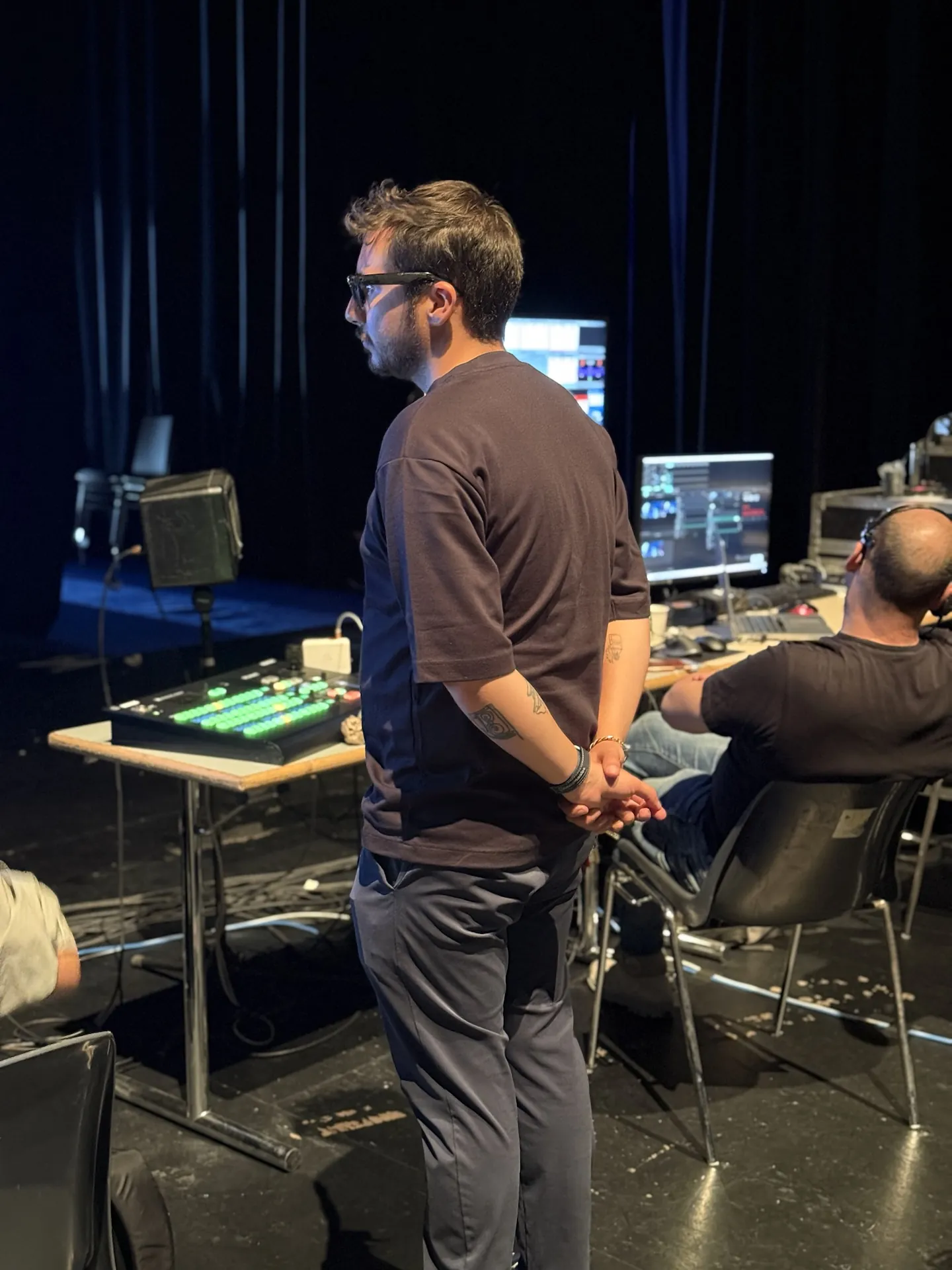
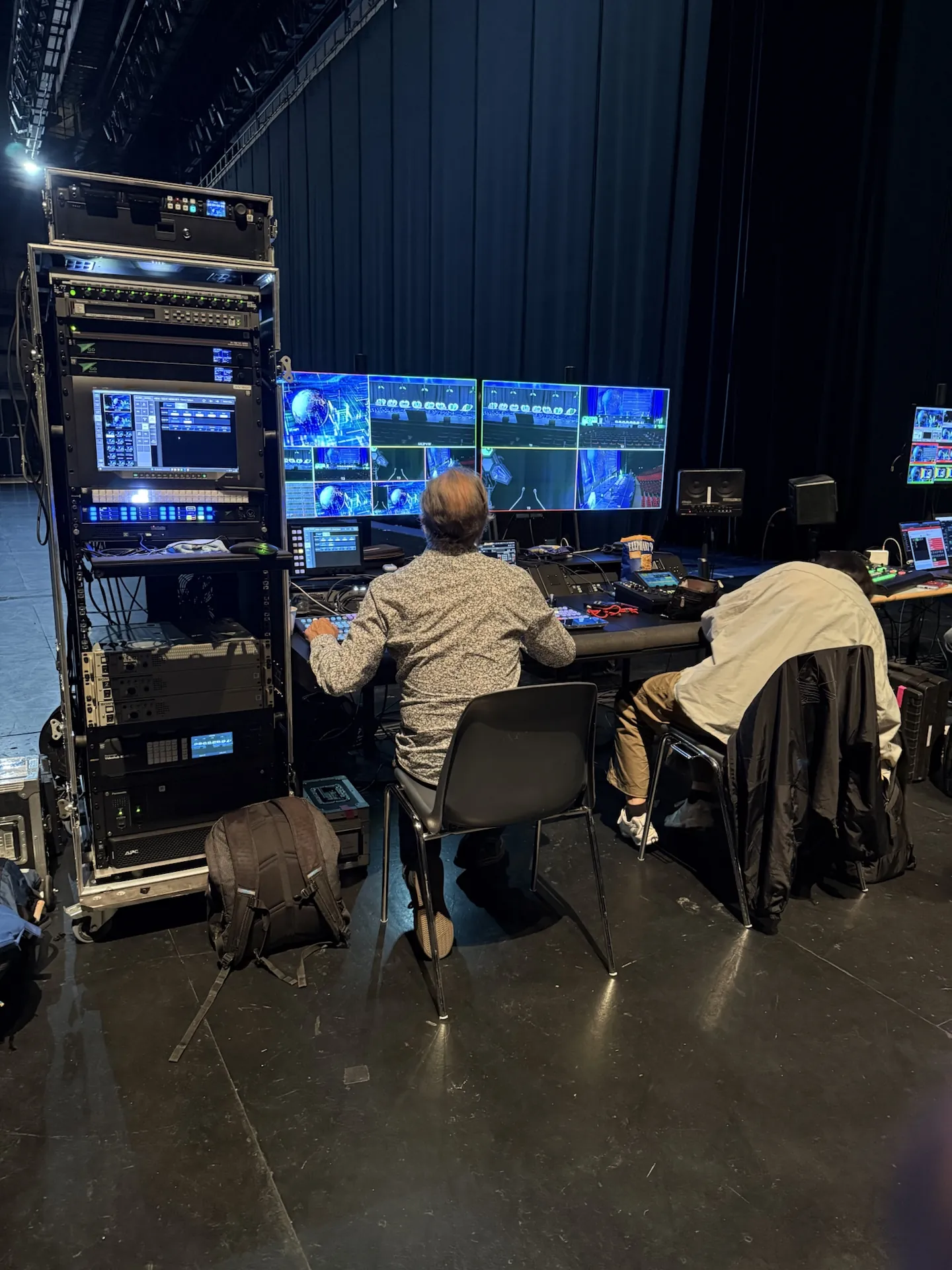
    Desk programming and validation in real conditions: scene programming, tests of every cue, broadcast synchronisation, incident simulation to validate backup protocols.

    • Desk programming (grandMA / Avolites / ETC) and scene storage.
    • Systematic tests of every cue and transition before the event.
    • Broadcast synchronisation measured and calibrated end to end.
    • Validation of backup equipment and documented switchover procedures.
  4. JFR stage with fixtures, structures and flown screens
    Journées Francophones de Radiologie · audiovisual stage

    Show day coordination

    Live operation by our dedicated lighting operator: real-time network monitoring, live adjustments, technical support and rapid intervention in case of an incident.

    • Dedicated lighting operator at the desk for the whole event.
    • Real-time network monitoring on DMX, Art-Net and sACN.
    • Live adjustments according to attendance and the reality of the room.
    • Post-event report documenting every incident and corrective action.
Choosing the right supplier

The questions to ask, by pillar

  • Programming & tests
  • Show day coordination

The 4 key questions on the lighting design phase to assess the creative and technical rigour of your supplier.

Lighting plot supplied in advance?A detailed lighting plot (positions, sources, angles, temperatures) must be delivered before the event. If there is no written document, nothing is fixed.
Is the creative intent developed with you?A good supplier gets you talking about your message before talking about equipment. If you are offered a standard kit without any questions, it is equipment hire in disguise.
Consistent with filming and broadcast?5600K, CRI > 95, flicker-free: these parameters must be validated with your video teams from the design stage, not discovered on show day.
Energy consumption calculated?A precise calculation including start-up peaks, power supply losses and control systems. Not just the rated power of the LEDs.
Testimonials

They trust us with their events

What our clients say about working with Chroma Technique and our audiovisual support.

Our experience with Chroma Technique was absolutely perfect. Communication was clear and proactive. Juhel Sangla helped us create an exceptional event by providing lighting, decoration, projection and sound services. A real pleasure to work with professionals. We highly recommend them!

Vyacheslav N.Google review

Very high technical standard, good support and very professional. I recommend them!

Eliott L.Google review

A wonderful experience. A professional team that does quality work. I highly recommend them.

Stéphane B.Google review
Protocol controlDMX, Art-Net and sACN managed together, incompatibilities between equipment generations resolved.
Broadcast standardsLighting ready for 4K/8K cameras: 5600K, CRI > 95, flicker-free.
LED optimisationPrecise energy calculations and documented environmental targets.
Expert networkSkilled technicians available to fit your schedule, even in peak season.
Frequently asked questions

Event Lighting FAQ

Frequently asked technical questions about the design and coordination of modern event lighting.

How can DMX, Art-Net and sACN coexist at the same event?

A unified network architecture remains the best solution. A central node converts the protocols to avoid conflicts.

  • Central sACN node as the master protocol (the 2025 standard direction)
  • Bidirectional converters for existing DMX equipment
  • Dedicated lighting network separate from the data/Wi-Fi network
  • Latency tests between protocols for perfect synchronisation

With a well-designed architecture, the three protocols can coexist without conflicts or noticeable latency.

Which colour temperature for the best broadcast result?

The modern broadcast standard requires 5600K with a CRI above 95 for the best HD/4K filming.

  • 5600K: daylight standard, natural rendering on camera
  • CRI > 95: faithful colour reproduction, essential for broadcast
  • Flicker-free: minimum frequency of 25 kHz to avoid flicker
  • Consistency: maximum variation of 200K between sources for uniformity

Modern LED solutions: broadcast-ready fixtures with variable temperature and precise control of the light spectrum.

How do you calculate the real consumption of an LED installation?

Rated consumption represents only 60-70% of real consumption. Hidden factors have a significant impact.

  • Rated LED power × 1.2 (power supply losses)
  • + Start-up peaks: 150% for 2-3 seconds
  • + Control systems: 5-10W per moving light
  • + Ventilation/cooling: 10-15% of total consumption

Practical example: an installation of 100 LEDs at 50W = 7,500W in reality (not 5,000W). Size breakers and cabling accordingly.

Which backup solutions should be planned for a critical event?

Technical redundancy must cover power, control and equipment to guarantee continuity of service.

  • Dual power supply: mains plus generator with automatic changeover switch
  • Backup desk: mirror desk synchronised in real time
  • Dual network: two physical paths for IP protocols
  • Backup fixtures: 20% extra equipment pre-wired

Cost of redundancy: allow 25-30% additional budget to fully secure a critical event.

My supplier is offering unfamiliar equipment: how do I assess it?

Established brands (Martin, Ayrton, Robe, Clay Paky) guarantee technical support and compatibility. Alternatives require thorough checks.

  • CE/UL certification: electrical safety in line with current standards
  • Photometric data: CRI, colour temperature, curves
  • Prior tests: a demonstration is mandatory before approval

Our approach: we systematically test any non-standard equipment before integrating it into our designs.

Why must lighting be designed together with video recording?

Because the camera result depends on key light, contrast, colour temperature, reflections and levels. Lighting that works for the audience may not be enough for the picture.

What are the warning signs in a lighting proposal?

No plot, too little focus time, protocol not specified, no coordination with video or structures, and few details about the on-site team.

Beyond lighting