Contact
Technical & logistics expertise

Congress Organisation

An 800-person plenary, four rooms running in parallel, speakers changing every hour: a congress is won or lost in the rooms.Chroma handles the technical side of your medical and scientific congresses and conventions, from reading the venue's technical specifications to the last session.

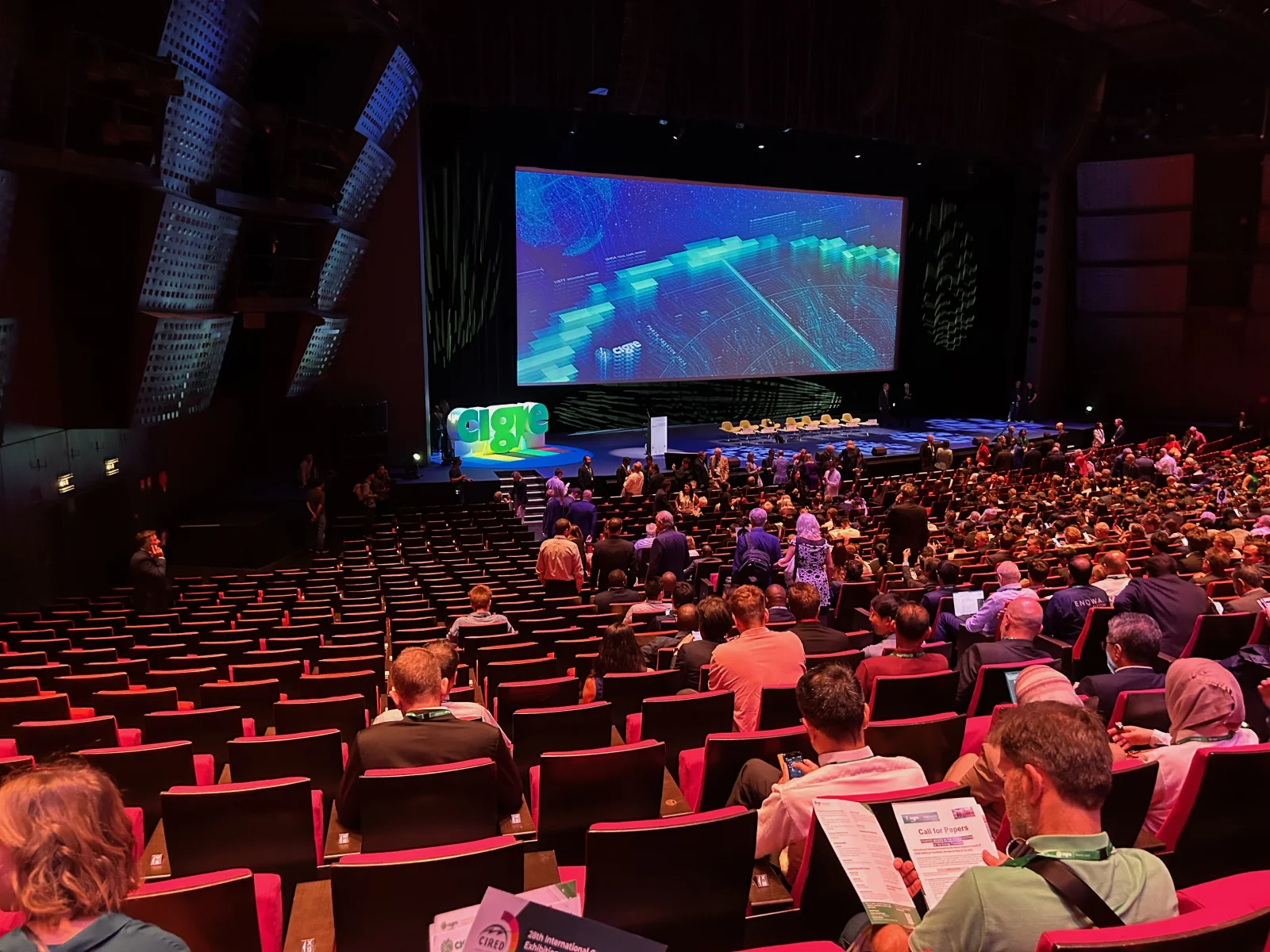
Audience and equipped stage in the CIGRE auditorium
CIGRE · plenary
300+
Events delivered
10
Years of experience
5000
Max participants
Clear brief
needs, constraints and priorities clarified
Request a quote
What we handle

What our support for your congress includes

We bring together the spaces, the audiovisual set-ups and the speakers' needs so that sessions and discussions run in good conditions.

Designing the set-up

Study the venue's constraints and organise the spaces, the distribution and the technical needs of each session.

A set-up tailored to the programme
  • Study of the venue's technical constraints and definition of the audiovisual solutions.
  • Coordination with your teams to validate the concept and the speakers' needs.
Preparing the sessions

Prepare the equipment, materials and teams so that each space is ready for its programme.

Sessions prepared in advance
  • Equipment build and validation of the connections between the different set-ups.
  • Tests and rehearsals with speakers before the sessions.

Control room and distribution

Coordinate audiovisual operations during the congress, then organise delivery of the planned content.

Support during and after the congress
  • Supervision of audio, video and distribution systems during the sessions.
  • Video recording and content for training or communication, according to the congress's needs.
Your event, your challenges

Which format for your congress?

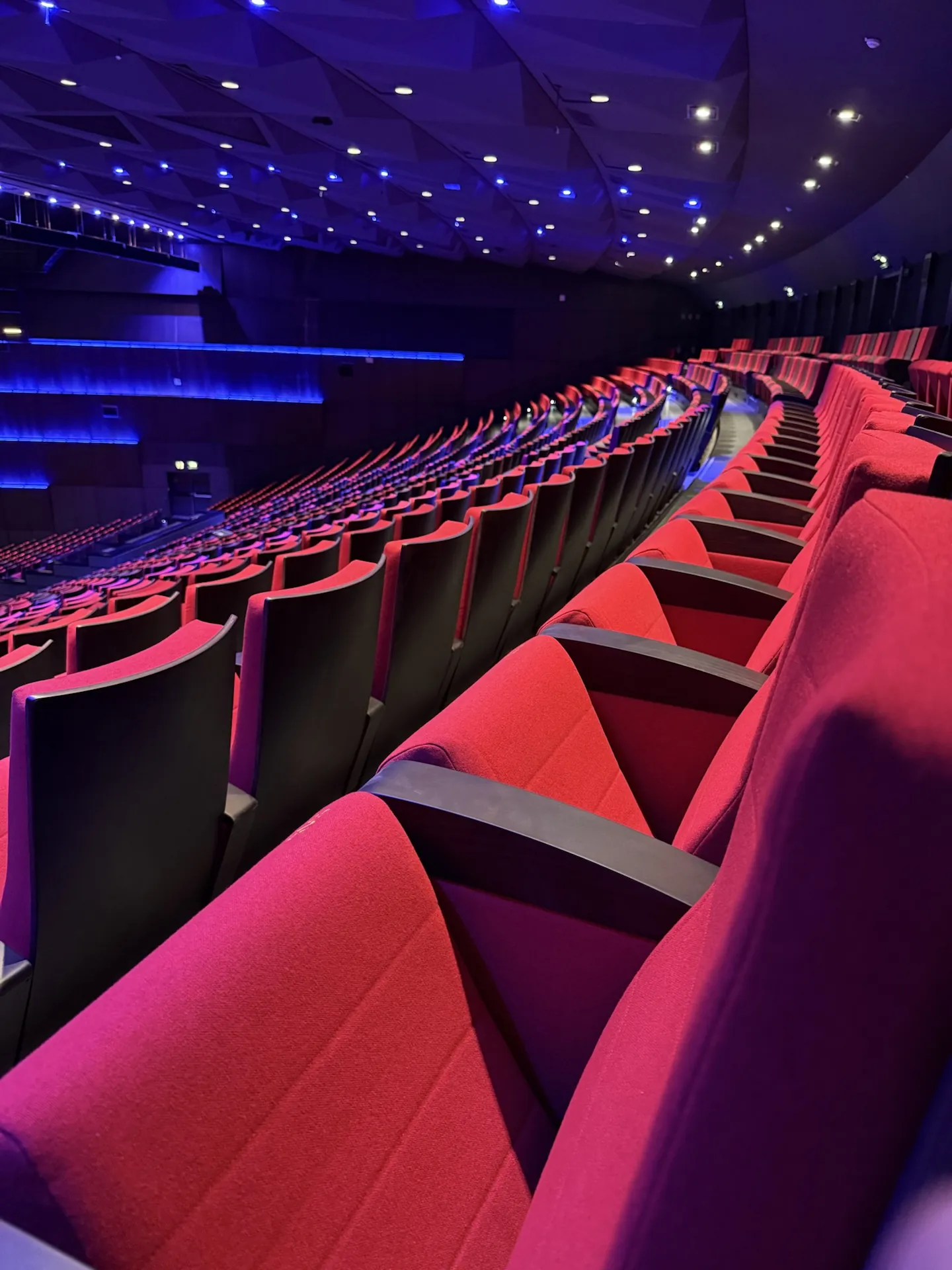
Rows of seats in a congress auditoriumCoordinated sessions

Medical & scientific congresses

Auditorium and audience at the CIGRE congressShare the highlights

Corporate conventions

Preparing the audiovisual set-up at Microsoft AI TourA prepared setting

General meetings

Operators in the video control room in front of the monitorsConnect audiences

Hybrid congresses

The venue and the technical side

What the venue provides, what you need to plan

Renting a congress centre does not mean the technical side is included. We read the venue's technical specifications with you before the quote.

Usually provided by the venue

The building's basics, designed for a meeting, not for a congress.

  • Sound: a mixing desk and 2 to 5 wired microphones
  • Video: one fixed screen, when the room has one
  • Basic Wi-Fi, around 4 Mbit/s per connection
  • Power: often 3 kW at the foot of the stage
  • Building staff: general lighting, air conditioning
Our part

To plan for a congress

What Chroma installs and operates, room by room.

  • Wireless microphones, monitors and a sound engineer for each room
  • Video projectors, LED screens and cameras, run from the control room
  • Reinforced Wi-Fi and a wired connection for live streaming
  • Additional power connections, a dedicated electrician above 500 participants
  • Sound, lighting, video and stage technicians, delivery slots booked

Typical figures observed on our congresses. Each venue has its own inclusions: they are listed in its technical specifications.

A brief to validate? Reply within 24 working hours: a personalised study and a clear proposal, with technical constraints addressed from the start.
Request a quote
Our method

Our Working Method

Whatever the type of congress, we apply a structured approach that keeps technical risks under control and ensures quality of delivery.

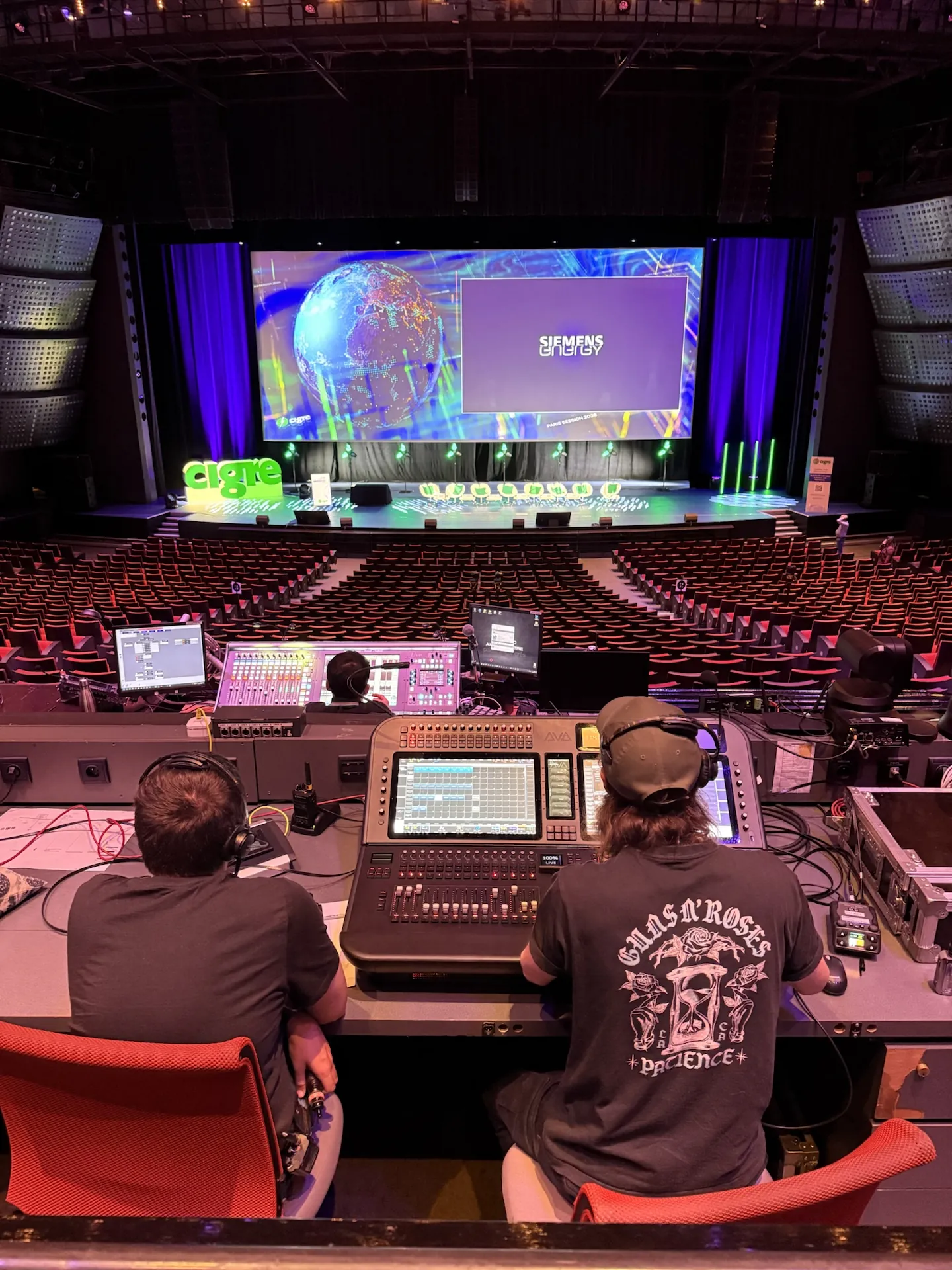
  1. Audience and equipped stage in the CIGRE auditorium
    CIGRE · plenary

    Analysis & Design

    Study of the venue's technical constraints, definition of the audiovisual solutions and coordination with your teams to validate the concept.

    • Technical audit of the venue (acoustics, power supply, access)
    • Definition of audiovisual and staging needs
    • Delivery of the V1 technical running order and technical file
    D-90 to D-60
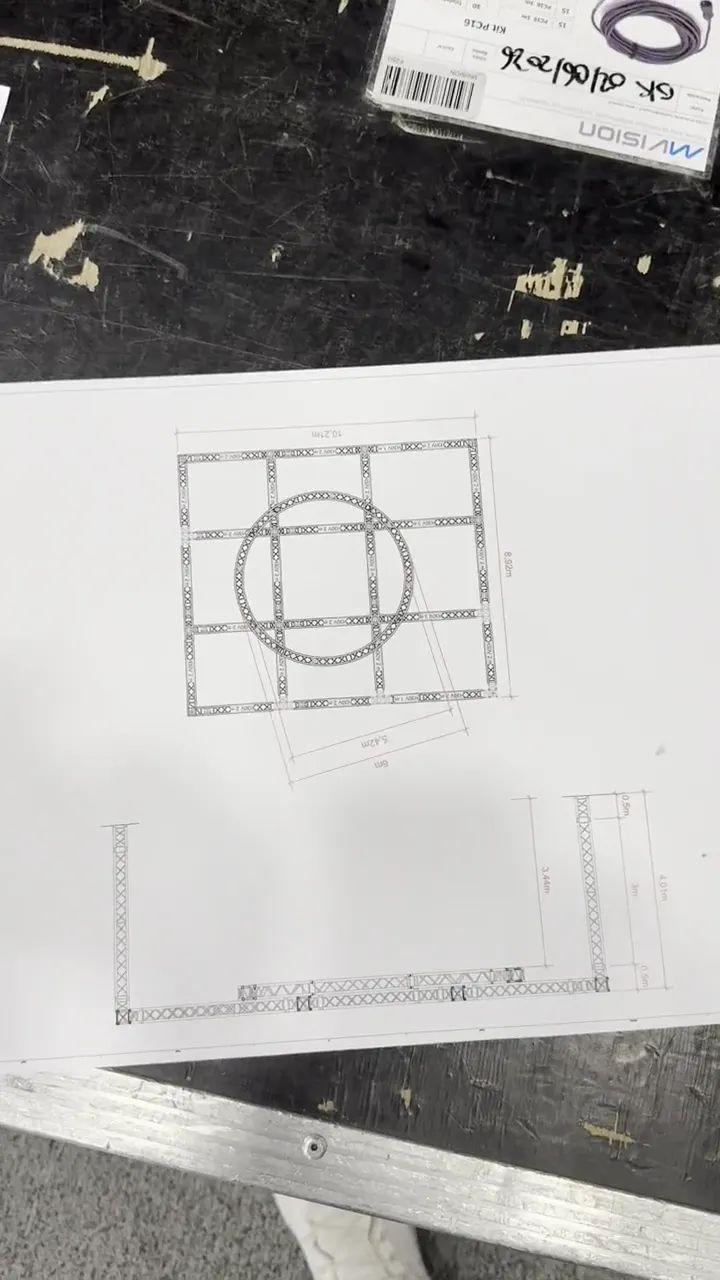
  2. Annotated structure plans during preparation
    Preparation · plans

    Operational Preparation

    Equipment booking, supplier coordination, preliminary technical tests and validation of visual materials.

    • Booking of equipment and technical crews
    • Supplier coordination (catering, security, transport)
    • Validation of speakers' visual materials
    D-60 to D-15
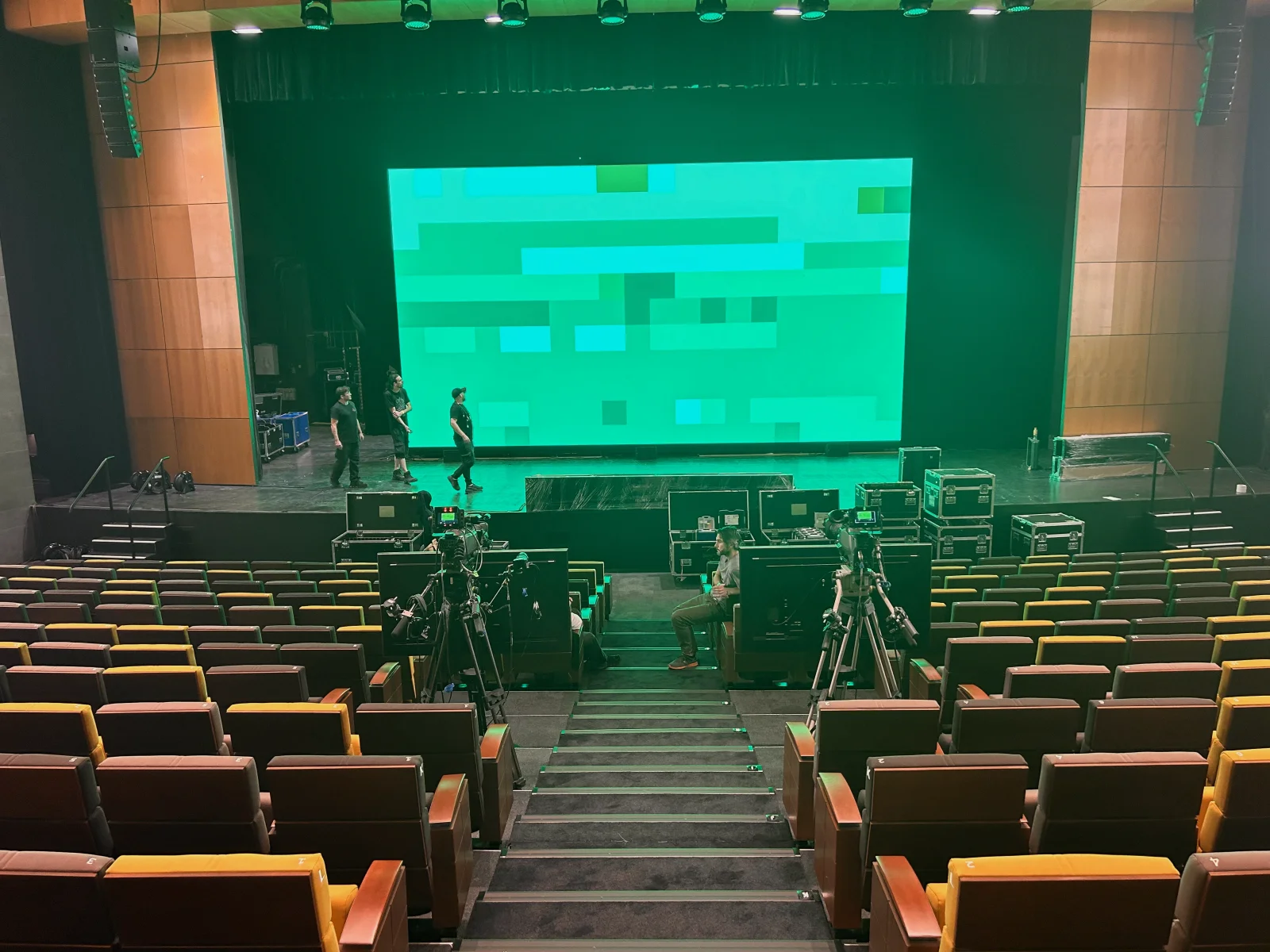
  3. Technicians, cameras and equipment in front of the stage at Microsoft AI Tour
    Microsoft AI Tour · technical preparation

    Installation & Tests

    Full technical build, audio/video calibration, rehearsals with speakers and final validation.

    • Sound, video and lighting build
    • Calibration and redundancy tests
    • Rehearsals with speakers, with priority given to the opening and closing
    D-3 to D-1
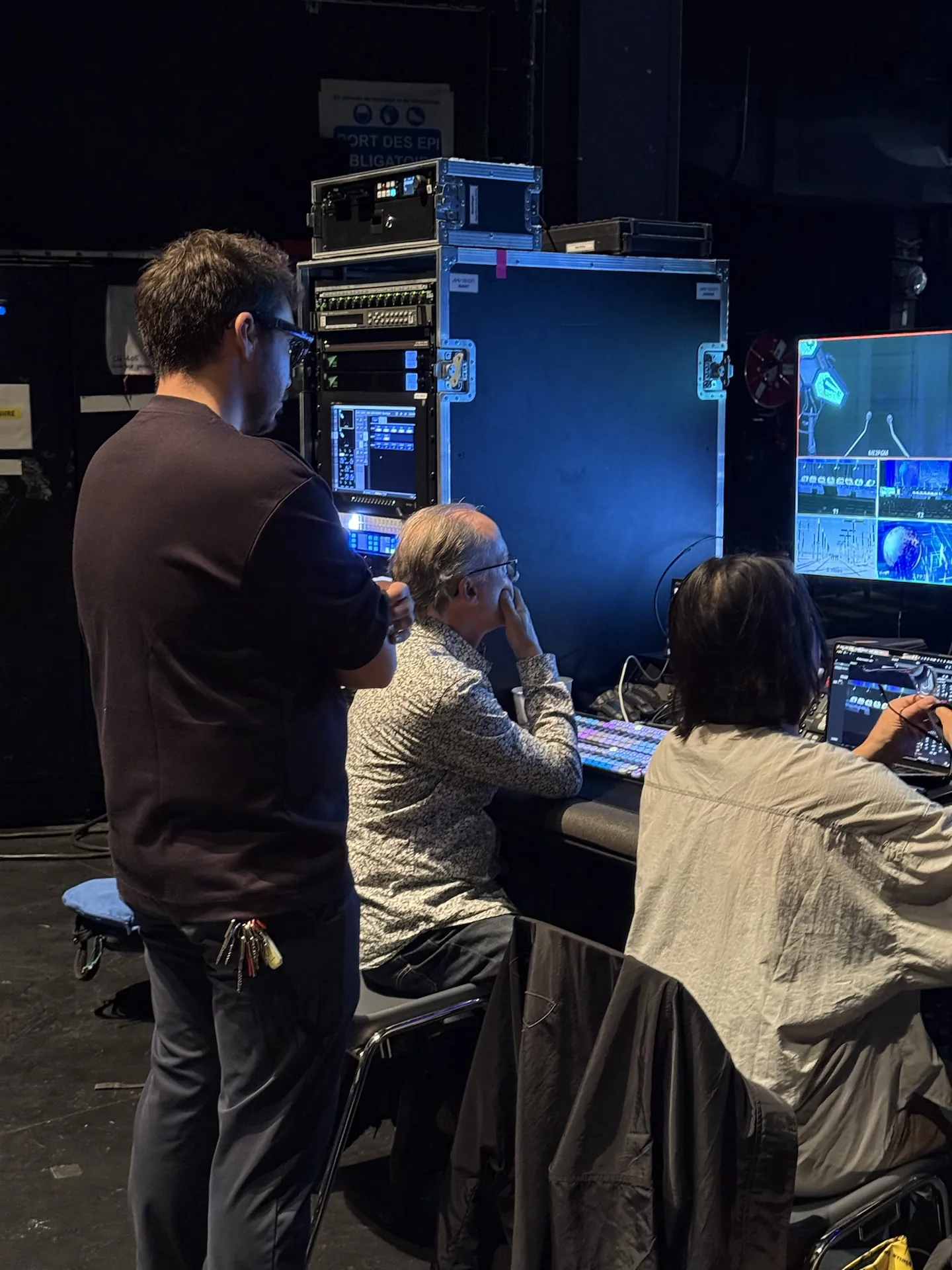
  4. Sound operators in the control room facing the hall
    Delivery · sound control

    Delivery & Follow-up

    Permanent technical control room, handling of the unexpected, coordinated de-rig and delivery of the content produced.

    • Permanent technical control room on site
    • Backup equipment on critical positions
    • De-rig and delivery of the recorded content
    Show day and after
Show day

Every unexpected event already has its answer

On a congress, the usual incidents are known. We prepare the response before day one, so the audience notices nothing.

Sensitive points, Chroma answers and benefits for your event
Sensitive pointOur answerFor you
Equipment failure
Our answer
Microphone, computer or video projector: a spare unit is already connected and tested, and the technician switches over in a few seconds.
For youThe session continues
Full room
Our answer
An overflow room is planned and receives the session live, picture and sound.
For youNobody is left outside
Speaker absent
Our answer
If the speaker has sent us a recorded version, we play it at the scheduled time; otherwise we adjust the running order with you.
For youThe programme holds
Programme change
Our answer
The control room updates the running order, the screens and the speakers' captions during the day.
For youThe screens stay accurate
Proof of trust

Why congress organisers choose us

A technical running order written before day one, one project manager from scoping to de-rig and a team in the control room throughout every session.

I have been working with Chroma Technique for several years on events such as the Journées Dermatologiques de Paris, the Journées Francophones de Radiologie and others… Always looking for new solutions, they support us with passion on the audiovisual technical side. A real pleasure to work together!

Fanny D.Google review

Genuine technical support and very good client relationship management. A pleasure to work with, every time.

Laurent M.Google review

A trusted supplier I work with regularly. Professionalism, responsiveness and technical quality are always there. Perfect for my events!

MatisseGoogle review
Broadcast expertiseMulti-camera control room, video recording and live streaming of your sessions
Proven methodDetailed schedules and risks addressed in advance, across many congresses
Dedicated project managerA single point of contact, from scoping to de-rig
Presence in the control roomSpecialist technicians throughout every session, backup equipment ready
Frequently asked questions

Frequently Asked Questions

Answers to the most common questions about congress organisation.

What is the minimum lead time to organise a congress of 300 participants?

We recommend at least 3 to 4 months for a congress of this size. This allows time to book the venue, coordinate suppliers and run the necessary technical tests.

For international events or events with specific constraints (accreditation, simultaneous interpretation), allow 5 to 6 months of preparation.

How do you handle live streaming for remote participants?

Professional streaming in broadcast quality: multiple cameras, a live video control room and a secure streaming platform.

We manage real-time interaction (chat, Q&A, voting) and recording for on-demand viewing. Dedicated bandwidth and backup solutions as standard.

What are your distinctive technical specialities?

Our expertise in television broadcast and wireless video transmission sets us apart on the most technically demanding congresses.

We master multi-camera control rooms, high-definition video recording and simultaneous distribution across several media (screens, streaming, recording).

What technical set-up is needed for each type of session?
  • Opening or closing plenary: distribution to the whole room, large screens, teleprompter if needed.
  • Parallel sessions: one installation and one technician per room, coordinated from the control room.
  • Round table: wireless microphones for each speaker, several cameras for the broadcast.
  • Workshop: small-scale distribution, microphones for discussion with the audience.
  • Live voting or questions: results shown on screens in real time.
How do I calculate the budget for my congress?

The budget depends on the number of participants, the duration, the venue and the number of rooms to equip.

A rough guide observed on our congresses: for 500 participants, technical production (sound, lighting, video) generally accounts for 15 to 20% of the total budget, after the venue and catering. Also allow a 5 to 10% contingency for the unexpected.

Do you work with our usual suppliers?

Absolutely. We adapt to your trusted suppliers (catering, security, transport) while handling technical coordination.

Our role is to centralise coordination and make sure all contributors work together for the success of your event.

What happens if there is a technical problem on show day?

A technical team on site throughout every session, with backup equipment for critical equipment (sound, video, lighting).

Every common incident has its response planned in advance: a spare unit, an overflow room, a pre-recorded talk. See the details further up this page.

Can you make sessions accessible to people with hearing loss?

Yes, provided it is planned from the scoping stage: hearing loops in the rooms, live captioning on the screens, and sign language interpretation if your audience requests it.