
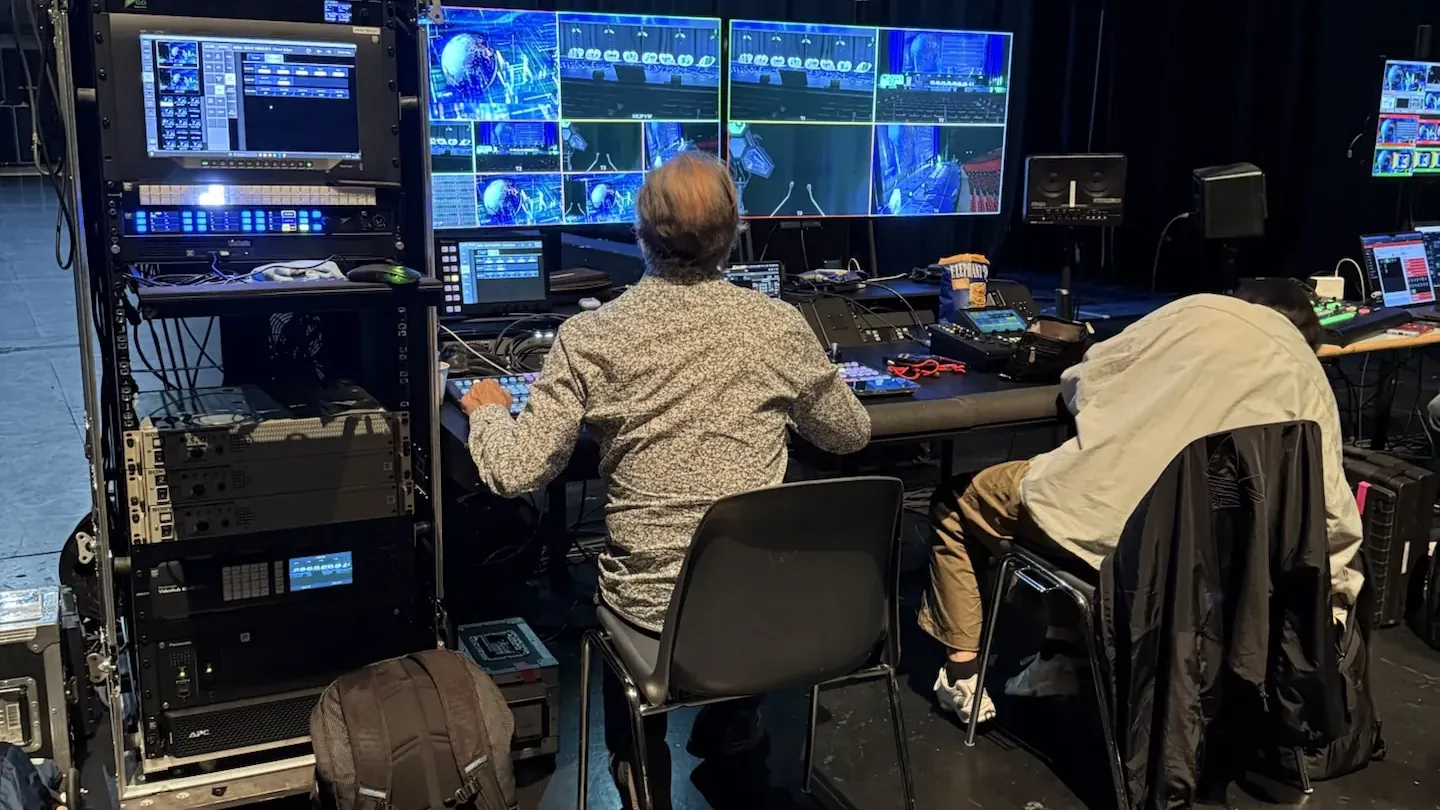
You have probably had to manage an event, and you know how hard it is to coordinate everything. Event production management is precisely what structures all of this. In this article, I share the planning tools and methods that the best production managers use so that everything runs without a hitch, from planning through to the final running of your event. This is the method our Paris team applies to its Île-de-France events.
The fundamentals of event production management
Event Production Management is the technical pillar of an event. The production manager masters the audiovisual tools, coordinates the teams and handles the unexpected. Their role: align artistic expectations with technical means, while respecting budget and safety.
Rigorous planning avoids delays and technical failures. The production manager anticipates needs, optimises resources and secures the event. Without clear coordination, the running of the event becomes chaotic, harming the experience of the audience and the agency's reputation.
The key qualities of an effective production manager:
- Expertise in sound, lighting and video to handle the technical aspects.
- Ability to unite multidisciplinary teams and suppliers.
- Clear communication to guide teams under pressure.
- Adaptability in the face of the unexpected and stress management in real time.
The essential tools in event production management
| Tool | Key features | Recommended use |
|---|---|---|
| Butlerapp | Booking management, Automatic notifications, Intuitive interface | Events requiring precise tracking of attendance (trade shows, conferences) |
| Invent App | Digital ticketing, Registration management, Creation of electronic badges | Public events or events with complex ticketing (festivals, concerts) |
| Eventdrive | Complete planning, Post-event analysis, Generation of statistical reports | Event projects requiring in-depth analysis (corporate events, internal meetings) |
| Wisembly | Hybrid management (in-person and online), Real-time interactivity | Mixed events or events with a digital component (webinars, hybrid general meetings) |
| Imagina | Secure payments, Management of financial flows, Customised dashboards | Events with a strong financial dimension (fundraisers, galas) |
| Lab Event | Centralising the event as the core of the system, Advanced technical integration | Projects requiring a 360° view of the event (large multi-site events, tours) |
| Salesforce (CRM) | Customer relationship management, Participant tracking, Integration with third-party tools | B2B events or events with personalised prospect follow-up (trade shows, roadshows) |
Communication tools such as Slack or Microsoft Teams centralise exchanges between the production manager, technical teams and suppliers. They avoid duplicate messages and make it easier to track urgent requests. A real-time sharing application ensures that a schedule change is immediately passed on to everyone concerned, avoiding misunderstandings.
Project methodology in events
Strategic event planning
A detailed technical specification is the basis of a good reverse schedule. It avoids oversights and secures critical steps. We start with the event date, then work backwards through each task with its real deadlines.
- Clarify the event objectives and the target audience
- Set the date and venue, checking availability
- A realistic budget with room for manoeuvre
- Select reliable, available suppliers
- Plan the phases of preparation, build and de-rig
- Allow a slot for technical tests and adjustments
Anticipating technical glitches at hybrid events is not optional. A streaming failure, a microphone that cuts out, a guest who cancels at the last minute. For each identified risk, I note a workaround action and check that it can be carried out on site.
Technical and logistics coordination
Sound, lighting and video are the technical trio. A production manager must make sure these aspects are aligned. The teams on site must also be coordinated, as with expertise in audiovisual techniques.
| Event type | Logistics checkpoints | Specifics to check |
|---|---|---|
| Indoor | Equipment access, parking spaces, electricity, fire safety | Compliance with accessibility standards for people with reduced mobility, evacuation routes |
| Outdoor | Building permit, suitable sound system, security, toilets | Weather, access for emergency services, emergency points |
| Conference | Presentation films, working microphones, simultaneous interpretation | Internet connection, looking after VIP guests |
| Team building | Venue access, participant transport, timings | Planned activities, safety instructions |
| Digital event | Streaming stability, platform access, technical tests | Remote guests' connection, moderated chat system |
Communication is the key to avoiding slip-ups. I set up a single channel to centralise exchanges between the client, the teams and the suppliers. Regular check-ins between each phase of the event project make it possible to validate completed actions and adjust course if necessary.
A good event production manager juggles rigorous organisation, team coordination and anticipated planning to avoid the unexpected. Try a structured method with suitable tools now: it changes everything for your upcoming events. The success of an event is mastered logistics, full stop.