
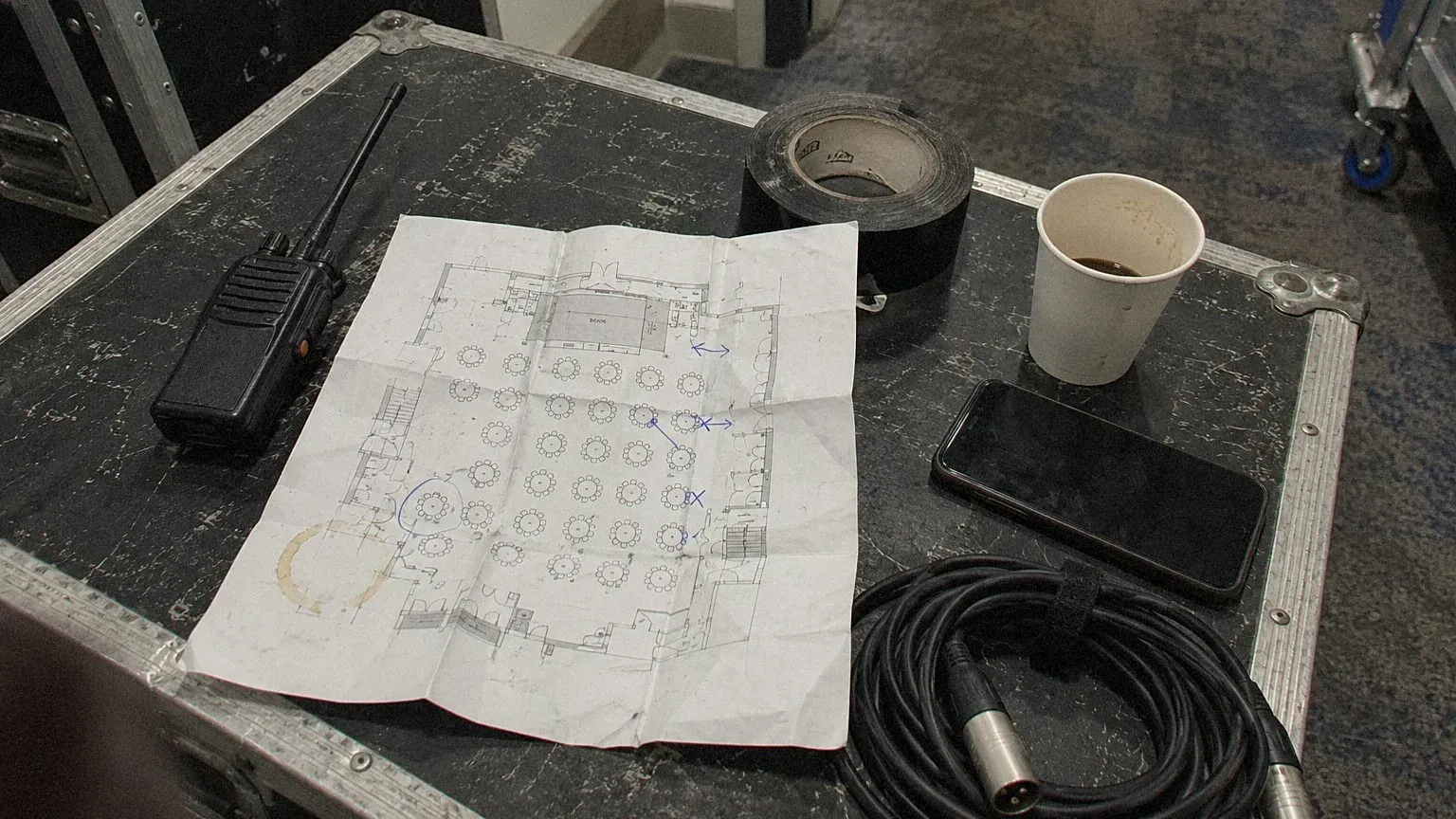
Organising an event without a technical specification is like setting out on an expedition without a map.
This important document brings together all the practical and technical information needed to ensure your event project runs smoothly.
A well-built event technical specification makes communication between the various parties easier and becomes a genuine steering tool, essential to the success of your professional events. It is the reference document of our Paris office: nothing is ordered without it.
What is an event technical specification and what is it for?
An event technical specification is a document that details all the technical and logistical aspects needed to deliver an event project. It serves as a practical guide for coordinating the various contributors.
The technical specification makes managing the event a lot easier by centralising all the important information. It helps anticipate technical problems such as a lack of power sockets or insufficient sound power. On top of that, it improves communication between teams by giving them a common language and precise data. It also simplifies planning by providing a detailed framework for the organisation.
Without a technical specification, a professional event risks running into many errors and coordination problems. Our teams on the Côte d'Azur use it in exactly the same way, from our Nice agency.
The important elements of an event technical specification
Every event technical specification should contain certain basic elements to be genuinely useful. Here, briefly, is the information to plan for so that the team can work well, and to master to guarantee the success of your event.
Here are the essential components of an event technical specification that works.
- General information: Name, date, venue and key contacts for the organisation.
- Technical details: Audio, video, lighting and stage equipment needs.
- Logistics: Supplier access, build times and traffic plans.
- Budget: Equipment hire costs, service fees and contingencies.
- Safety: Evacuation plans, instructions and safety equipment.
Cost items vary noticeably in the Principality, as our Monaco agency can attest.
For a trade show, you will focus on exhibitor areas and electrical connections, whereas for a conference it will be more the projection equipment and the sound system.
For a concert, you detail everything to do with sound, lighting and the artists' requirements.
The target audience also influences the content, particularly for safety and accessibility depending on the age of the participants.
Accurate information avoids errors and eases coordination between all contributors.
How to create an effective event technical specification
To produce a good event technical specification, you need to follow a few basic steps so that nothing is forgotten.
I advise starting by gathering all the important information for your event, by talking to the teams and suppliers involved. Then organise this data by theme (technical, logistics, safety) so that it is easy to consult.
For it to be genuinely useful, you need to circulate the rider to all the parties concerned and check that everyone has understood their role. Also think about preparing a document that can adapt easily to the unexpected.
Here are some best practices for writing a clear, effective event technical specification.
- Collection: Gather all relevant data from the teams.
- Clarity: Write each section concisely and precisely.
- Verification: Make sure the information provided is complete.
- Updating: Update the technical specification regularly.
Practical uses of the technical specification in event management
The role of the technical specification in steering the event
The technical specification serves as a quick on-site reference for all teams. It lets everyone check technical information and schedules while activities are under way.
During the event, we use the rider to solve problems quickly as they arise. For example, if a supplier cannot find their allocated spot, we can refer directly to the plan included in the technical specification.
If the schedule changes at the last minute, everyone can consult the same document to understand the new running order. If we have a problem with a piece of equipment, the contact list lets us call the right person directly to sort it out.
It really avoids confusion when several contributors are involved in the same project.
The technical specification as a communication tool with suppliers
The technical specification clarifies exactly what is expected of suppliers for the event.
The information has to be adapted to the type of supplier concerned. For sound technicians, we specify the number of microphones, the type of console and the power required. For the event technical supplier, we detail all the specialist equipment needs.
For catering teams, we state the number of meals, dietary requirements and service times. The rider is also an essential tool for the event technical director, who has to coordinate all these technical aspects for the proper execution of the event.
A standardised format strengthens our credibility with external contributors.
Evaluation and continuous improvement through the technical specification
The technical specification helps us assess whether the event went according to the original plan. We can easily identify the gaps between what we had planned and what actually happened. If certain technical elements caused problems, we note them so as not to repeat the same mistakes.
The rider thus becomes a learning document that helps us improve our event organisation.
After each use, we improve our rider template. We can add columns for lessons learned or create a section dedicated to areas for improvement. We also ask the various teams what was missing for them in the document.
For example, if the technicians tell us they would have needed more detail on electrical connections, we will add it to the next template.
It is a process that evolves with experience in the field.
The event technical specification remains the central tool for turning an idea into a successful project. It ensures smooth communication between all parties and makes it possible to anticipate problems before they arise.
By adopting this structured approach in your event organisation, you gain efficiency and peace of mind throughout the planning process.
You can download an example technical specification as a PDF by signing up here: