
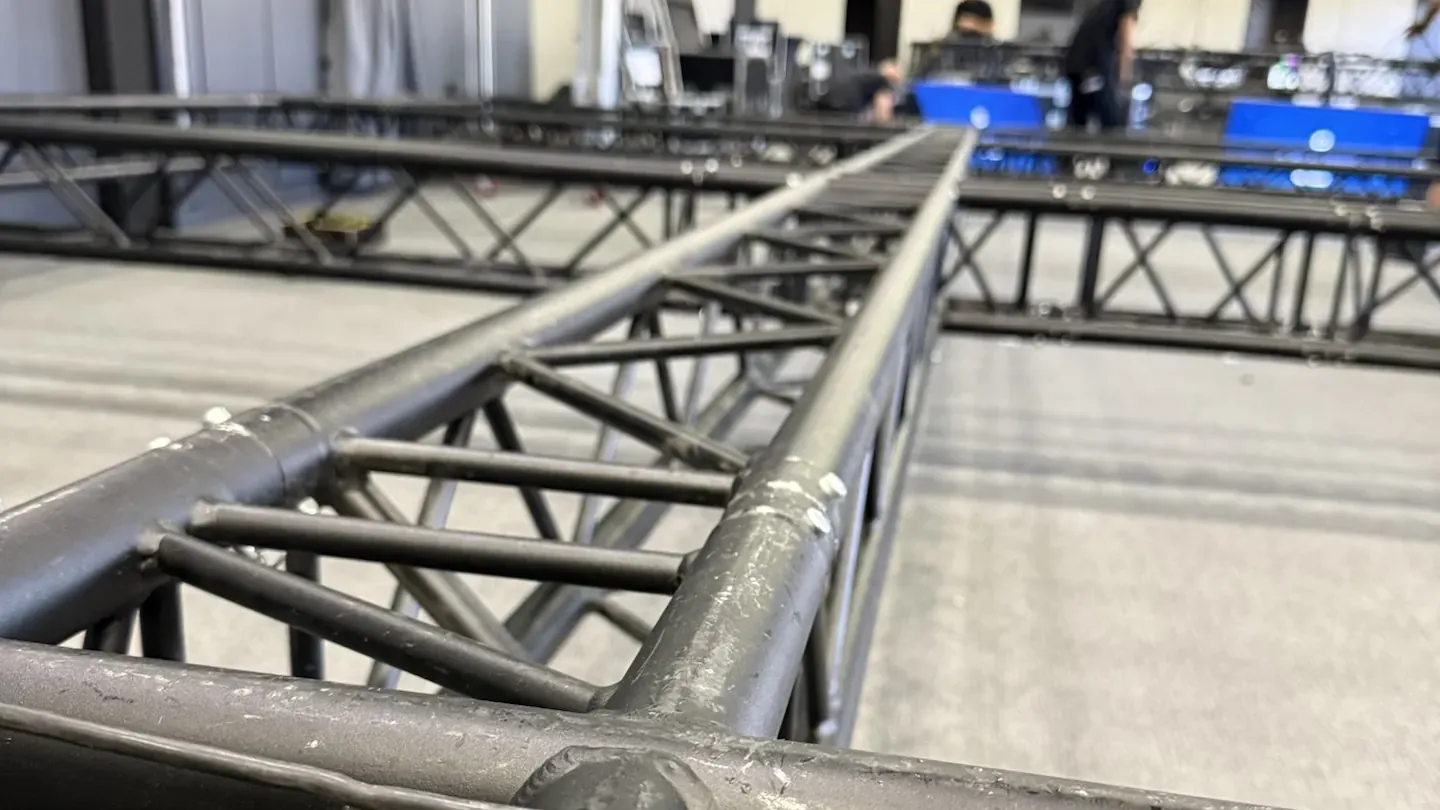
Event rigging is an essential technical discipline in the events world. LED screens, lighting systems, speakers or suspended sets: all of it relies on secure overhead installations that free up floor space while delivering an optimal visual and sound experience.
This expertise, although often invisible to the public, is at the heart of the technical success of events. Our technical direction in Paris works with certified riggers on all its builds.
Why choose rigging for your events?
Rigging optimises space by suspending heavy, bulky equipment, while improving sound and visual distribution.
For example, at a recent medical congress, 8 LED screens and 12 speakers were suspended, freeing up the aisles to welcome 500 participants. Without rigging, the available space would have been reduced by nearly 20%.
Modern events, which are becoming more and more ambitious and technical, require suitable solutions. Whether you are organising a small showroom or a large-scale festival, rigging techniques remain similar; only the scale and complexity vary.
According to a study by EventMB (2022), 65% of event organisers consider rigging an essential solution for optimising their technical and aesthetic spaces.
The Key Components of Event Rigging
A rigging installation rests on three main elements that guarantee its stability and safety:
- Load-bearing structures: Aluminium trusses form the framework of the installation. Available in triangular or square sections, they are assembled using pins and couplers. Each model is designed to support specific loads, up to 2 tonnes (source: Prolyte).
- Lifting systems: Electric hoists lift equipment to height safely. They generally have a double safety brake and are certified for loads from 250 kg to 2 tonnes.
- Attachment accessories: Steel slings, safety shackles and specific hooks complete the system. Each item is subject to strict standards and must be CE certified.
Successful rigging also depends on the traceability of the equipment. For example, every sling or hoist must be inspected regularly, at least once every six months, by an approved body in accordance with French regulations (order of 19 January 2023).
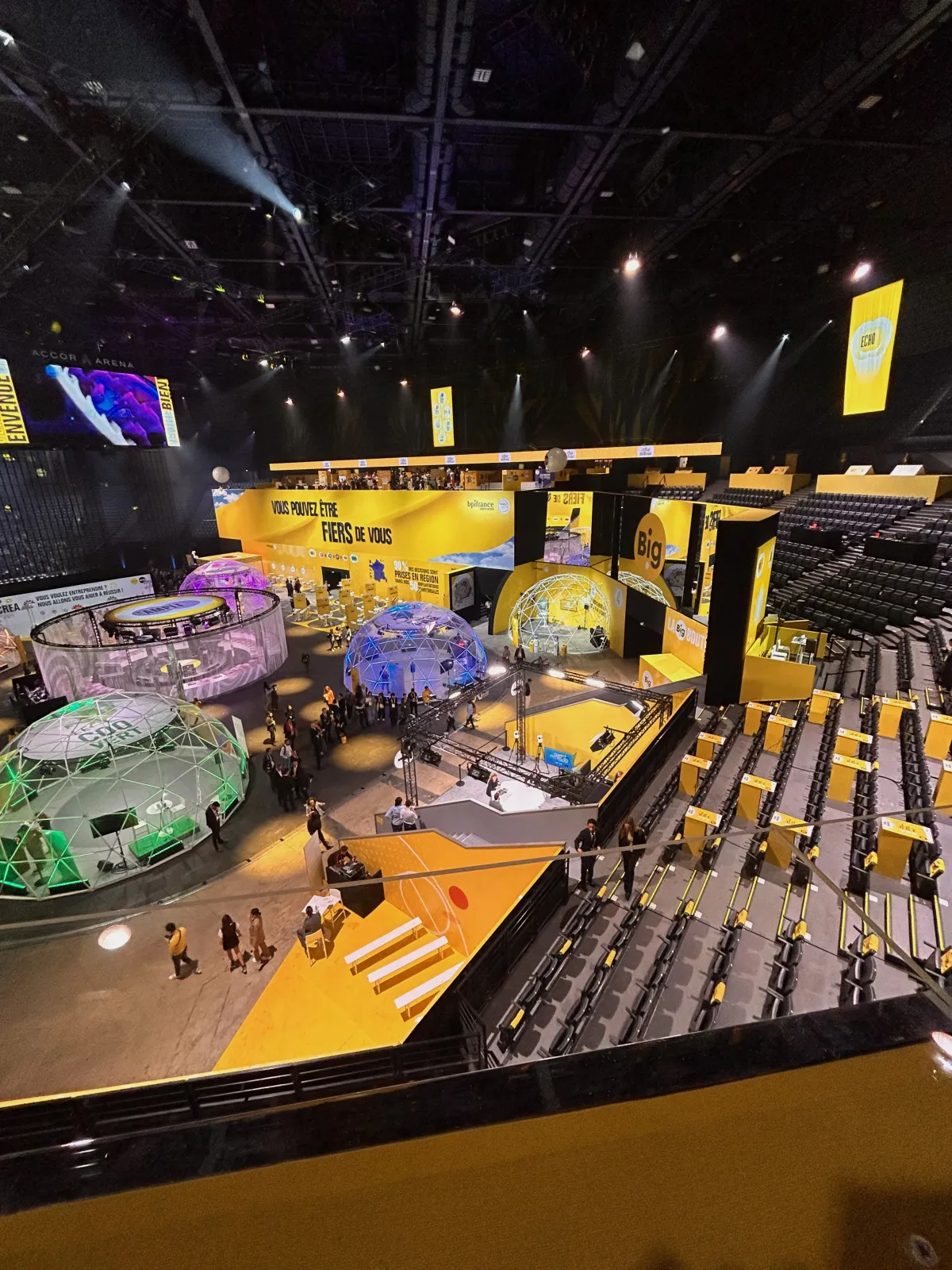
Standards and Regulations: Non-Negotiable Safety
Rigging is an activity governed by strict standards to guarantee the safety of technicians and the public. Every installation must comply with precise rules, such as those set out in the European standard NF EN 17206, which requires a minimum safety factor of 5 to 10 times the rated load.
The essential certifications:
- Working at height: All riggers must be trained to work safely several metres off the ground.
- CACES aerial platform: This certification is mandatory for operating elevating work platforms.
- Specific rigging: Dedicated training in mastering attachment and lifting equipment is essential.
In addition to these qualifications, every project requires complete documentation: load plans, calculation notes, equipment certificates of conformity, and an up-to-date safety register.
On a project in a historic venue, we had to provide a detailed analysis of each attachment point to respect the constraints of the building and avoid any structural damage.
Applications and Technical Adaptations
Every event presents unique challenges that require customised rigging solutions.
- Stage installations: Concerts and shows often require complex lighting trusses. For example, at a trade show, a 30-metre truss was suspended to support 4-metre LED screens and 500 kg projectors each.
- Adapting to venues: Congress halls generally have existing attachment points, but these must be checked and adapted. Outdoors, structures must take wind and weather into account.
According to a study by Plasa (2023), 55% of riggers have to design tailored solutions for unusual venues, such as factories or heritage sites, where structural constraints are significant.
Key Steps for a Successful Installation
A rigging project takes place in several phases, each crucial to ensuring the safety and quality of the installation.
- Analysis and design:
- Identification of the available attachment points.
- Calculation of loads and forces.
- Creation of 3D technical plans to anticipate constraints.
- On-site installation:
- Assembly of the structures following a precise schedule.
- Double check by certified technicians.
- Systematic strength tests before the event.
- Supervision and de-rig:
- Continuous coordination to guarantee safety.
- Careful removal of equipment to protect the infrastructure.
This de-rig is planned with the technical coordination, which clears the areas in order.
Advantages of Event Rigging
Rigging offers technical and aesthetic solutions suited to every type of event.
- Optimising floor space: Ideal for cramped venues or events with a high density of participants.
- Immersive experience: Suspended equipment provides better sound and visual coverage.
- Versatility: Rigging adapts equally to large spaces and unusual venues, such as historic buildings or open-air spaces.
According to a survey by Live Design (2023), 78% of event organisers say that rigging significantly improves the visual impact of their productions.
Rigging Best Practice Checklist
What to do:
- Always check the certifications of equipment and technicians.
- Carry out a structural analysis of the venue before installation.
- Prepare a detailed prevention plan including load calculations and attachment points.
What to avoid:
- Using equipment without traceability or certifications.
- Underestimating venue constraints (wind, fragile ceiling, etc.).
- Neglecting safety checks before the event.
Event rigging is an essential technical solution for modern events.
Through secure, suitable overhead installations, it guarantees the success of the most ambitious productions while respecting the strictest standards.