
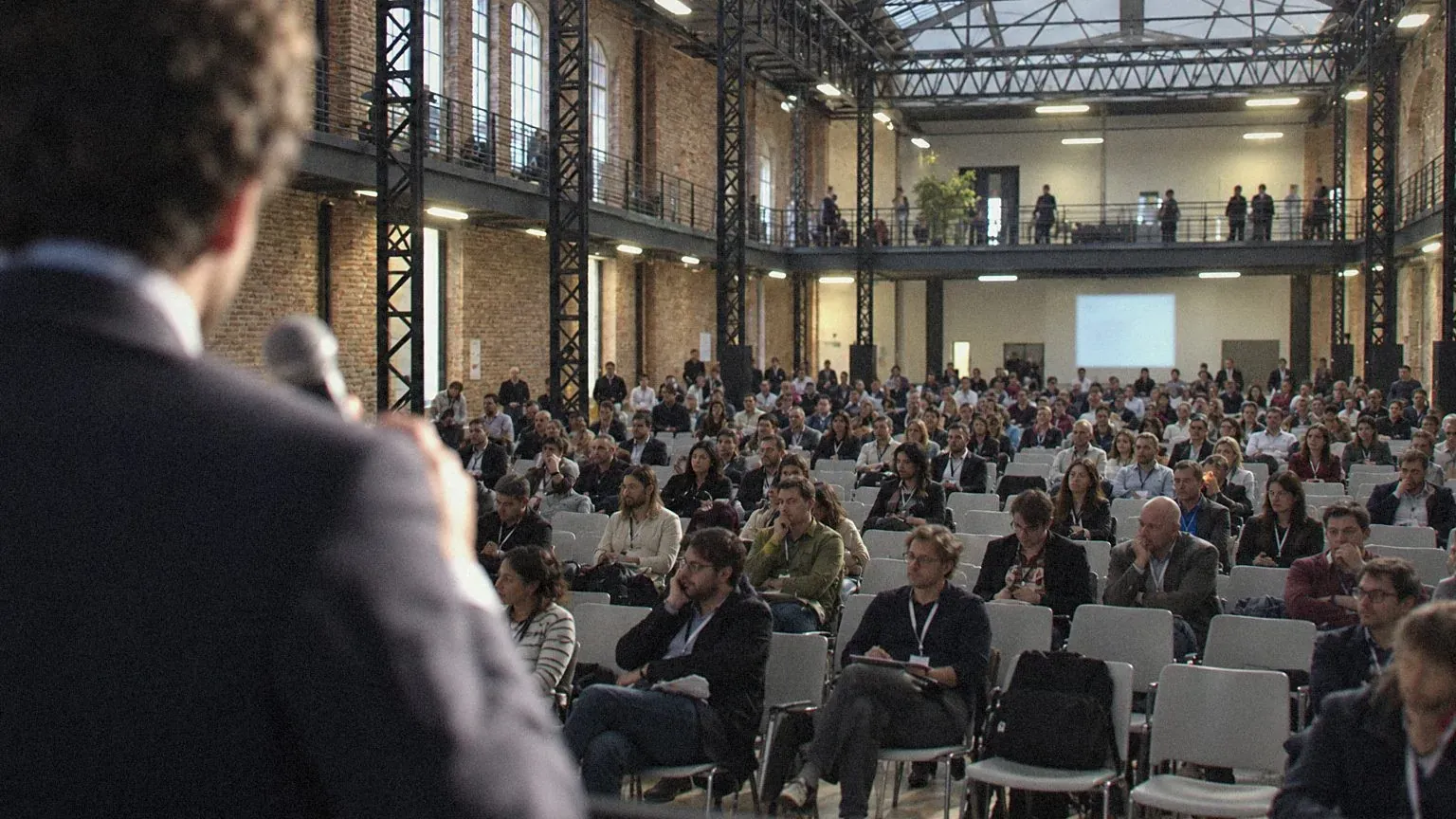
Organising a memorable plenary evening is often a real headache, isn't it? Here we explain the key steps and give concrete advice to make your next corporate event a real success.
The aim? To create a dynamic that genuinely brings participants together around a striking event message. Let us see how an event agency can support you in practice: from choosing relevant entertainment ideas to coordinating speakers, including creating standout moments that boost employee engagement. These formats can also be set up on the Côte d'Azur, with our Nice team.
Defining the objectives
To make your plenary evening a success, start by clarifying your priorities with your agency. Without a precise direction, the organisation risks going off in all directions, and you know that better than anyone.
Well-defined goals align all the teams, including the agencies in charge of venue hire or entertainment. Take a concrete example: if your seminar aims to boost sales, every activity will have to serve that intention.
Preparatory meetings with suppliers will be more efficient, especially for coordinating venues and speakers. A good event agency will also be able to translate your ambitions into measurable indicators: attendance rate, quality of discussions in the plenary session...
The OKR method works quite well for this. Rather than staying vague, you define concrete targets with your partners. Imagine organising a team-building event: by setting precise objectives from the outset (number of collaborative activities or venue hire budget), your briefing to suppliers becomes more precise.
Do not forget to involve the agencies in the thinking: their expertise in entertainment and logistics will save precious time.
One last point: always allow some room for manoeuvre. The unexpected at a seminar happens more often than not!
Choosing the date and venue
Caption: This table compares different types of venues for a plenary evening, according to their advantages, drawbacks and suitability for different types of events.
Choosing the venue is hugely important for the atmosphere and active participation. A well-chosen space changes everything in terms of group dynamics. You really need to think about how the venue will influence exchanges.
For example, a coworking space can be perfect for a relaxed seminar, whereas a hotel suits official meetings better.
A good event agency will also be able to suggest venues that fit your budget.
A small tip: hiring original venues can really boost the impact of your entertainment. But beware, it requires more logistics. If you are short of time, it is better to contact agencies that specialise in organising events. They often have valuable advice and useful partnerships.
For large plenaries, remember to check the capacity and the on-site technical facilities. A venue that is too cramped or poorly equipped can spoil the experience of speakers and guests.
Some companies now combine physical venues with remote participation, a lead worth exploring depending on your needs.
In short, whether for a quick meeting or a seminar lasting several days, the choice of venue remains the foundation. Do not hesitate to compare several hire options and to ask event professionals for advice.
It will spare you a lot of organisational headaches!
Determining the participants
For your plenary evening, you need to choose carefully who you invite. No forgetting the key people! It is the basis for the organisation to hold together.
Here are the profiles to prioritise:
- Management: Their presence is essential to show the importance of the event and to share the vision of the company.
- Partners: Invite your main external collaborators. It strengthens ties and opens up leads for future projects.
- Internal teams: All the departments concerned must be represented. It encourages involvement and internal exchange.
- VIP clients: Their attendance builds links and can lead to concrete opportunities.
- Specialists and speakers: Their expertise adds real value to the running of the meeting.
For a plenary meeting that works, the balance between operational and strategic is key.
Good to know: some agencies offer smart tools for managing invitations. Handy for tracking attendance confirmations in real time and anticipating the logistics of room hire.
For example, working with an event agency often makes it possible to centralise participant information, automate reminders and manage the schedule of activities.
Solutions such as Digitevent help organisers with exactly these aspects. According to feedback from the field, using event management software can improve the efficiency of planning and delivering events, which is quite useful when planning a seminar or a large corporate event.
A few practical tips: favour online confirmations for guests, check the capacity of the chosen venue, and always allow for latecomers.
An agency experienced in events will be able to guide you on these points.
Setting a budget
Without a budget, there is no plenary evening that holds together! You must plan the expenses.
For a plenary event, here is how to split the costs in general: venue hire, technical equipment (sound, lighting, video), caterer, entertainment, speakers, communication, and contingencies. It is essential to allow a safety margin: count on 5 to 10% of the total.
The catch? Tech budgets are often poorly estimated.
Hire of audiovisual equipment, high-speed connection, specialist event software... Not to mention on-site support. You see the idea? From experience, overruns sometimes reach 5 to 10% if these details are neglected.
For organising your plenary evening, an event agency can simplify the process. In Paris, for example, agencies know local costs well. Managing in-house gives total control over every aspect, that is true. But working with professionals brings their expertise in complex seminars and meetings. Their strength? Fresh ideas and turnkey solutions for companies.
Bonus: they often negotiate advantageous rates on venue or equipment hire, which lightens the overall bill. A plus when you have to manage several activities in parallel.
Did you know, by the way, that some agencies offer complete packages including entertainment and guest management? Handy for focusing your efforts on content rather than logistics.
Whether for a seminar or a large plenary, their advice avoids many pitfalls.
And in terms of timing, it keeps you on course without overloading your teams. Worth considering if you are planning several events during the year!
Preparing the necessary equipment
On the equipment side, you must forget nothing for your plenary evening! Sound, video, visual materials: everything has to be flawless. Our agency always insists on this point with clients hiring a seminar venue.
Technical checklist: sound system at its best, quality screens, a projector that works. Allow at least two microphones for speakers, cables in good condition and adapters.
Let us be honest: even with good organisation, zero risk does not exist.
At a recent conference, a power cut interrupted the main presentation.
Fortunately, the agency on site had planned for a generator and a backup version of the presentation.
The result? The guests barely noticed the problem!
For visual materials, test everything at least 2 hours beforehand, depending on the size of your event.
A pro tip: always keep a USB stick with the files on you.
Some event agencies even offer ready-to-use kits for this kind of situation. It is worth a look if you often hold plenary meetings.
On the innovation side, interactive screens and live voting work quite well to boost participation. However, beware of overly complex fads: the essential point is that your ideas come across clearly.
From our experience in running events, it is better to rely on 1-2 well-mastered tools than to multiply gadgets.
Finally, do not forget to brief speakers on the available equipment. There is nothing worse than a speaker looking for how to switch on the microphone during their presentation!
For a successful seminar, this advice applies as much to small meetings as to large events.
Communicating well during a seminar
To make a plenary evening or a corporate event a success, the exchange of information plays a central role. The secret? Creating a dynamic atmosphere while keeping participants involved.
To boost participation before the seminar, here are a few channels to use:
- Targeted emails: Send practical information (programme, speakers, venues) in an encouraging tone. Remember to mention the planned entertainment to build interest.
- Company social networks: Launch teasers about the event, highlighting the original activities. A specialist agency can help you create striking content.
- Direct calls: Contact key guests personally: it shows the importance the organiser attaches to their presence. Ideal for strategic meetings.
- Intranet: Centralise documents and logistical information (venues, plenary times). Some agencies offer turnkey dedicated spaces.
- Short videos: Show excerpts from previous seminars or interviews with speakers. Perfect for giving a concrete preview of the planned entertainment.
During the event, alternate visual materials and interaction. Event agencies often advise using portable roll-up banners to adapt to different venues; we prefer to use screens, LED screens, which give a less cheap-looking result.
For plenary meetings, clean slides with striking figures work well.
A good tip: always provide an informal discussion area. It lets participants exchange ideas between sessions. Hiring a cosy lounge with light entertainment can work wonders for the atmosphere.
Finally, do not forget the post-event debrief. Many agencies recommend collecting feedback quickly through a short questionnaire, which is essential for improving the organisation of future seminars.
Running the celebration
For your plenary evening to leave a mark, entertainment remains the key. A good event agency will be able to suggest highlights suited to your audience, a real plus for corporate seminars!
Team building is often a must for bringing teams together when hiring a dedicated venue. Escape games, connected challenges or creative workshops... There is no shortage of options.
Event organisation experts also note a growing demand for adapted game shows and team challenges. A good idea? Take a look at the guide to themed parties for fresh ideas. It can give a real boost to your next seminar.
On the conference side, the choice of speakers makes all the difference. In practice, we aim for three criteria: professional expertise, ability to carry the audience, and alignment with the company's values.
A good seminar speaker is one whose ideas land and who knows how to get a reaction in the plenary room.
A small tip: do not hesitate to ask for professional advice on mixing talks and activities. Active participation by employees often boosts the impact of the event.
And if you go through an agency, check that they have a good command of hiring specific equipment: some venues need particular equipment for entertainment.
Handling the legal aspects
Do not forget the legal side! Permits, copyright... Everything has to be in order. If you are not sure, it is better to take advice from a specialist agency.
As an organiser, you have responsibilities and must therefore know the rules for professional events.
Event insurance, for example, is compulsory to cover mishaps.
A reputable event agency will always offer this type of contract: cancellation, damage, weather... It depends on the venue and the number of guests.
Is that clear? For corporate seminars, also check the clauses relating to on-site activities.
When it comes to music and images, things get complicated. Many meetings forget to check the rights! An agency can help you choose royalty-free sounds or negotiate licences.
For entertainment, think about specific permits, especially if you are filming. A professional's advice is worth more than a lawsuit, isn't it?
One last point: venue hire. Some spaces require a deposit for seminars.
Check the cancellation terms and hidden fees.
An agency experienced in events will be able to guide you on this, especially for large attendances. It avoids unpleasant surprises after the plenary meeting!
Choosing the right evening format
For your plenary evening, you need to choose the right format! Between a seminar, a product launch and a classic plenary meeting, specialist agencies offer different options. It all depends on what you want your guests to experience.
The type of event depends above all on what the company is aiming for. Seminars work well for training teams or presenting new strategies. For a commercial coup, the product launch remains essential. As for plenary meetings, they are the ideal format for sharing important information with the whole company.
Another key point: think about hybrid formats for 2024. Audiovisual suppliers are seeing more and more requests for mixed entertainment (in-person + digital). This mix reaches more participants, especially for companies with dispersed teams.
Feedback shows that this model offers real flexibility, useful when organising activities in several stages.
Some organisers even add virtual spaces for exchanges between speakers and guests.
In short, the choice of format depends on your audience and the resources available.
Do not hesitate to ask professional agencies for advice to find the right balance between physical and digital participation.
Some suppliers offer turnkey packages including venue hire, entertainment and registration management. Handy when you want to focus your efforts on the content of the event!
Defining the agenda
The agenda is the backbone of your plenary evening! A well-built programme helps to maintain participants' attention during meetings. Let us see how to balance all this.
For a successful plenary meeting, alternate short presentations and interactive activities.
For example: 20 minutes of pitch, then questions and answers before the break. Note that cognitive overload occurs when too much information is sent at once. The trick? Simplify the content with clear visuals.
Tools like Miro can also be useful for seminars.
For teamwork, favour collaborative tools such as Google Drive or Asana. These solutions, very popular in the events industry, make it possible to change the programme live with all the speakers. Did you know that Microsoft Teams helped companies go digital? But be careful not to overload guests with too many materials!
Finally, do not forget to allow downtime. A good event programme breathes between sessions. Some agencies specialising in venue hire insist on the importance of relaxation areas.
It allows companies to make meetings flow without exhausting teams.
Comparison
To find the event format that suits your company, there is no secret: you have to weigh up the pros and cons. The size of the company, the stakes, the budget and the logistics all come into play.
A specialist agency can guide you in this choice.
The thing is, each formula has its advantages. Take seminars, for example: perfect for training teams, but they require a great deal of organisation. This is where an event agency becomes useful: they handle venue hire, the equipment and the whole technical side. For plenary meetings, the cost depends mainly on the number of participants.
On budget, team-building activities remain affordable, especially if you opt for local activities.
On the other hand, a product launch requires more resources.
Here again, a good agency will know how to find the right balance between impact and costs. And for participation, nothing beats an unusual venue or speakers who make an impression.
Caption: This table gives you a basis for comparing the main event formats. Useful for discussing with your agency or your colleagues.
Worth noting: I cannot repeat it enough, but the advice of an event professional often makes the difference on practical details.
A successful event organisation is first of all a matter of common sense: well-defined objectives, a venue that fits the project, entertainment that mobilises teams.
Rather than seeking perfection, aim for collective buy-in: it is often what stays in people's memories.
Consider this: a successful plenary evening is not measured by the number of special effects, but by the energy shared between colleagues.
Where some companies still hesitate, yours could set the example... provided you act without delay.
So, when do we start?