
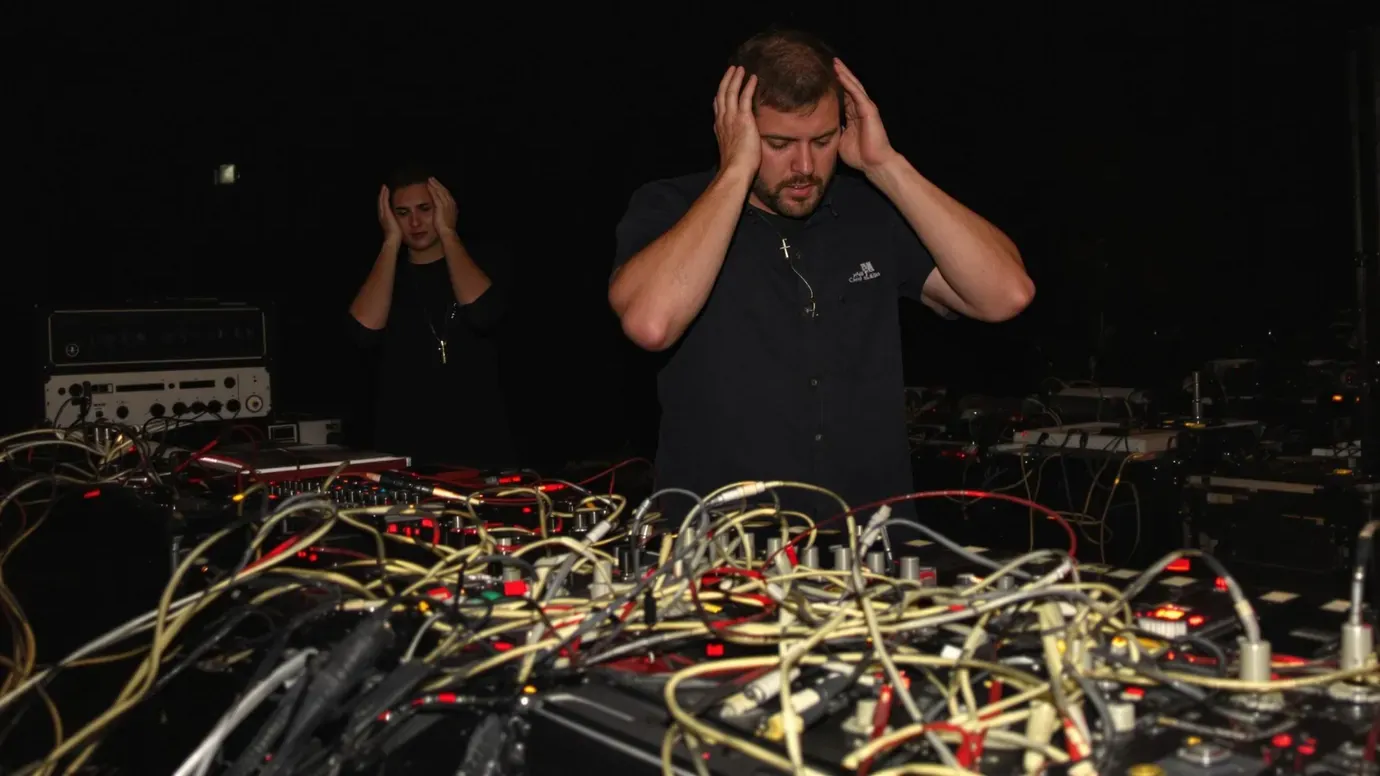
Putting on an event and ending up with a faulty sound system is the surest way to ruin the atmosphere. We have all sat through inaudible conferences or concerts spoiled by ear-piercing feedback.
In this article, we break down the 5 most common sound mistakes, from poor equipment choices to rushed tests.
Above all, we share our tips for professional sound quality without breaking the bank. Because good sound has to be planned ahead!
Wrong equipment choice
Here are concrete examples of kit to avoid, depending on your event:
- Low-quality audio cables for weddings - risk of interference during exchanges
- Passive speakers not suited to conferences - they need a separate amplifier
- Omnidirectional microphones in noisy environments - they pick up every surrounding sound
- Overpowered video broadcast systems for small rooms - unbalanced sound
- Complex mixing desks for simple events - risk of setting errors
A good reflex: always check the technical specifications against the type of event and the space available. As you can see in our guide to audiovisual techniques, undersized equipment gives weak or distorted sound.
To work out the power you need, allow 5 watts RMS per person indoors. Outdoors, plan for more because sound disperses.
Neglecting the acoustics
Reverberation lingering in a poorly prepared room is the surest way to make speeches unintelligible. People often think about the speakers, but not about the walls bouncing the sound back in every direction.
For large events such as sports events, our experience with acoustic optimisation for sports events shows that you need to combine wall treatments with strategic speaker placement. Average budget: allow €20-40/m² for proper soundproofing. This trade-off between budget and acoustic comfort is settled in event project management, not on build day.
Connection errors
A badly connected cable can cut the sound in the middle of a speech. To secure the installation, run a full check 1 hour beforehand, with spare cables.
Against feedback, place the microphones behind the speakers and use cardioid models. Keep a graphic equaliser and a feedback suppressor to hand.
In well-run event project management, a good technician always checks for ground loops.
Too many microphones
Putting 10 microphones on stage when three would do guarantees interference. Phase problems appear when signals overlap. The solution? We use directional microphones and mute the ones that are not needed.
For large events such as sports ceremonies, our method in large-scale productions shows that you can replace 4 wired microphones with a wireless system with diversity antennas.
Wireless headset microphones work well for speeches given on the move.
Lack of prior testing
Last-minute settings often give a muddy sound or unexpected feedback.
The minimum checklist: check every cable, test all the microphones in real conditions and plan 2 sets of spare cables. 80% of technical problems come from rushed tests.
For outdoor events, we run simulations with a stand-in audience to test the sound range. Our method for Event Production Management includes a protocol for strong winds or temperature changes that throw the equipment off.
Comparison
Choosing a technical solution is like putting together a menu: you mix event, venue and budget. For a small conference, a plug-and-play system at €300 does the job. For a concert of 500 people, plan instead on €1,500-2,000 of professional hire.
Our article on Event Production Management explains how to choose between these options according to your constraints. The right choice always depends on the quality/urgency/budget balance.
The key points: choose equipment suited to the size of the event, test your setup and avoid overloading on microphones. For your next sound system, apply these simple solutions from the planning stage.
You will gain sound quality and peace of mind on show day: the audience will feel the difference.
You can also see our page on event sound!