Rigging Événementiel : L’Art de Suspendre et de Sublimer Vos Événements
Le rigging événementiel est une discipline technique essentielle dans le monde de l’événementiel. Écrans LED, systèmes d’éclairage, enceintes ou décors suspendus : tout cela repose sur des installations aériennes sécurisées qui libèrent l’espace au sol tout en offrant une expérience visuelle et sonore optimale.
Cette expertise, bien que souvent invisible pour le public, est au cœur de la réussite technique des événements.
Pourquoi choisir le rigging pour vos événements ?
Le rigging permet d'optimiser l’espace, en suspendant des équipements lourds et volumineux, tout en améliorant la diffusion sonore et visuelle.
Par exemple, lors d’un congrès médical récent, 8 écrans LED et 12 enceintes ont été suspendus, permettant de libérer les allées pour accueillir 500 participants. Sans rigging, l’espace disponible aurait été réduit de près de 20 %.
Les événements modernes, devenant de plus en plus ambitieux et techniques, nécessitent des solutions adaptées. Que vous organisiez un petit showroom ou un festival d’envergure, les techniques de rigging restent similaires, seules l’échelle et la complexité varient.
Selon une étude de EventMB (2022), 65 % des organisateurs d’événements considèrent le rigging comme une solution incontournable pour optimiser leurs espaces techniques et esthétiques.
Les Composants Clés du Rigging Événementiel
Une installation de rigging repose sur trois éléments principaux qui garantissent sa stabilité et sa sécurité :
- Structures porteuses : Les trusses en aluminium forment l’ossature de l’installation. Disponibles en sections triangulaires ou carrées, elles sont assemblées à l’aide de goupilles et de manchons. Chaque modèle est conçu pour supporter des charges spécifiques, pouvant aller jusqu’à 2 tonnes (source : Prolyte).
- Systèmes de levage : Les palans électriques permettent de hisser les équipements en hauteur en toute sécurité. Ils disposent généralement d’un double frein de sécurité et sont certifiés pour des charges allant de 250 kg à 2 tonnes.
- Accessoires d’accroche : Élingues en acier, manilles de sécurité et crochets spécifiques complètent le dispositif. Chaque élément est soumis à des normes strictes et doit être certifié CE.
Un rigging réussi dépend également de la traçabilité des équipements. Par exemple, chaque élingue ou palan doit être inspecté régulièrement, au moins une fois tous les six mois, par un organisme agréé conformément à la réglementation française (arrêté du 19 janvier 2023).
Normes et Réglementations : Une Sécurité Non-Négociable
Le rigging est une activité encadrée par des normes strictes pour garantir la sécurité des techniciens et du public. Chaque installation doit respecter des règles précises, comme celles énoncées dans la norme européenne NF EN 17206, qui impose un coefficient de sécurité minimal de 5 à 10 fois la charge nominale.
Les certifications indispensables :
- Travail en hauteur : Tous les riggers doivent être formés pour évoluer en sécurité à plusieurs mètres du sol.
- CACES nacelle : Cette certification est obligatoire pour manipuler les plateformes élévatrices.
- Rigging spécifique : Une formation dédiée à la maîtrise des équipements d’accroche et de levage est essentielle.
En plus de ces qualifications, chaque projet nécessite une documentation complète : plans de charge, notes de calcul, certificats de conformité des équipements, et un registre de sécurité à jour.
Lors d’un projet dans une salle historique, nous avons dû fournir une analyse détaillée de chaque point d’accroche pour respecter les contraintes du bâtiment et éviter tout dommage structurel.
Applications et Adaptations Techniques
Chaque événement présente des défis uniques qui nécessitent des solutions personnalisées en matière de rigging.
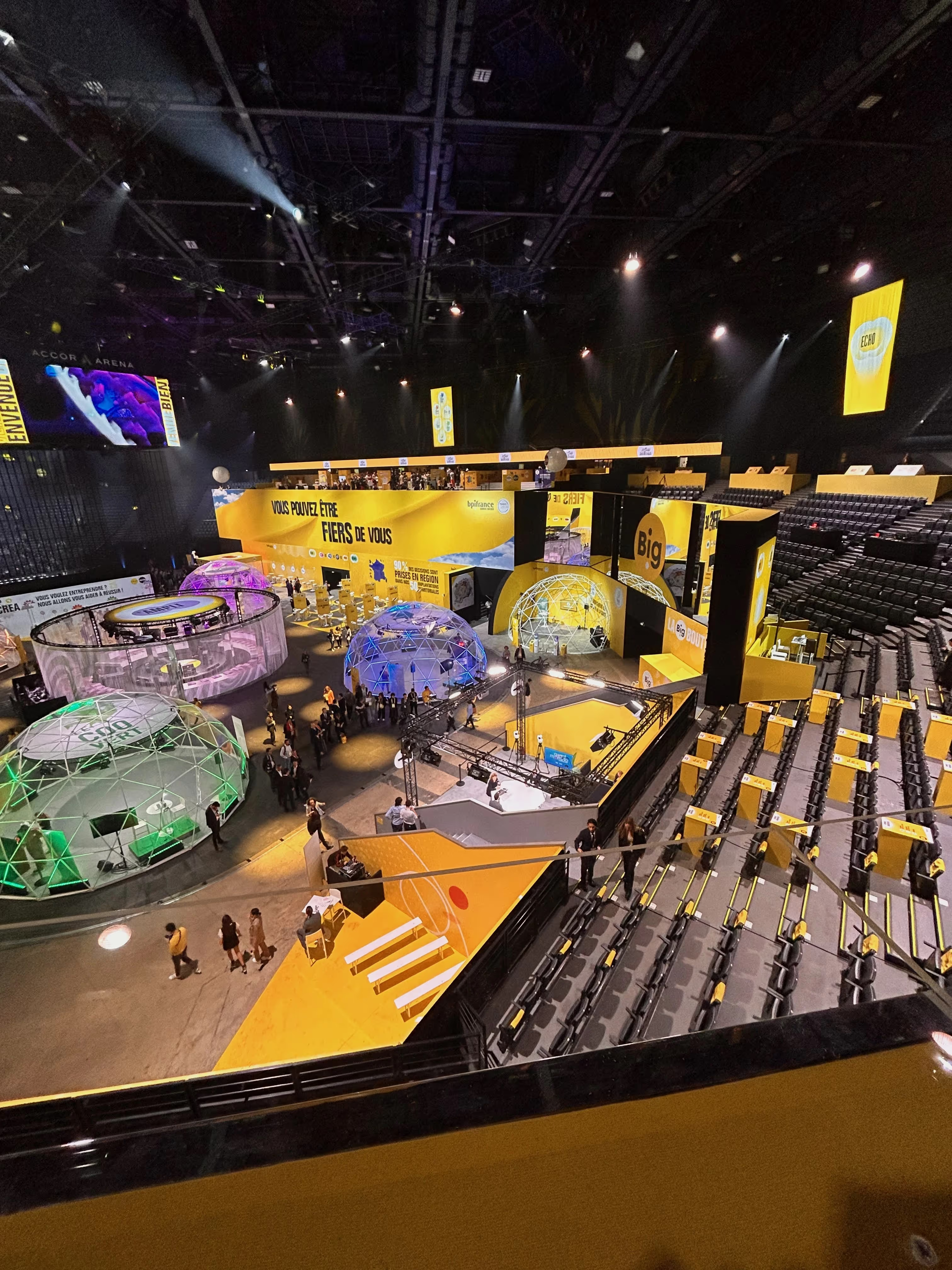
- Installations scéniques : Les concerts ou spectacles requièrent souvent des ponts lumineux complexes. Par exemple, lors d’un salon professionnel, un pont de 30 mètres a été suspendu pour supporter des écrans LED de 4 mètres et des projecteurs de 500 kg chacun.
- Adaptations aux lieux : Les salles de congrès disposent généralement de points d’accroche existants, mais ils doivent être vérifiés et adaptés. En extérieur, les structures doivent tenir compte du vent et de la météo.
Selon une étude de Plasa (2023), 55 % des riggers doivent concevoir des solutions sur mesure pour des lieux atypiques, comme des usines ou des espaces patrimoniaux, où les contraintes structurelles sont importantes.
Étapes Clés pour une Installation Réussie
Un projet de rigging se déroule en plusieurs phases, chacune cruciale pour assurer la sécurité et la qualité de l’installation.
- Analyse et conception :
- Identification des points d’accroche disponibles.
- Calcul des charges et des forces.
- Création de plans techniques en 3D pour anticiper les contraintes.
- Installation sur site :
- Montage des structures en suivant un planning précis.
- Double vérification par des techniciens certifiés.
- Tests de résistance systématiques avant l’événement.
- Supervision et démontage :
- Coordination continue pour garantir la sécurité.
- Retrait soigné des équipements pour préserver les infrastructures.
Avantages du Rigging Événementiel
Le rigging offre des solutions techniques et esthétiques adaptées à tout type d’événement.
- Optimisation de l’espace au sol : Idéal pour les lieux exigus ou les événements à forte densité de participants.
- Expérience immersive : Les équipements suspendus permettent une meilleure couverture sonore et visuelle.
- Polyvalence : Le rigging s’adapte aussi bien aux grands espaces qu’aux lieux atypiques, comme les bâtiments historiques ou les espaces en plein air.
D’après une enquête menée par Live Design (2023), 78 % des organisateurs d’événements affirment que le rigging améliore significativement l’impact visuel de leurs productions.
Checklist des Bonnes Pratiques en Rigging
Ce qu’il faut faire :
- Toujours vérifier les certifications des équipements et techniciens.
- Effectuer une analyse structurelle du lieu avant l’installation.
- Préparer un plan de prévention détaillé incluant les calculs de charge et les points d’accroche.
Ce qu’il faut éviter :
- Utiliser des équipements sans traçabilité ou certifications.
- Sous-estimer les contraintes liées au lieu (vent, plafond fragile, etc.).
- Négliger les contrôles de sécurité avant l’événement.
Le rigging événementiel est une solution technique incontournable pour les événements modernes.
Grâce à des installations aériennes sécurisées et adaptées, il garantit la réussite des productions les plus ambitieuses tout en respectant les normes les plus strictes.