.avif)
Organizing a memorable corporate event can often be a real headache, right? Here we explain the key steps and offer practical advice to make your next corporate event a real success.
The goal? To create momentum that truly brings participants together around a powerful event message. Let's take a look at how an event agency can provide you with concrete support: from choosing relevant entertainment ideas to coordinating speakers and creating memorable moments that boost employee engagement.
Define the objectives
To ensure your evening event is a success, start by clarifying your priorities with your agency. Without this clear direction, the organization risks going off in all directions, and you know that better than anyone.
Well-defined goals bring all teams together —including agencies in charge of rentals or entertainment. Let's take a concrete example: if your seminar aims to boost sales, every activity should serve that purpose.
Preparatory meetings with service providers will become more efficient, especially when it comes to coordinating venues and speakers. What's more, a good event agency will be able to translate your ambitions into measurable indicators: participation rates, quality of discussions in plenary sessions, etc.
The OKR method works well for this. Rather than remaining vague, you define concrete targets with your partners. Imagine organizing a team-building event: by setting specific objectives from the outset (number of collaborative activities or rental budget), your advice to service providers becomes more precise.
Don't forgetto involve agencies in the planning process —their expertise in facilitation and logistics will save valuable time.
One last point: always allow for some flexibility. Unexpected events during a seminar happen more often than you might think!
Select the date and location
.avif)
Caption: This table compares different types of venues for a plenary evening event, based on their advantages, disadvantages, and suitability for different types of events.
So, choosing the right venue is extremely important forthe atmosphere and active participation. A well-chosen space can completely change the group dynamic. You really need to think about how the venue will influence discussions.
For example, a coworking space may be perfect for a casual seminar, while a hotel is more suitable for formal meetings.
What's more, a good event agency will be able to suggest venues that suit your budget.
Here's a little tip: renting unique venues can really boost the impact of your event. But be aware that this requires more logistics. If you're short on time, it's best to contact agencies that specialize inevent planning. They often have valuable advice and interesting partnerships.
For large plenary sessions, remember to check the capacity and technical equipment available on site. A venue that is too small or poorly equipped can spoil the experience for speakers and guests.
Some companies now combine physical locations with remote participation—something to explore depending on your needs.
In short, whether it's for a quick meeting or a multi-day seminar, choosing the right venue is key. Don't hesitate to compare several rental options and ask event professionals for advice.
It will save you a lot of organizational headaches!
Determine the participants
For your plenary evening, you have to choose who you invite carefully. Don't forget the key people! That's the basis for ensuring the organization runs smoothly.
Here are the profiles to prioritize:
- Management: Their presence is essential to demonstrate the importance of the event and share thecompany's vision.
- Partners: Invite your key external collaborators. This strengthens relationships and opens up avenues for future projects.
- Internal teams: All relevant departments must be represented. This promotes involvement and internal communication.
- VIP clients: Their visit creates connections and can lead to concrete opportunities.
- Specialists and speakers: Their expertise brings real added value to the meeting.
For a successful plenary meeting, the balance between operational and strategic issues is key.
Good to know: some agencies offer smart tools for managing invitations. This is useful for tracking RSVPs in real time and planning venue logistics in advance.
For example, working with an event agency often makes it possible to centralize participant information, automate reminders, and manage the activity schedule.
Solutions such as Digitevent help organizers with precisely these aspects. According to feedback from the field, usingevent management software can improve the efficiency of event planning and execution—which is rather useful when planning a seminar or a large corporate event.
Some practical advice: encourage guests to RSVP online, check the capacity of your chosen venue, and always allow extra time for latecomers.
An experienced event agency will be able to guide you on these points.
Set a budget
Without a budget, you can't have a successful evening event! You have to plan for expenses.
For a large-scale event, here is how costs are generally broken down: venue rental, technical equipment (sound, lighting, video), catering, entertainment, speakers, communication, and contingencies. It is essential to allow for a safety margin— allow for 5 to 10% of the total.
The catch? Tech budgets are often poorly estimated.
Audiovisual equipment rental, high-speed internet connection, specialized event management software... Not to mention on-site support. You get the idea? In our experience, costs can sometimes exceed the budget by 5 to 10% if these details are overlooked.
For the organization of your plenary evening, an event agency can simplify the process. In Paris, for example, agencies are familiar with local costs. Managing internally gives you total control over every aspect, that's true. But working with professionals brings their expertise on complex seminars and meetings. Their advantage? Fresh ideas and turnkey solutions for businesses.
Bonus: they often negotiate favorable rates on venue rentals or equipment, which reduces the overall cost. This is a significant advantage when managing multiple activities simultaneously.
By the way, did you know that some agencies offer complete packages that include entertainment and guest management? This is handy for allowing you to focus your efforts on the content rather than the logistics.
Whether for a seminar or a large plenary session, their advice helps avoid many pitfalls.
And in terms of timing, it allows you to stay on track without overloading your teams. Something to think about if you are planning several events throughout the year!
Prepare the necessary equipment
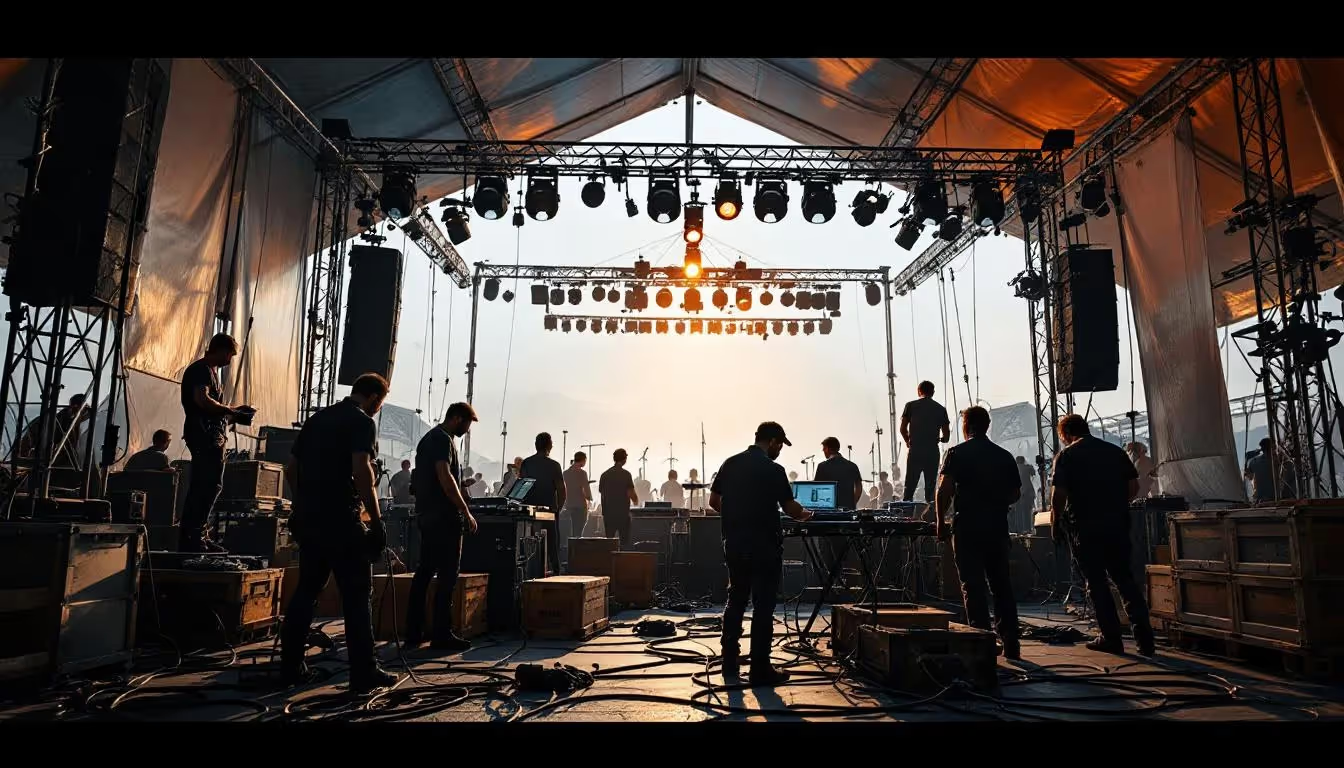
When it comes to equipment, you can't forget anything for your big event! Sound, video, visual aids —everything has to be perfect. In fact, our agency always emphasizes this point with clients renting seminar facilities.
Technical checklist: top-quality sound system, high-quality screens, working projector. Provide at least two microphones for speakers, cables in good condition, and adapters.
Okay, let's be honest: even with good organization, there is no such thing as zero risk.
During a recent conference, a power outage interrupted the keynote presentation.
Fortunately, the local agency had provided a generator and a backup version of the presentation.
The result? The guests hardly noticed the problem!
For visual aids, test them at least two hours beforehand, depending on the size of your event.
A pro tip: always keep a USB drive with the files on you.
Some event agencies even offer ready-to-use kits for this type of situation. It's worth checking them out if you often hold plenary meetings.
In terms of innovations, interactive screens and live voting work quite well to boost participation. However, be wary of overly complex fads—the most important thing is that your ideas come across clearly.
Based on our experience in event management, it is better to focus on 1-2 tools that you have mastered than to use a multitude of gadgets.
Finally, don't forget to brief the speakers on the equipment available. There's nothing worse than a speaker trying to figure out how to turn on the microphone during their presentation!
For a successful seminar, these tips apply equally to small meetings and large events.
Communicating effectively during a seminar
To make a plenary evening or corporate event a success, information sharing plays a key role. The secret? Create a dynamic atmosphere while keeping participants engaged.
To boost participation before the seminar, here are a few channels to explore:
- Targeted emails: Send practical information (program, speakers, rental locations) in an encouraging tone. Be sure to mention the planned activities to generate interest.
- Corporate social media: Launch teasers about the event, emphasizing the unique activities. A specialized agency can help you create compelling content.
- Direct calls: Contact key guests personally—this shows how important their attendance is to the organizer. Ideal for strategic meetings.
- Intranet: Centralize documents and logistical information (venues, plenary session schedules). Some agencies offer ready-to-use dedicated spaces.
- Short videos: Show clips from previous seminars or interviews with speakers. Perfect for giving a concrete overview of the planned activities.
During the event, alternate between visual aids and interactions. Event agencies often recommend using mobile kakemonos to adapt to different venues, but we prefer to use screens, LED screens, which give a less cheap result.
For plenary meetings, simple slides with key figures work well.
A good tip: always provide a space for informal discussion. This allows participants to exchange ideas between sessions. Renting a cozy lounge with light entertainment can work wonders for the atmosphere.
Finally, don't forget the post-event debriefing. Many agencies recommend gathering feedback quickly via a short questionnaire —essential for improving the organization of future seminars.
Host the celebration
To ensure your evening event leaves a lasting impression,entertainment is key. A good event agency will be able to offer you highlights tailored to your audience —a real bonus for corporate seminars!
Team building is often a must for bringing teams together when renting a dedicated venue. Escape games, connected challenges, or creative workshops... There's no shortage of options.
In fact, event planning experts are seeing growing demand for customized game shows and team challenges. A good idea? Take a look at the theme party guide for fresh ideas. It could give your next seminar a real boost.
When it comes to conferences, the choice of speakers makes all the difference. In practice, we aim for three criteria: professional expertise, the ability to engage the audience, and alignment with the company's values.
A good seminar speaker is someone whose ideas make an impact and who knows how to get a reaction from the audience.
Here's a little tip: don't hesitate to seek professional advice on combining conferences and activities. Active participation from employees often boosts the impact of the event.
And if you go through an agency, make sure they are familiar with renting specific equipment—some venues require special equipment for events.
Manage legal aspects
Don't forget the legal aspects! Authorizations, copyrights... Everything must be in order. If you are unsure, it is best to seek advice from a specialized agency.
As an organizer, you have responsibilities and must therefore be familiar with the rules for professional events.
Event insurance, for example, is mandatory to cover mishaps.
A reputable event agency will always offer you this type of contract— cancellation, damage, weather, etc. It depends on the venue and the number of guests.
Is that clear? For corporate seminars, also check the clauses relating to on-site activities.
When it comes to music and images, things get complicated. Many meetings forget to check the rights! An agency can help you choose royalty-free sounds or negotiate licenses.
For events, remember to obtain specific permissions —especially if you are filming. Advice from a pro is better than a lawsuit, right?
Last point: venue rental. Some venues require a deposit for seminars.
Check the cancellation policy and hidden fees.
An experienced event agency will be able to guide you on this, especially for large events. This avoids any unpleasant surprises after the plenary meeting!
Choosing the right format for your evening event
For your plenary event, you need to choose the right format! Between seminars, product launches, and traditional plenary meetings, specialized agencies offer a range of options. It all depends on what you want your guests to experience.
The type of event depends mainly on what the company is aiming for. Seminars work well for training teams or presenting new strategies. For a commercial coup, product launches remain essential. As for plenary meetings, they are the ideal format for sharing important information with the whole company.
Another key point: consider hybrid formats for 2024. Audiovisual service providers are seeing increasing demand for mixed events (in-person + digital). This mix makes it possible to reach more participants, especially for companies with dispersed teams.
Feedback shows that this model offers real flexibility —useful when organizing activities in several stages.
Some organizers even add virtual spaces for exchanges between speakers and guests.
In summary, the choice of format depends on your audience and the resources available.
Don't hesitate to seek advice from professional agencies to find the right balance between physical and digital participation.
Some providers offer turnkey packages that include venue rental, entertainment, and registration management. This is handy when you want to focus your efforts on the content of the event!
Set the agenda
The agenda is the backbone of your plenary event evening! A well-structured program helps keep participants engaged during meetings. Let's see how to balance everything.
For a successful plenary meeting, alternate between short presentations and interactive activities.
For example: 20 minutes of pitching, then questions and answers before the break. It should be noted that cognitive overload occurs when too much information is sent at once. The trick? Simplify the content with clear visuals.
In fact, it can be useful to use tools such as Miro for seminars.
For teamwork, opt for collaborative tools such as Google Drive or Asana. These solutions, which are very popular in the events industry, allow you to modify the program live with all stakeholders. Did you know that Microsoft Teams has helped digitize businesses? But be careful not to overload guests with too much material!
Finally, don't forget to allow for breaks. A well-run event needs breathing space between sessions. Some agencies specializing in venue rental emphasize the importance of relaxation areas.
This allows companies to streamline meetings without exhausting their teams.
Comparative
To find the event format that suits your company, there's no secret: you have to weigh the pros and cons. The size of the company, the challenges, the budget, and logistics all come into play.
A specialized agency can guide you in making this choice.
The thing is, each option has its advantages. Take seminars, for example: they're perfect for team building, but they require a lot of organization. That's where an event agency comes in handy—they handle the venue rental, equipment, and all the technical aspects. For plenary meetings, the cost depends mainly on the number of participants.
In terms of budget, team-building activities remain affordable, especially if you focus on local activities.
On the other hand, a product launch requires more resources.
Here again, a good agency will know how to strike the right balance between impact and cost. And when it comes to participation, there's nothing better than an unusual venue or speakers who leave a lasting impression.
.avif)
Caption: This table provides a basis for comparing the main event formats. Useful for discussions with your agency or collaborators.
Please note: I cannot stress this enough, but advice from an event planning professional often makes all the difference when it comes to practical details.
Successful event planning is primarily a matter of common sense: clearly defined objectives, a venue that suits the project, and activities that engage the teams.
Rather than striving for perfection, aim for collective acceptance —that's often what sticks in people's minds.
Consider this: a successful plenary evening is not measured by the number of special effects, but by the energy shared among colleagues.
Where some companies are still hesitant, your company could lead the way... Provided you act without delay.
So, when do we start?