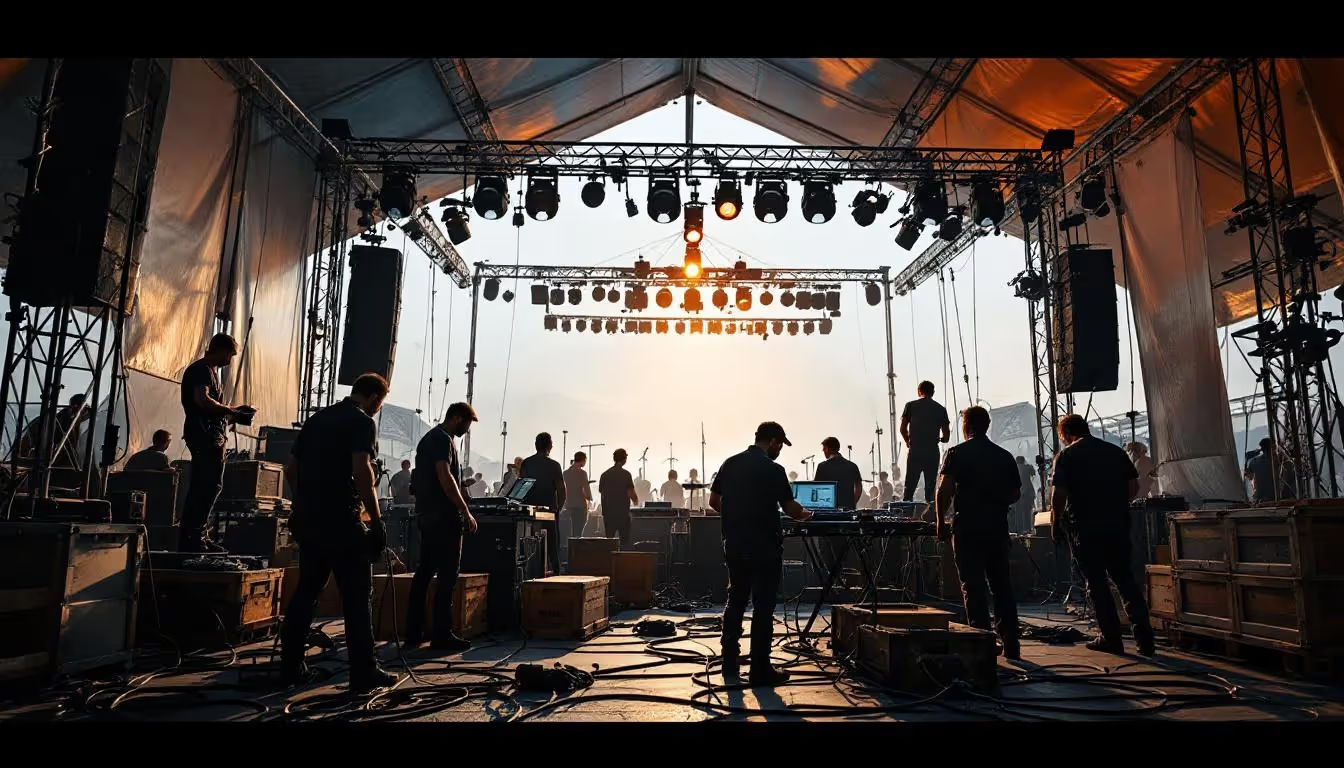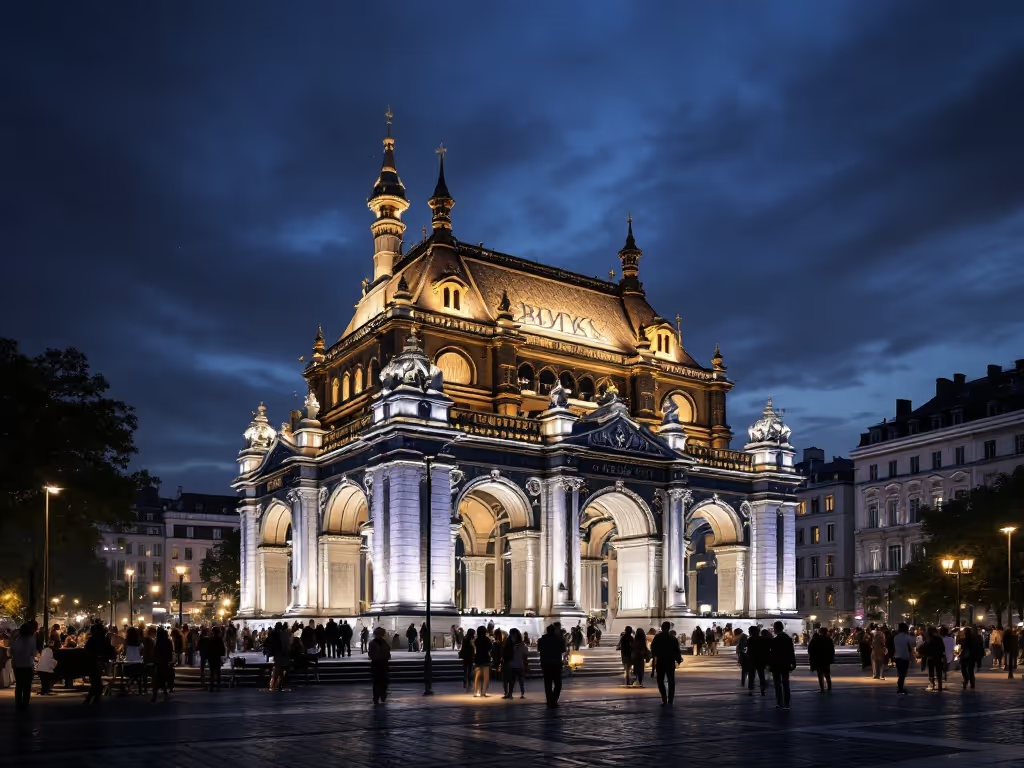
Vous en avez assez de voir votre bâtiment disparaître dans la nuit, sans aucun caractère ? L'éclairage architectural pourrait bien changer la donne.
Ce guide pratique vous montre comment réussir votre projet lumineux : du choix des projecteurs LED à la maîtrise des couleurs RGBW, en passant par les réglages pour un confort visuel adapté.
On vous explique aussi comment jouer avec les lumières pour une mise en valeur espace qui fait ressortir l'esthétique bâtiment.
Bonne nouvelle : vous trouverez ici nos comparatifs de produits et luminaires, avec des retours concrets de professionnels !
Éclairage d'accentuation
L'éclairage d'accentuation, c'est une solution essentielle en architecture. Ce type de projecteur LED permet de mettre en valeur des éléments précis.
Son but ? Diriger le regard et créer des contrastes visuels percutants.
Dans le domaine de l'architecture, quels éléments tirent le meilleur parti de ces projecteurs RGBW ? Voyons comment optimiser leur utilisation avec les dernières LEDs.
L'arrivée des LEDs modernes a vraiment changé la donne pour les projecteurs d'accentuation. Ces appareils compacts proposent désormais une gestion précise des couleurs RGB et blanc.
Parlons réglages : l'intensité lumineuse et la température de couleur s'ajustent au millimètre. Et côté fixation, les options sont multiples pour s'adapter à chaque situation.
Un point clé ? La qualité de la lumière qui reste cohérente même avec un zoom poussé. Ces produits se contrôlent facilement en DMX pour les pros, tout en restant accessibles au grand public.
Éclairage d'ambiance
L'éclairage d'ambiance joue un rôle clé dans la mise en valeur des volumes architecturaux. Pour un rendu optimal, mieux vaut mixer lumière diffuse et zones d'ombre.
Ce type d'éclairage détermine l'atmosphère d'une pièce.
- Chambres à coucher : On opte pour des projecteurs compacts à fixation murale. Leur lumière douce permet de créer une ambiance relaxante.
- Salons : Les spots RGBW font des merveilles ici. Ils permettent de jouer sur les couleurs tout en mettant en valeur un tableau ou un élément architectural.
- Éclairage connecté : Les projecteurs DMX entrent en jeu. Disponibles en version RGB ou blanc réglable, ils s'adaptent à toutes les ambiances.
- Solutions intelligentes : Certains produits combinent LEDs compactes et contrôle DMX. Noir ou blanc, ces projecteurs architecturaux s'intègrent discrètement tout en offrant des possibilités créatives. Leur fixation universelle simplifie l'installation.
- Lampes à poser : La gamme inclut désormais des modèles RGB compacts. Disponibles en plusieurs couleurs de boîtier (noir métallisé, blanc mat), elles ajoutent une touche design tout en restant fonctionnelles.
Au final, le bon mix entre projecteurs LED, couleurs maîtrisées et produits adaptés à l'architecture transforme n'importe quel espace.
Léchage de murs
Le léchage de murs, c'est cette technique qui éclaire uniformément les surfaces verticales. Particulièrement utile pour agrandir visuellement les espaces, voyons comment l'optimiser.
Le choix des projecteurs devient alors déterminant pour le résultat final.
Avec les rubans LED encastrables, on obtient des solutions discrètes. Ces produits permettent une installation électrique simple, mais attention : comment assurer une répartition homogène sans éblouissement ?
La qualité des LEDs joue ici un rôle clé. Pour les projets d'architecture, les versions compactes avec fixation ou zoom offrent des options intéressantes au prix raisonnable.
Gestion de l'éclairage LED
On vous présente ici un comparatif des systèmes de contrôle lumière pour projecteurs LED. Ces produits répondent à différents besoins en architecture d'intérieur ou extérieure.
Bon à savoir : Ce tableau compare les prix et caractéristiques techniques des produits LED pour l'architecture.
Aujourd'hui, . Comment intégrer ces systèmes dans une architecture existante ?
Projecteurs à LED
Les projecteurs à leds se révèlent indispensables pour l'éclairage architectural, combinant efficacité énergétique et créativité. Leur polyvalence intérieur/extérieur fait clairement la différence. Quel angle de zoom privilégier selon les applications ?
Prenons l'exemple des spots compact blanc ou noir : leur fixation discrète s'adapte à tous les projets.
Pour l'installation, le rail ou la fixation murale simplifient la mise en œuvre. Côté étanchéité, le produit doit impérativement répondre aux normes extérieures - un point crucial pour la sécurité électrique.
Bonne nouvelle : les gammes existantes propose des options adaptées, avec des prix maîtrisés même pour les systèmes complexes. Ces produits au design compact trouvent leur place partout, des façades aux détails architecturaux.
Rubans LED
Les rubans LED offrent une solution flexible pour des éclairages linéaires sur mesure. On les retrouve souvent intégrés dans des profils aluminium, surtout en architecture d'intérieur. Mais le vrai choix se pose sur la densité des LEDs ?
Tout dépend de l'intensité lumineuse voulue pour votre projet.
Avec les versions RGBW et RGB, ces produits permettent des jeux de couleurs dynamiques. Pour contrôler les transitions, le DMX reste incontournable - surtout en scénographie. Signalons que le blanc chaud ou froid s'intègre aussi bien que les couleurs vives dans les structures architecturales.
Côté fixation, prévoyez un transformateur adapté selon la longueur installée.
Effets visuels architecturaux
Les techniques pour jouer sur la perception des espaces jouent un rôle clé dans les projets d'éclairage. Les projecteurs à LEDs redessinent les volumes et façonnent des ambiances uniques. Quelques options se distinguent pour souligner les reliefs et renforcer l'esthétique des bâtiments.
Prenez l'exemple d'un musée récent : leur installation combine des projecteurs avec un système DMX. Résultat ? Une mise en valeur mesurable des œuvres.
Pour le confort visuel, le choix des températures de blanc fait toute la différence. D'ailleurs, certaines approches s'inspirent directement des techniques événementielles, surtout pour les effets de couleur et de zoom. Ces solutions architecturales exploitent intelligemment le potentiel des LEDs RGB, avec des fixations discrètes qui préservent les lignes pures.
Chez Mvision par exemple, ils proposent justement une gamme de produits adaptée aux contraintes électriques et budgétaires. Leur catalogue inclut des projecteurs, disponibles en version fixe ou orientable.
Un bon point de départ pour des projets où le prix doit rester maîtrisé sans sacrifier la créativité.
Intégration 3D
Les logiciels de simulation prévisionnelle deviennent incontournables pour l'éclairage architectural. Ces outils permettent de modéliser en 3D et d'anticiper le rendu des projecteurs LED. En pratique, on ajuste les paramètres pour obtenir un éclairage architectural réaliste.
Travailler main dans la main entre architectes et concepteurs lumière, c'est la clé. Le défi ? Trouver le juste équilibre entre technique et créativité.
Par exemple, le choix des spots influence autant l'ambiance que l'esthétique du bâtiment. Signalons qu'une bonne fixation et le câblage électrique prévu dès le plan 3D évitent bien des soucis sur le chantier.
Question prix, les solutions restent intéressantes pour les projets exigeants.
Normes et sécurité
Pour les installations fixes d'éclairage architectural, les normes électriques sont strictes. On doit se renseigner sur les certifications obligatoires - les projecteurs LED pour espaces publics nécessitent notamment le marquage CE.
Côté technique, la gestion de la chaleur dans les projecteurs compactes est primordiale. Pour la fixation, privilégiez les matériaux résistants aux variations thermiques.
Tendances et innovations
Les matériaux luminescents et les surfaces interactives font partie des dernières nouveautés en éclairage architectural. Qu'est-ce qui ressort en 2024 pour transformer la conception lumière ?
Du côté des systèmes intelligents, l'IA s'intègre progressivement dans les projecteurs architecturaux. Ces produits permettent notamment d'automatiser les ambiances tout en gardant une consommation électrique maîtrisée. Comment ça marche ? En ajustant dynamiquement l'intensité des leds selon l'occupation des espaces.
Pour les pros, cette technologie reste disponible à prix abordable, surtout dans les gammes compactes DMX. Signalons au passage le zoom optique qui se généralise sur les spots récents, simplifiant la fixation sans travaux électriques lourds.
Comparatif
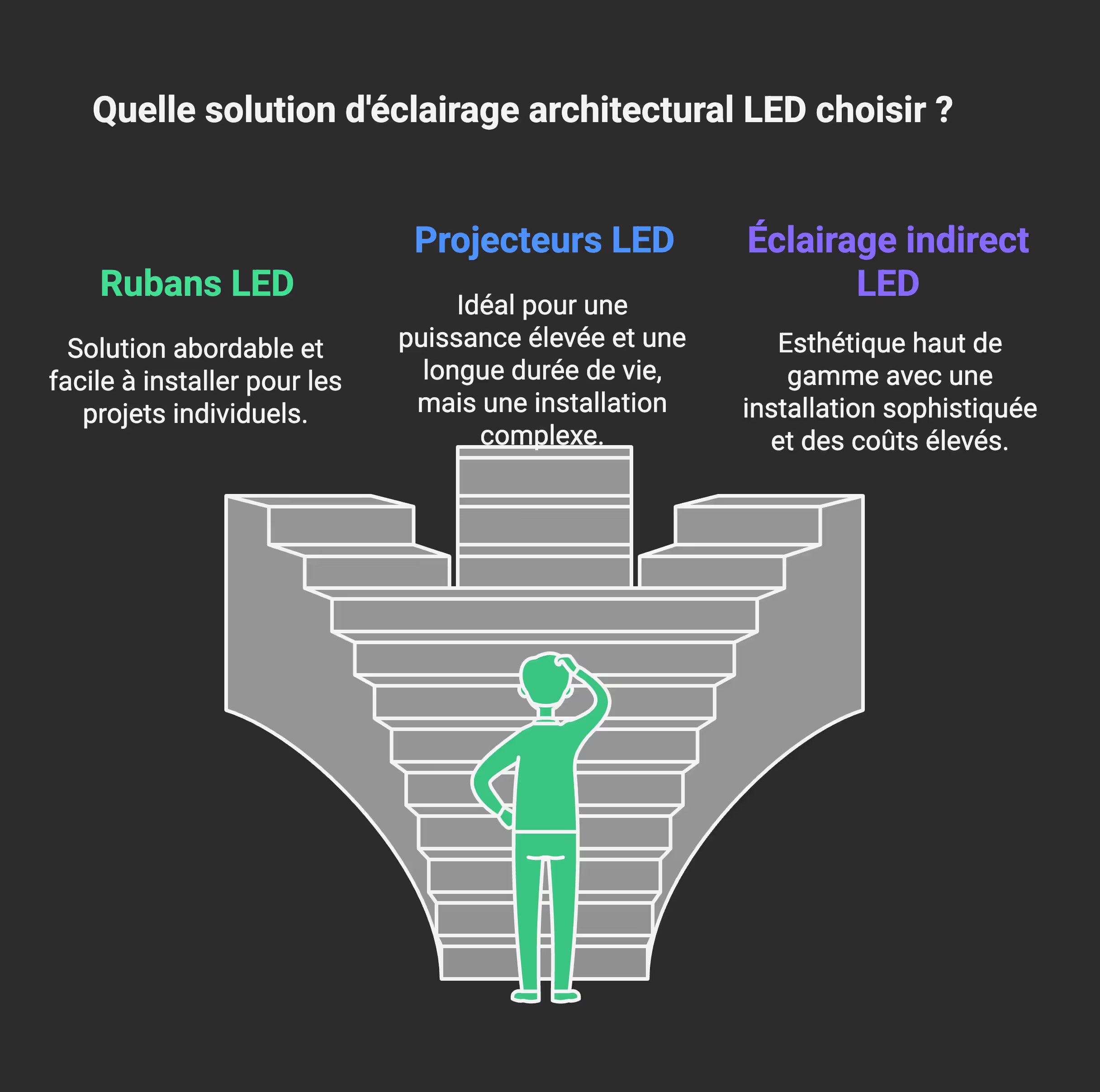
Choisir la bonne solution d'éclairage architectural dépend surtout de votre budget et de l'usage prévu. Il faut surtout identifier ce qui compte pour votre type de bâtiment. Les prix varient pas mal selon les produits et les gammes disponibles. Pour un particulier qui veut éclairer son intérieur, des rubans LED suffisent souvent.
Par contre, un pro préfèrera des projecteurs LED plus performants - d'ailleurs, ces modèles existent en noir ou en blanc selon la fixation nécessaire.
Les architectes, eux, misent souvent sur l'éclairage indirect : c'est plus cher au départ, mais ça offre plus de souplesse pour jouer avec les couleurs.
Voici comment se positionnent les options LED sur le marché :
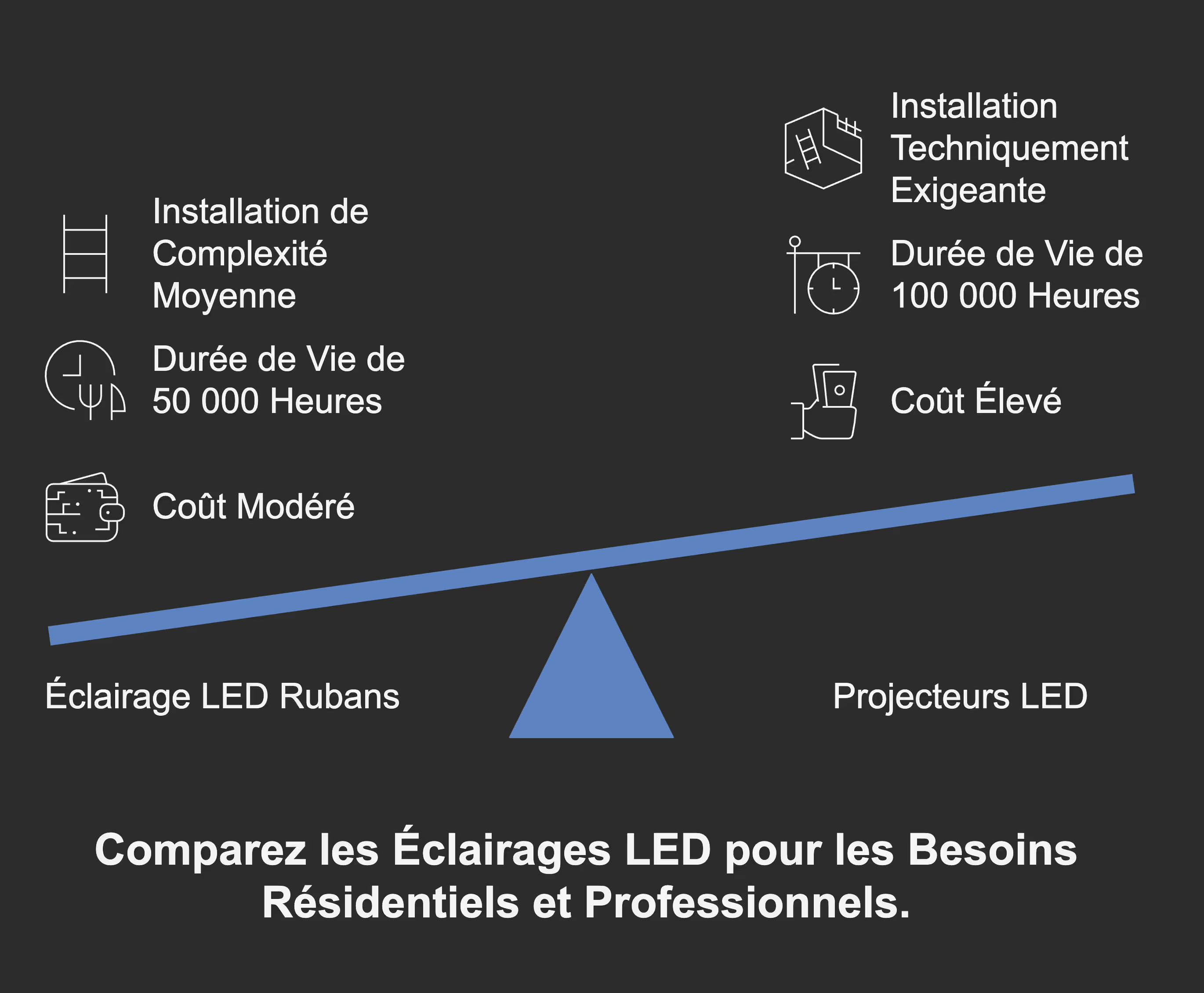
Note : Ce tableau donne un ordre d'idée des prix et de la durée de vie des produits LED. Les € indiquent une fourchette de coût relative. La durée de vie dépend de l'utilisation réelle.
Pour l'installation, prévoyez le matériel adapté.
Les gammes pro avec gestion DMX demandent généralement plus d'expertise.
L'éclairage architectural, c'est l'art de révéler les espaces, d'améliorer le confort visuel et de composer avec la lumière. Voyez plutôt nos projecteurs LED et luminaires pour insuffler une âme à vos projets.
Ne tardez pas : demain, l'esthétique bâtiment s'appuiera sur une conception lumière rigoureuse et une mise en valeur espace vraiment maîtrisée.