Eco-friendly event: zero waste tips
Does organizing an eco-friendly event seem complicated given the challenges associated with carbon footprints, waste, and resources? This article offers 30 practical ideas for addressing environmental issues in event planning, covering accessible venue choices, paper reduction, renewable resource management, and energy-efficient technologies. With recognized expertise, discover tailored solutions that combine performance with controlled environmental impact, while ensuring quality and precision in the organization.
Choose a location that is accessible by public transportation.
Transportation of participants accounts for a significant portion of an event's carbon footprint. A venue that is easily accessible by public transportation reduces the need for private cars, thereby limiting CO2 emissions. Multimodal access is part of an eco-responsible approach, optimizing the overall environmental impact.
Prioritizing public transportation reduces carbon footprint. According to ADEME, trains emit approximately 14 g of CO2e per kilometer, compared to 104 g for cars. These alternatives reduce air pollution and road traffic, strengthening the organization's ecological consistency.
The general management team is involved in the technical analysis of a site. Their expertise includes checking multiple access points, the availability of transportation networks, and assessing any obstacles that could limit accessibility for all participants.
Technical solutions can be implemented to compensate for any shortcomings at a given location. Electric shuttles can connect train stations to sites, temporary facilities such as removable ramps can be installed, and technical aids can be put in place to ensure universal accessibility.
To identify committed locations, refer to the Eco-Committed Event Label (EEE), which guarantees a structured approach to the circular economy. The ISO 20121 standard also defines an international framework for responsible events, incorporating accessibility criteria.
Limiting paper communication for a sustainable event
Paper-based communication generates waste and consumes resources during its manufacture. According to ADEME, recycled paper requires 40% less energy to produce and has three times less impact on water resources. These figures are prompting organizers to seek alternative solutions to reduce their carbon footprint.
Digital events offer innovative tools to replace physical media. Invitation management platforms, interactive mobile applications, and videoconferencing interfaces enable seamless communication without printed materials, with simplified handling for participants.
- Online invitation platforms: Replace postal mailings with personalized digital invitations with open tracking.
- Dedicated mobile applications: Centralize all event information in a downloadable application.
- Electronic badges: Use scannable digital badges for access to areas.
- Dynamic QR codes: Integrate smartphone-readable codes to access detailed content.
- Virtual trade shows: Recreate the physical experience with interactive booths and live videoconferencing.
When printing is essential, prioritize recycling and vegetable-based inks. FSC-certified paper and vegetable-based inks guarantee sustainable forest management. Vegetable-based inks made from soybean oil limit toxic compounds, with a biodegradability rate of over 90%.
Print optimization involvesdouble-sided printing and the use of eco-designed fonts that reduce ink consumption. A weight of 90 g/m² is sufficient for 80% of event-related uses. Digital tools can be used to remove unnecessary elements before printing, thereby limiting waste.
Reducing paper-based communication generates 30% savings on production costs. Digital solutions are part of a circular economy approach, with a carbon footprint that is half that of traditional media. Operational efficiency is enhanced by immediate traceability of interactions.
Promote the use of public transportation and carpooling
Events generate 29.5% of transport-related emissions. The Tour de France emits 341,000 tons of CO2 annually, partly due to spectator travel. Optimized mobility management reduces these figures by incorporating proven technical solutions for organizers.
Financial incentives stimulate sustainable transport. The sustainable mobility allowance (up to €900/year) opens up economic opportunities. These mechanisms integrate financing criteria into the overall budget, with a measurable return on investment through reduced emissions.
International logistics guide the selection of eco-responsible partners. Agreements with operators include electric shuttles or SNCF discounts, as with We Love Green, for enhanced accessibility at no extra cost.
Event-based carpooling platforms, such as Togetzer and Caroster, make travel easier. These tools include secure booking, intermodality with public transportation, and traffic flow analysis for strategic locations.
Communication on sustainable transport is delivered via digital tools and visual media. Mobility apps, social media, and on-site signage guide participants toward clear solutions, ensuring targeted dissemination and measurable impact.
Partnerships with mobility operators are based on concrete commitments. SNCF discounts for teams, electric shuttles, and shared season tickets are examples of these collaborations, which incorporate carbon reduction targets into the specifications.
The evaluation of initiatives is based on specific indicators. The rate of use of sustainable transport, the reduction in CO2 emissions, and participant satisfaction measure effectiveness, with tools such as AdScore studies to validate the impact of the measures.
Incorporate environmental criteria into the selection of technical services
Definition of essential environmental criteria for the evaluation of technical service providers
Environmental criteria guide the choice of technical suppliers. The team has a thorough understanding of requirements relating to energy consumption, carbon emissions, and reused materials. These elements shape calls for tenders for eco-responsible services in professional events.
Analysis of energy-efficient lighting solutions
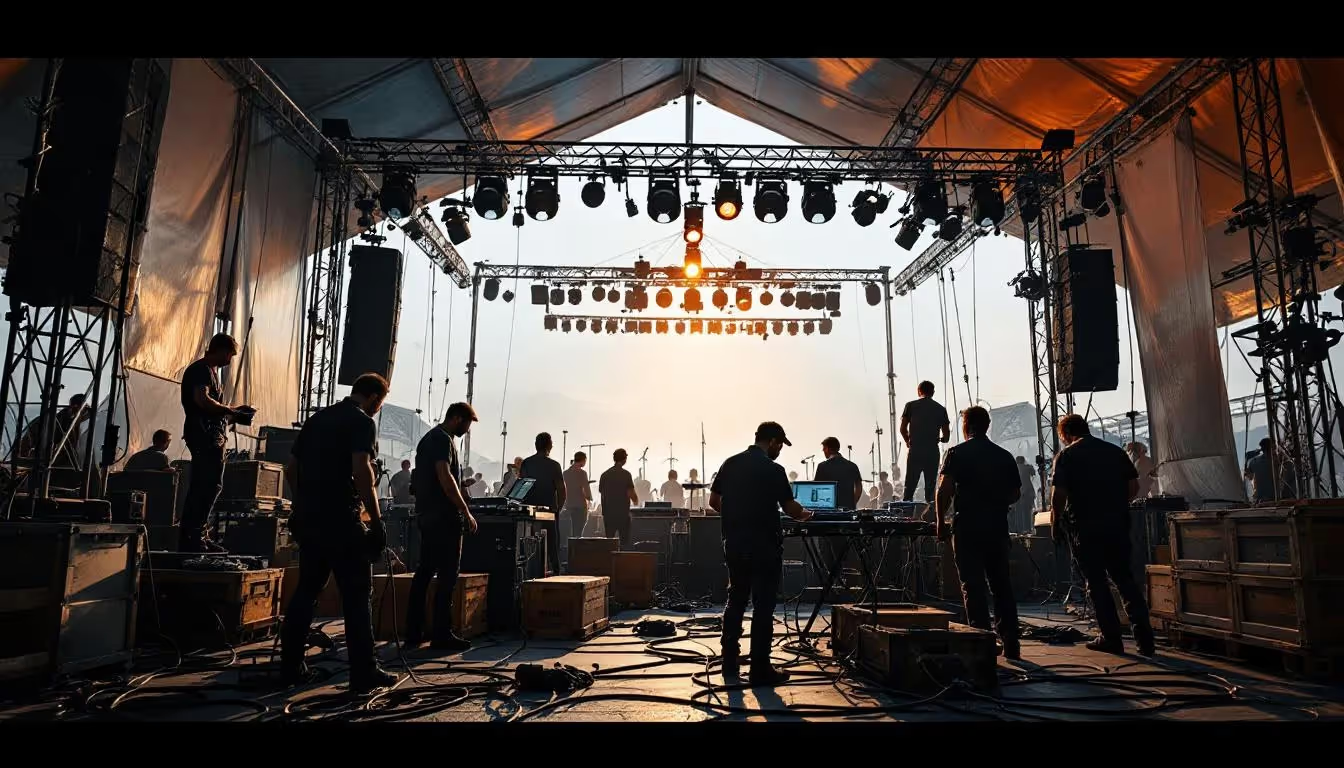
LED lighting systems reduce energy consumption. Their efficiency is in line with sustainable development principles, offering extended service life and a rapid return on investment. These technologies optimize resources while ensuring professional lighting for demanding stage designs.
Evaluation of low-energy sound systems
Class D speakers offer excellent value for money. Their efficiency of over 90% limits energy requirements without compromising sound quality. These systems combine acoustic performance and energy efficiency, with proven technologies for large-scale events.
Selection of modular and reusable stands for sustainable scenography
The modular structures made of aluminum and FSC wood can be reused for several editions. They are designed to be assembled without glue or screws, making them easy to dismantle and store. These stands combine high aesthetic standards with low environmental impact, and are manufactured locally.
Integration of smart energy management technologies
Modern audiovisual technologies incorporate energy management systems. These technologies monitor consumption in real time, adjust lighting according to occupancy, and optimize energy flows. Operational responsiveness is combined with environmental performance in the comprehensive management of technical systems.
Adopt the ISO 20121 standard to structure your technical criteria. This international framework guides the development of rigorous specifications, incorporating best practices in energy, waste, and mobility. Precise indicators ensure that commitments are monitored.
Eliminate disposable items and focus on renewable resources
Single-use items generate 2.5 tons of waste during an average event attended by 5,000 people. Plastic bottles, disposable cups, and plastic cutlery account for 30% of event waste, with 30,000 tons of disposable cups used annually in France.
A reusable tableware system requires professional dishwashers for cleaning, eco-friendly washing products, and dedicated storage space. Praloc uses cycles at over 100°C to guarantee hygiene with a residual bacteria rate of less than 0.001%.
The deposit system is organized around strategic distribution and return points. Personalized cups come with a deposit of €1 to €2, which is refunded upon return. Ecocup and Greencup manage logistics with dedicated teams and strict washing procedures.
- Reusable tableware: Replace disposable cutlery with washable stainless steel, glass, or ceramic tableware to reduce waste.
- Returnable cups: Introduce a system of reusable cups with a deposit to encourage their return and reduce carbon impact.
- Biodegradable materials: Choose stainless steel or bamboo straws, cloth napkins, and compostable containers for catering.
- Recycled or plant-based paper: Use printed materials made from recycled fibers or renewable materials such as hemp or cotton.
- Modular stands: Choose demountable and reusable exhibition structures made of aluminum or FSC wood for sustainable scenography.
Plant-based decoration offers bio-based alternatives for scenography. Materials such as compact cardboard or FSC wood offer an original aesthetic while limiting environmental impact, with a transparent and responsible supply chain.
Impact is measured by tracking the amount of waste avoided and the reuse rate of equipment. Indicators such as the weight of waste per participant (below 0.5 kg) or the percentage of deposits returned (above 90%) assess the effectiveness of anti-disposable measures throughout the entire event cycle.
Environmental challenges require a change in event practices. Prioritizing accessible venues, limiting waste, and opting for sustainable transportation are appropriate solutions. An eco-responsible approach, supported by recognized expertise, reduces the carbon footprint while strengthening the organization's credibility. Taking action today guarantees a lasting positive impact.