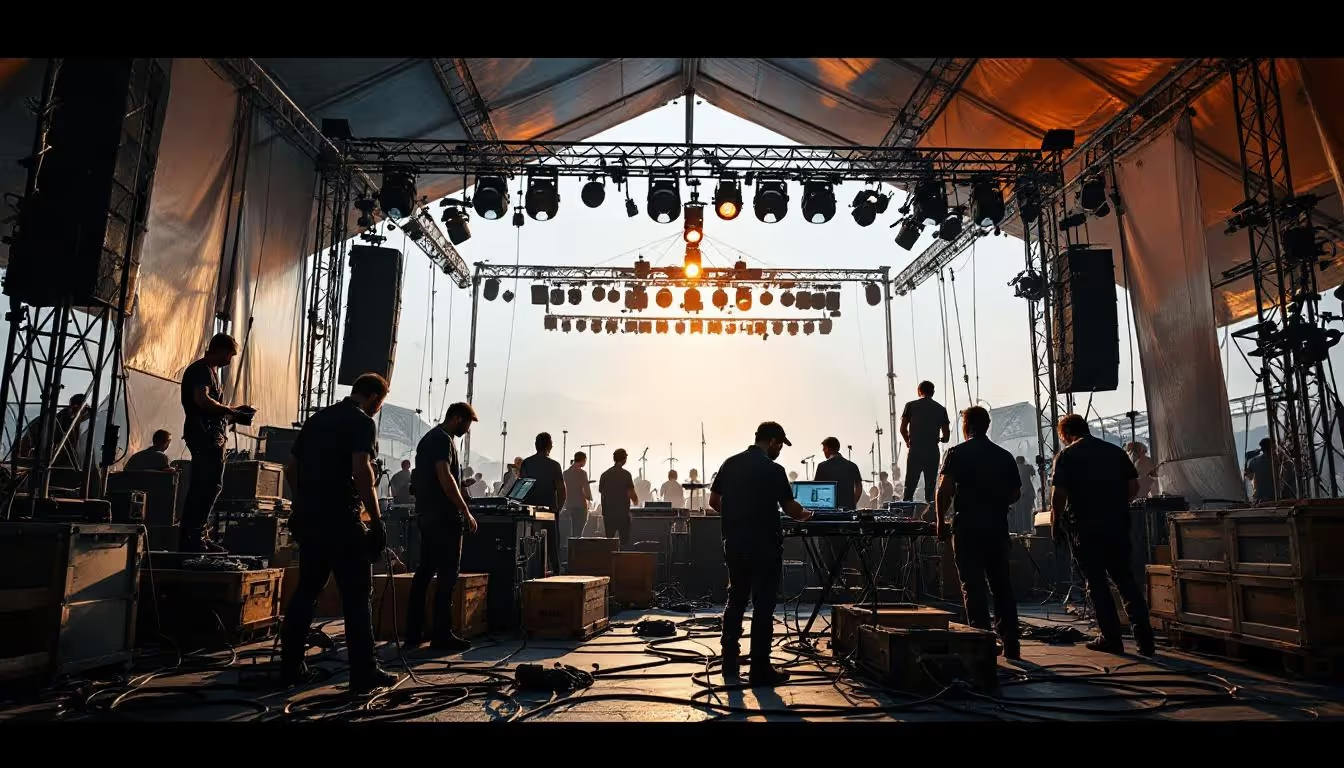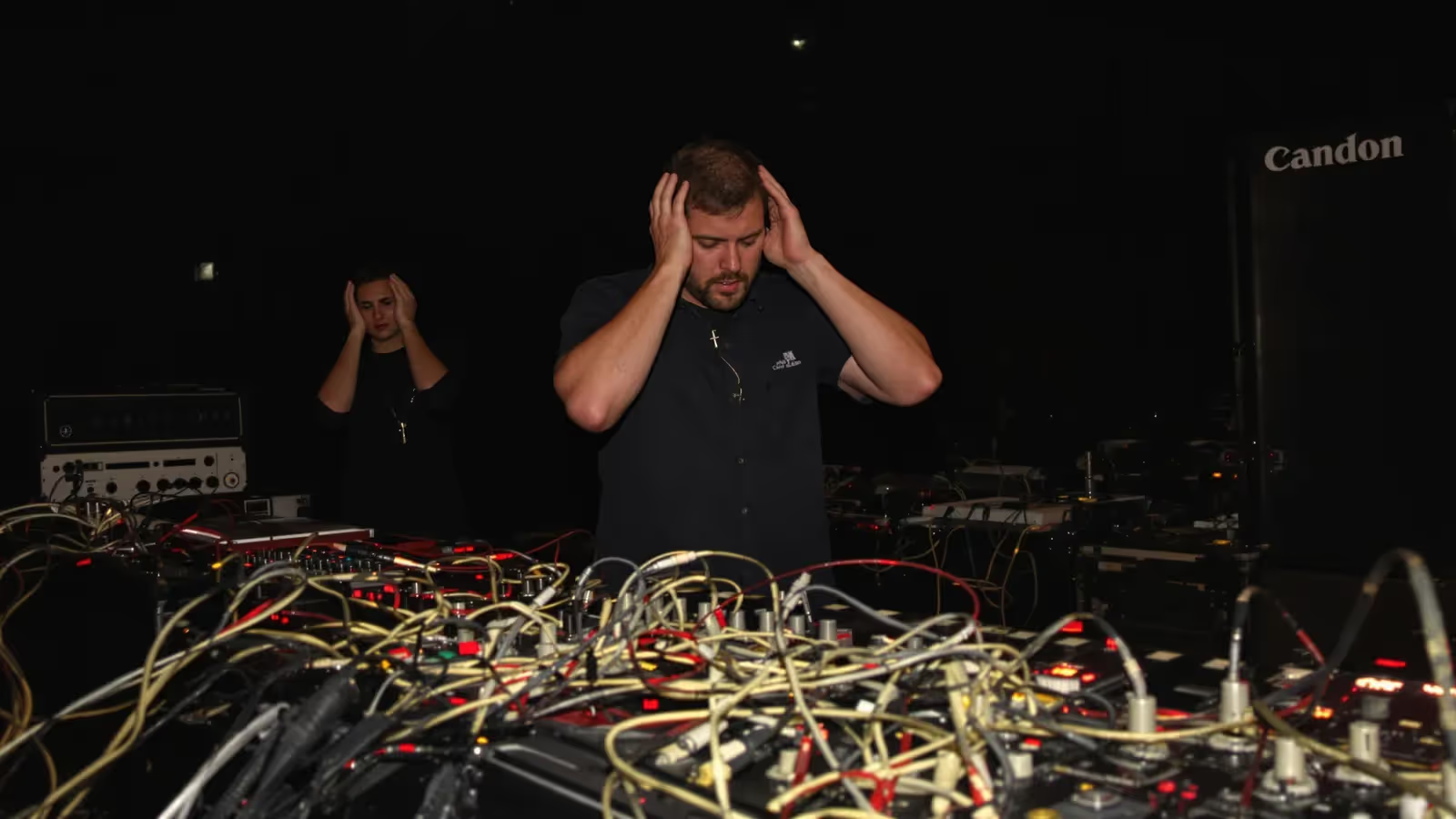
Organiser un événement et se retrouver avec une sono qui déconne, c’est le meilleur moyen de gâcher l’ambiance. On a tous vu des conférences inaudibles ou des concerts gâchés par des larsens qui piquent les oreilles.
Dans cet article, on décrypte les 5 erreurs de sonorisation les plus fréquentes – du mauvais choix de matériel aux tests bâclés.
Et surtout, on vous donne nos astuces pour garantir une qualité sonore pro sans vous ruiner. Parce qu’une bonne sono, ça s’anticipe !
Mauvais choix du matériel
Voici des exemples concrets de matos à éviter selon votre événement :
- Câbles audio basse qualité pour les mariages - risque de parasites pendant les échanges
- Enceintes passives non adaptées aux conférences - nécessitent un ampli séparé
- Micros omnidirectionnels en milieu bruyant - captent tous les sons environnants
- Systèmes de diffusion vidéo surpuissants pour des petites salles - déséquilibre sonore
- Tables de mixage complexes pour événements simples - risque d'erreurs de réglage
Un bon réflexe : toujours croiser les caractéristiques techniques avec le type d'événement et l'espace disponible. Comme on le voit dans notre guide des techniques audiovisuelles, le matériel sous-dimensionné donne un son faible ou saturé.
Pour calculer la puissance nécessaire, comptez 5 watts RMS par personne en intérieur. En extérieur, prévoyez plus car le son se disperse.
Négligence de l'acoustique
La réverbération qui traîne dans une salle mal préparée, c'est le meilleur moyen de rendre les discours incompréhensibles. On pense souvent aux enceintes mais pas aux murs qui renvoient le son n'importe comment.
Pour les gros événements type sportifs, notre retour d'expérience sur l'optimisation acoustique des événements sportifs montre qu'il faut mixer traitements muraux et positionnement stratégique des enceintes. Budget moyen : comptez 20-40€/m² pour une insonorisation correcte.
Erreurs de branchements
Un câble mal branché peut couper le son en plein discours. Pour sécuriser l'installation, faites un check complet 1h avant avec des câbles de rechange.
Contre les larsens, placez les micros derrière les enceintes et utilisez des modèles cardioïdes. Gardez sous la main un égaliseur graphique et un processeur anti-larsen.
Comme expliqué dans notre guide sur la sélection des prestataires, un bon technicien vérifie toujours l'absence de boucles de masse.
Surabondance de micros
Mettre 10 micros sur scène alors que trois suffisent, c'est la garantie d'avoir des interférences. Les problèmes de phase apparaissent quand les signaux se chevauchent. La solution ? On utilise des micros directionnels et on coupe ceux qui ne servent pas.
Pour les gros événements type cérémonies sportives, notre méthode dans les productions à grande échelle montre qu'on peut remplacer 4 micros filaires par un système sans fil avec antennes diversifiées.
Les micros serres-tête sans fil fonctionnent bien pour les discours en mouvement.
Manque de tests préalables
Les réglages à l'arrache donnent souvent un son boueux ou des larsens imprévus.
La check-list minimale : vérifier chaque câble, tester tous les micros en conditions réelles et prévoir 2 jeux de câbles de rechange. 80% des soucis techniques viennent de tests bâclés.
Pour les événements en extérieur, on fait des simulations avec du faux public pour tester la portée sonore. Notre méthode dans la gestion de régie technique inclut un protocole pour gérer les vents forts ou les changements de température qui détraquent le matériel.
Comparatif
Choisir sa solution technique, c'est comme composer un menu : on mixe événement, lieu et budget. Pour une petite conférence, un système plug-and-play à 300€ fait l'affaire. Pour un concert de 500 personnes, prévoyez plutôt 1500-2000€ de location pro.
Notre article sur la régie technique événementielle détaille comment arbitrer entre ces options selon vos contraintes. Le bon choix dépend toujours du rapport qualité/urgence/budget.
On retient l'important : choisir du matériel adapté à la taille de l'événement, tester son setup et éviter la surcharge de micros. Pour votre prochaine sonorisation, appliquez ces solutions simples dès la planification.
Vous gagnerez en qualité sonore et sérénité le jour J – le public sentira la différence.
Vous pouvez aussi consulter notre page sur la sonorisation événementielle !