Outdoor stage lighting: pro tips
Organizing an outdoor event and struggling with lighting that can't cope with the vagaries of the weather?
We've all been there. Let me explain how to choose the right stage equipment —LEDs, Fresnel spotlights, DMX management—to transform any outdoor space into a professional stage.
You'll discover tips for creating a crazy atmosphere while managing technical constraints without getting stressed out.
The basics of outdoor stage lighting
Choosing the right equipment
For outdoor events, we rely on waterproof LED projectors (minimum IP65) that can withstand the rain.
Fresnel lights are ideal for front lighting and soft ambience, while motorized moving heads allow for dynamic effects. DMX remains essential for controlling multiple devices at the same time.
Key criteria for projectors suitable for outdoor events:
- High IP rating (minimum IP65) to withstand harsh weather conditions
- Light output adjustable according to the size of the area to be covered
- LED technology for energy savings and color variations
- RGB/RGBW options to create a variety of color atmospheres
- Robust structure with anti-corrosion materials for intensive use
LEDs consume up to 80% less energy than halogen lights. Perfect for long shows without breaking the bank on electricity. They have a lifespan of up to 50,000 hours—a game changer for permanent installations.
Don't forget the accessories: colored filters to change the hues, zooms to adjust the beams. A well-adjusted moving head can switch from a tight spot to a wide wash in seconds.
Convenient for adjusting lighting live during the event.
Managing technical challenges
The sun beating down during the day? We compensate with spotlights of at least 300W. In the evening, we lower the intensity to avoid glare. LEDs offer good performance even under a full moon, but you need to have dimmers to adjust in real time.
Cable organization becomes important outdoors. Waterproof sheaths are used and everything is secured to the ground with double-sided tape.
For more information, see our page on audiovisual techniques. Allow for 30% more cables than you would indoors—distances are often greater.
Regular maintenance extends the life of the equipment. Clean the lenses after each use and check the seals every month. Store the projectors in dry cases— moisture remains the number one enemy of electronic circuits.
Collaborate with professionals
Working with a professional lighting technician saves time. They know the tricks of the trade to maximize visual impact while complying with standards.
Their experience helpsavoid common pitfalls such as annoying shadows.
The creative brief must be extremely precise: site plan, number of artists, desired atmosphere. Plan for at least two technical meetings on site to adjust the placement of the spotlights.
Rigorous project management prevents unpleasant surprises on the big day.
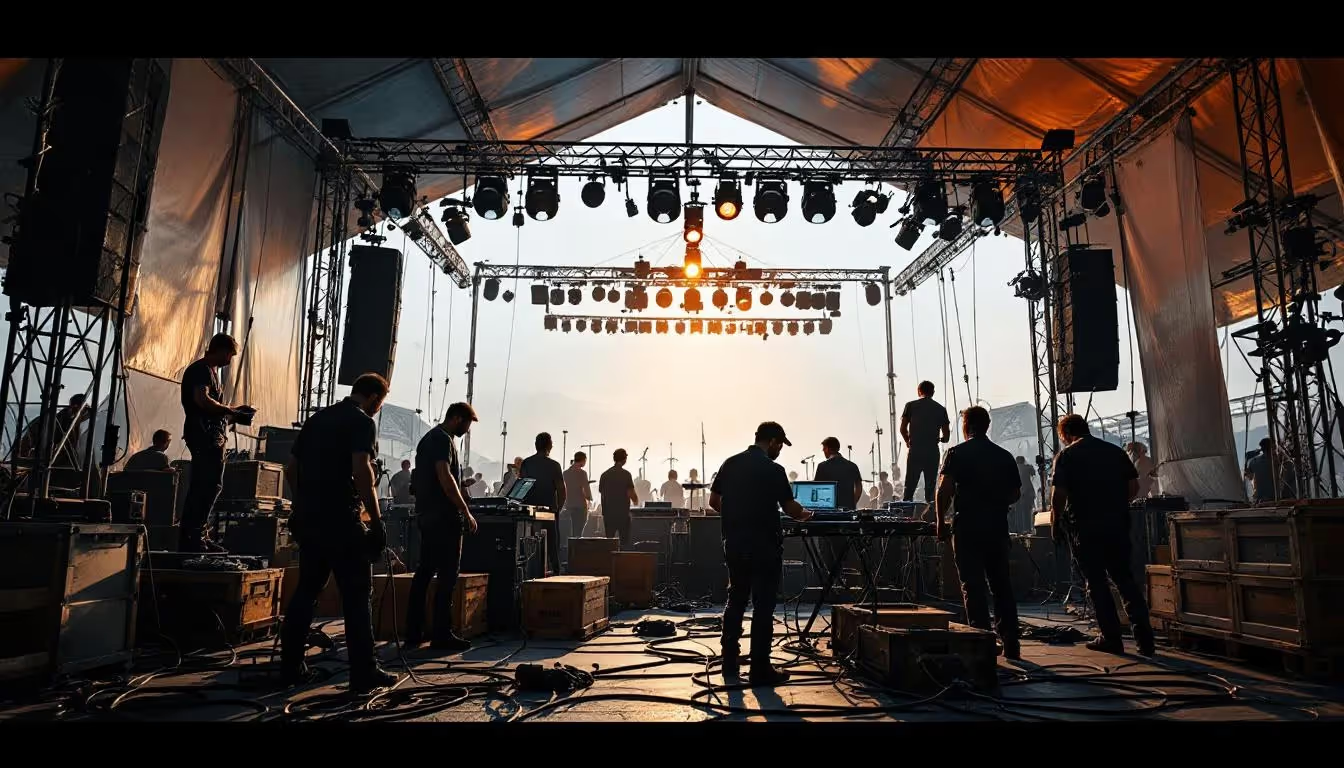
Coordinate schedules with lighting technicians as a priority. They often need to access the site before other teams in order to install the supporting structures.
Estimated budget: allow 30% for equipment rental, 50% for labor, and 20% for contingencies. Installation costs often amount to twice the cost of the equipment rental.
Create a memorable atmosphere
Playing with colors
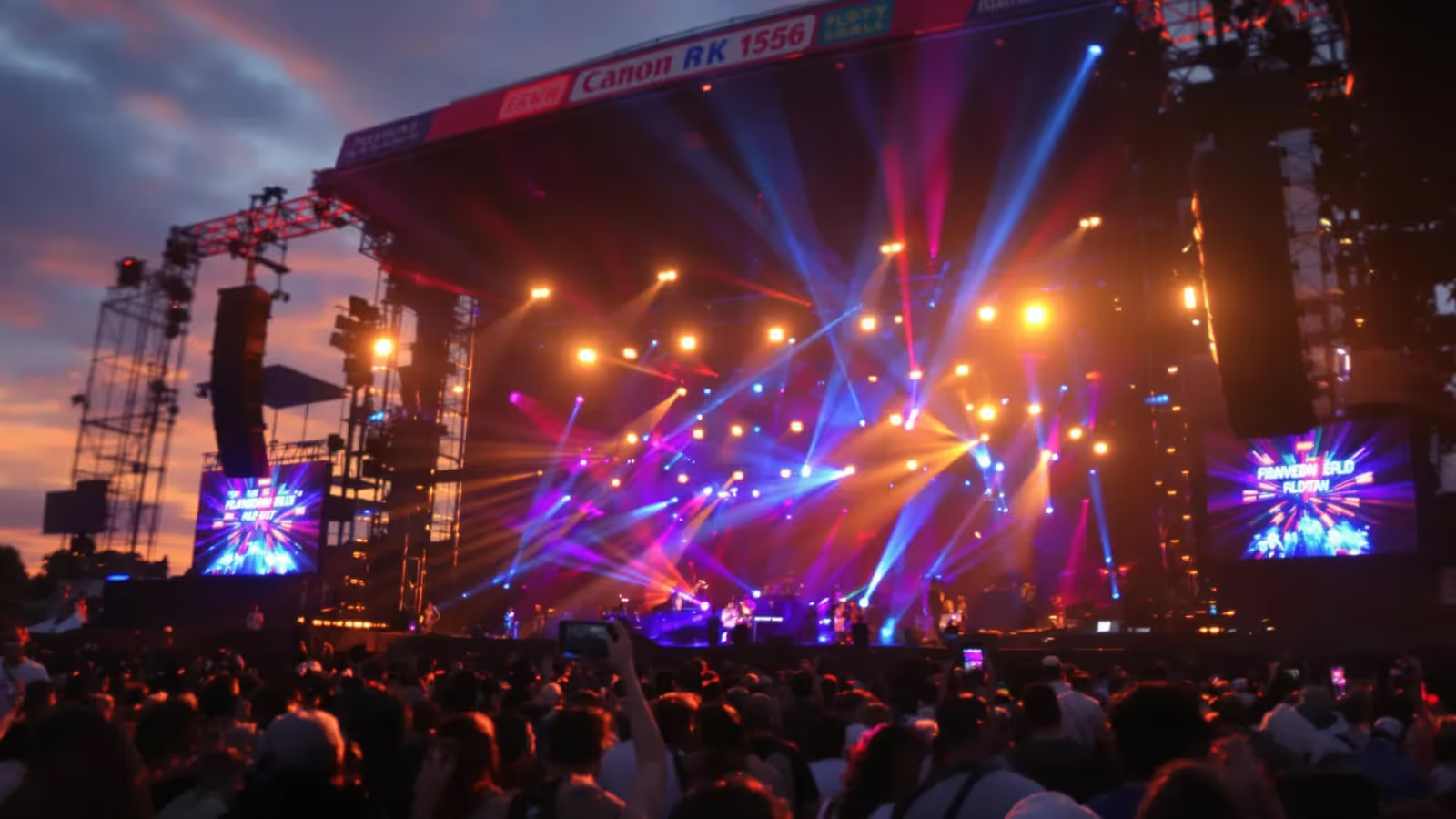
Choosing colors that match the theme of the event is essential. Cool blue for a tech atmosphere, warm tones for a romantic wedding. RGBW LEDs offer an ultra-wide palette —you can even match corporate colors.
Orange gels on Fresnel projectors create hyper-realistic fake sunsets. Combine them with diffusion filters to soften the edges. Matte surfaces absorb light better and boost contrast.
With DMX, color changes are synchronized to the beat of the music. A slow song? 10-second fade transitions. An electro drop? Instant switch to RGB strobe.
Managing transitions is like conducting an orchestra. You alternate between fixed spotlights and moving scanners to maintain attention. Plan predefined sequences for each part of the show.
Special effects and movements
1500W smoke machines are the minimum requirement for outdoor use. They are placed behind the spotlights to make the beams visible. Tip: add a side fan to spread the smoke without creating swirls.
Motorized 8-facet Lyre scan projectors cast dancing patterns onto walls. Program random rotations with syncopated pauses—it brings the space to life. Perfect for DJ sets.
Outdoor strobes? Maximum 5 seconds at a time, and always warn the audience beforehand. Combine them with soft lights as a counterpoint to avoid headaches.
Laser mapping transforms any building into a giant screen. Combined with RGB LED projectors, it creates stunning 3D illusions. A dedicated technician should be provided to align the projections with the architecture.
Safety and regulations
Mandatory standards
Outdoors, the minimum requirement for projectors is IP65—waterproof and dustproof. For exposed areas such as seaside locations, the requirement increases to IP66. UV/IR-free LEDs pass safety checks more easily than older halogen models.
A clear distinction is made between areas requiring fixed lighting (access routes, exits) and areas requiring adjustable lighting (stage, bars). The former require a minimum of 20 lux at all times, while the latter can vary between 5 and 500 lux depending on artistic requirements.
For temporary installations, the M1/B1 standard applies to all flammable materials. One fire extinguisher is required for every 200m² and emergency exits must be clearly marked at all times. Electrical checks must be carried out 48 hours before opening to the public.
Emergency exits must be equipped with NF X08-003 retro-reflective signs. Strategic placement: above doors and on the side opposite the hinges. Mandatory safety lighting test with failure simulator.
Risk management
Lightweight structures such as marquees are secured with spiral anchors measuring at least 80 cm. For heavy stages, concrete counterweights weighing 500 kg per mast are used. Wind resistance is always calculated with a safety margin. Always consult a testing agency.
Provide a maximum number of minimum power sources: EDF grid + generator + lithium batteries. BAES (autonomous blocks) cover sensitive areas such as stairways. A UPS protects DMX consoles from micro-cuts.
Technical staff must have SST training and BR electrical certification. Daily safety briefings are held during assembly. Key actions: check PPE, monitor noise levels, turn off the power before working.
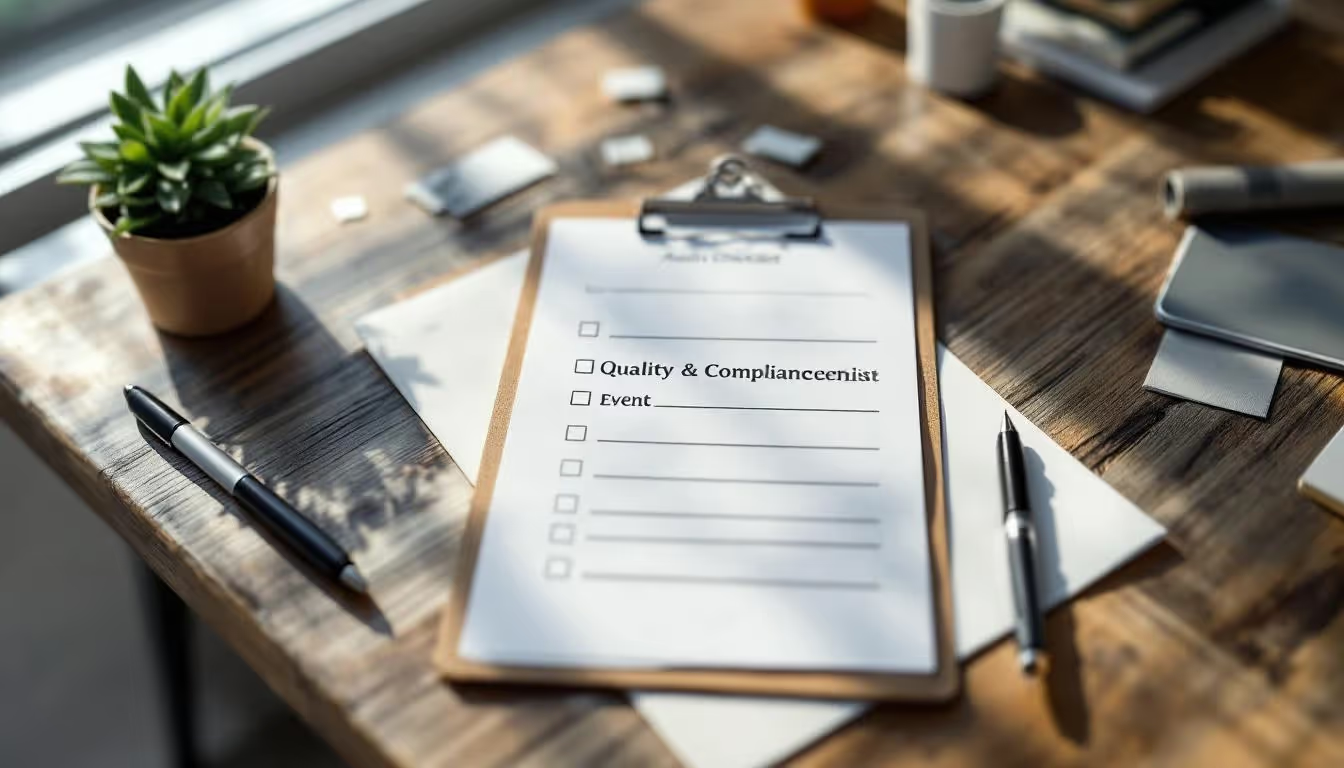
Mandatory checklist with the local fire department: clear access routes, visible fire extinguishers, emergency numbers displayed. Schedule a validation visit 72 hours before opening.
Trends and innovations
Autonomous solar lighting is making a big splash. Kits with photovoltaic panels and lithium batteries now power entire stages. Discover how the latest innovations are transforming event lighting with 100% autonomous systems.
Example: a concert in Lyon used only 500W of power thanks to this system.
AI is making its way into lighting consoles. Algorithms analyze live music to generate synchronized effects. The MaestroDMX controller automatically adjusts the intensity of the spotlights according to the mood of the crowd. Some systems even anticipate the movements of dancers.
Disposable accessories are becoming biodegradable. Lyres made from PLA (corn starch) and chitosan filters decompose within six months. This reduces technical waste by up to 70%. Even transport cases now incorporate biocomposites.
Augmented reality merges the virtual and the real. Interactive holograms projected onto the stage react to the artists' movements. Our guide to architectural lighting shows how to integrate these technologies into urban spaces. Some festivals already use mobile apps to personalize the viewing experience.
You now have the essentials: LEDs for efficiency, DMX for controlling effects, and professionals to guarantee results. Test your setups in real-world conditions, check IP ratings, and keep in mind that every detail counts.
Successful outdoor events take preparation—and now you know how to make them memorable.
Need assistance withevent lighting? Please don't hesitate to contact us.