Want to boost your marketing strategy and make a lasting impression on your prospects? A roadshow could be just what you need.
Here we break down this powerful event concept: how to define it, implement it, what goals to achieve for your company, and, last but not least, the pitfalls to avoid in order to make your promotional tour a success.
One thing is certain: this tool could well revolutionize your marketing approach by creating a concrete link with your future customers.
The roadshow concept
Definition and origins
The word "roadshow" comes from English and refers to a series of traveling presentations. In the events industry, it is a direct promotional tool used by brands to promote their products or services through live demonstrations.
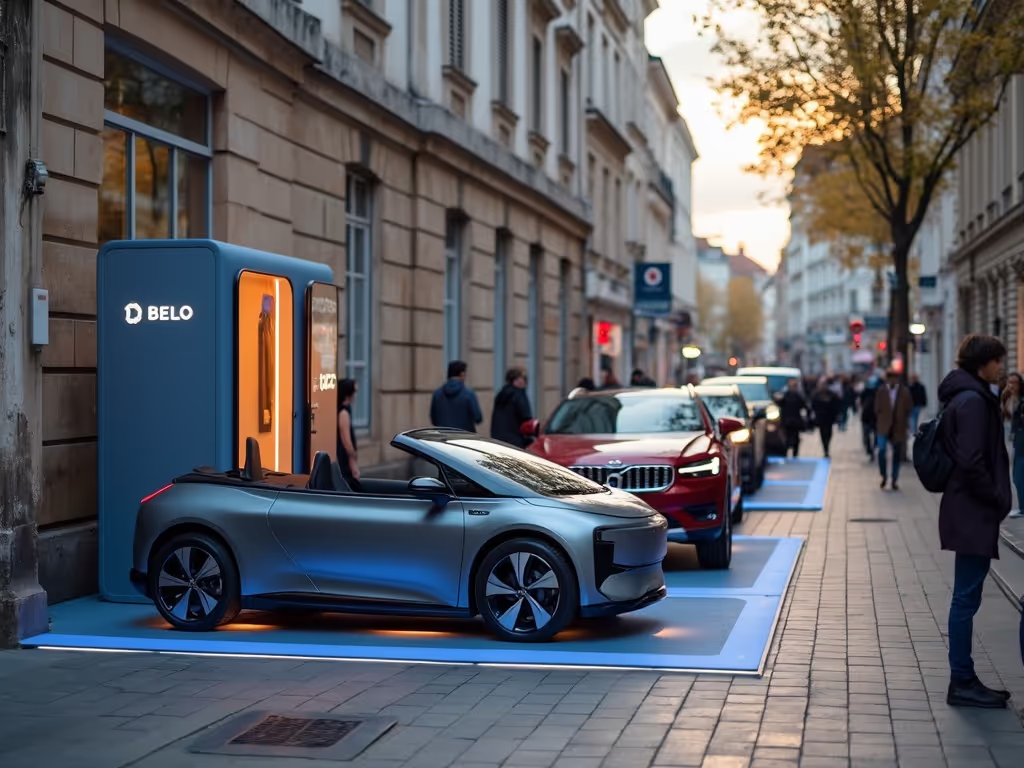
In practical terms, a company organizes a tour with interactive booths, product demonstrations, and sometimes shows.
The main idea: create a direct link with customers while gathering useful information. This concept works particularly well for new product launches.
Operating mechanisms
For an operation of this type to be successful, several factors come into play:
- Good preparation: First, the stopover cities are defined based on local partners. Communication materials are prepared in advance.
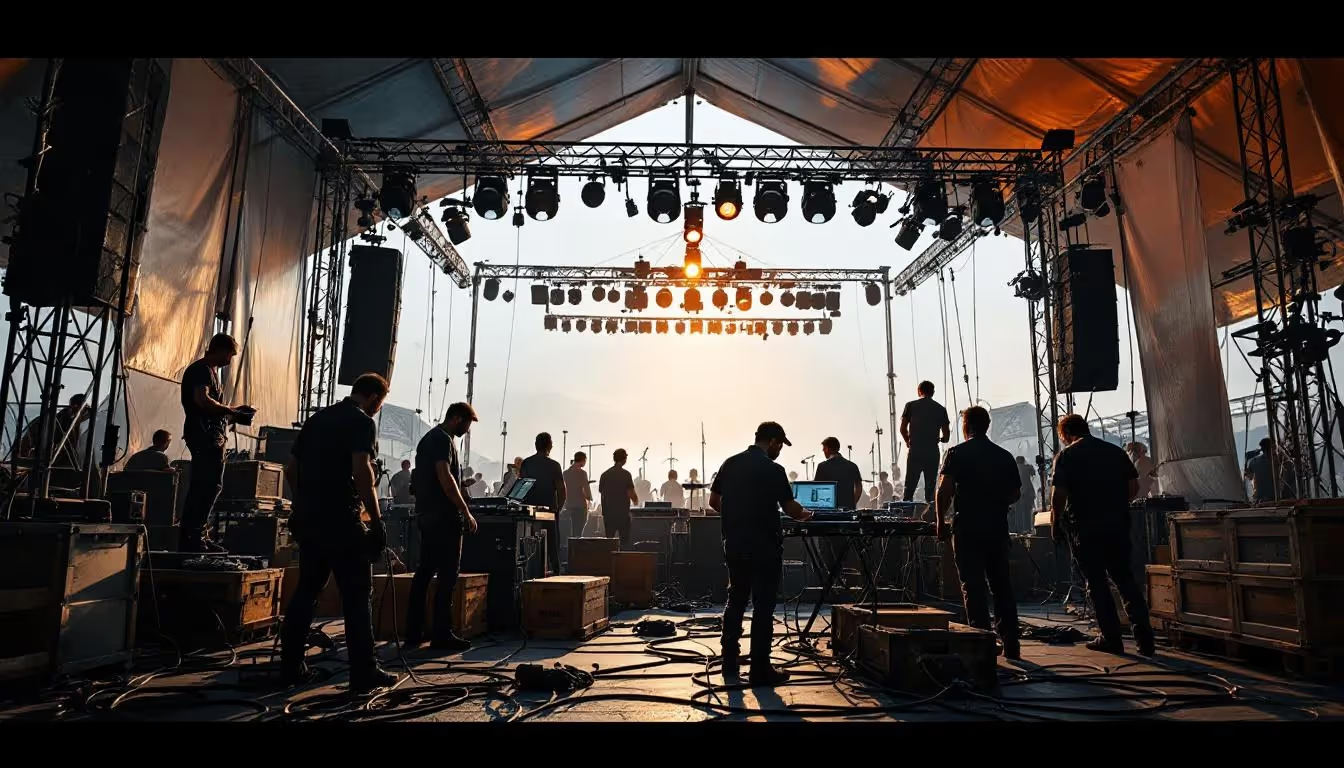
- Logistics on point: Transporting stands, coordinating teams precisely, managing technical tools... Every detail counts.
- Appropriate content: Presentations use powerful visual aids and practical demonstrations. The goal? To show the offering in concrete terms.
- Personalized exchanges: Face-to-face interactions allow you to gauge customer reactions and adjust your approach.
- Immersive experience: Some incorporate technological tools such as virtual reality to immerse visitors in the brand's universe.
This type of operation allows a company to stand out during an important launch. Unlike a digital campaign, physical contact creates lasting memories. It should be noted that some organizers reuse materials to optimize costs.
In summary, a well-run roadshow serves to promote products, strengthen brand image, and gather feedback from the field. Marketing departments often see it as a strategic complement to their usual activities.
Strategic objectives and advantages
Marketing targets
Roadshows are a practical way to promote products or services, whether in B2B or B2C. Here is a comparison of possible approaches:
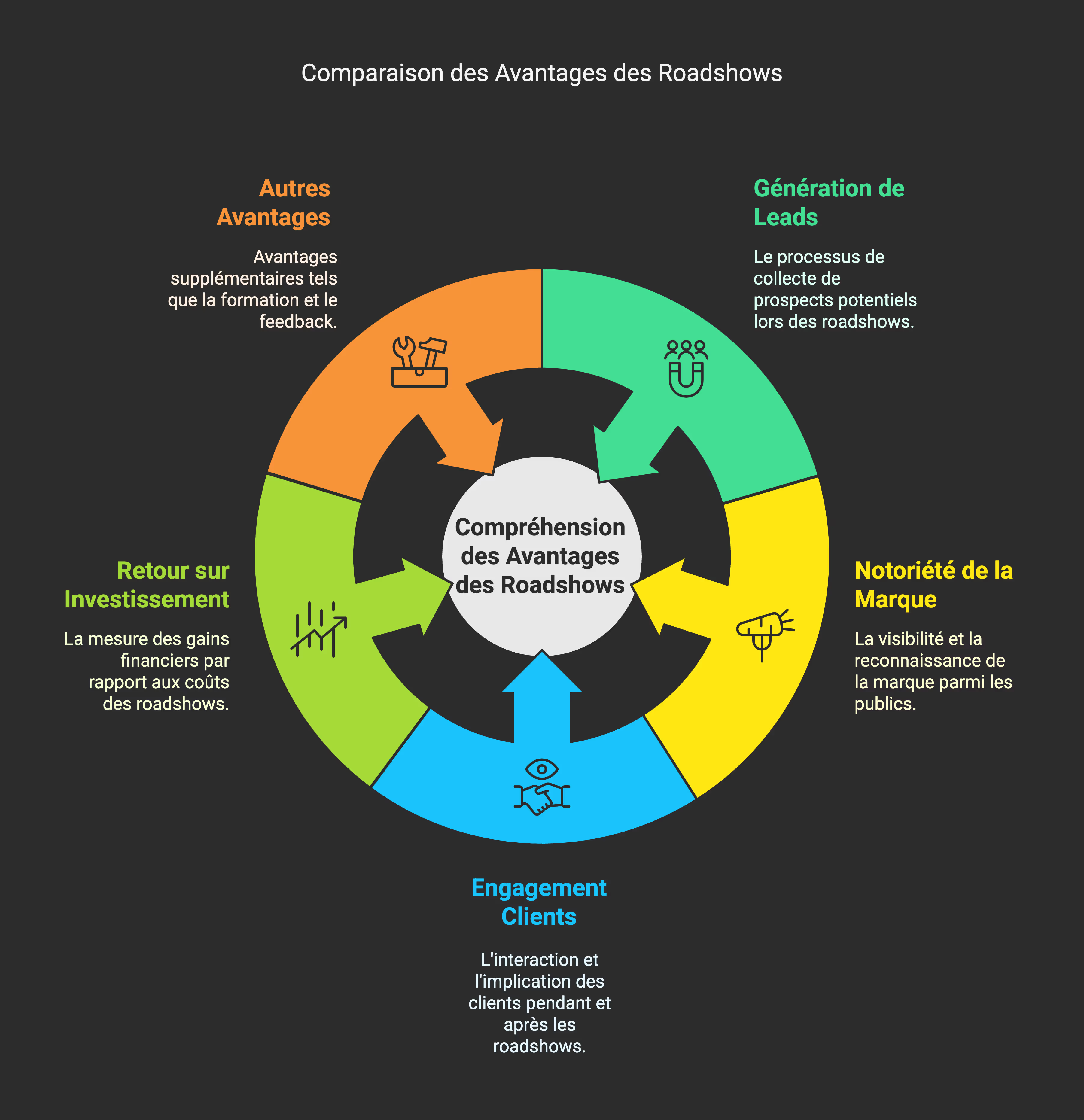
This event concept allows brands to communicate in the field using tailored tools. Its effectiveness is based on specific goals: number of contacts to generate, visibility to gain.
A positive point? The materials used (stands, demonstrations) make the approach tangible.
Return on investment
The main advantage? Directly targeting your audience without relying on trade shows.
For example: visiting schools with interactive materials, or presenting a new product on the road.
Concrete results include an improved corporate image, enhanced brand awareness, and increased sales. Significantly, the relational aspect also plays a role: partners often appreciate this more personalized format over traditional campaigns.
In terms of budget, the use of modular tools allows costs to be optimized while covering multiple locations.
Types of promotional tours
Sector-specific variants
Traveling events are tailored to specific industries. For tech services, digital tools are often presented in strategic cities —the idea being to reach both developers and investors.
In the luxury sector, pop-up stands are used to unveil exclusive collections to privileged partners.
For healthcare, targeted conferences in hospitals introduce professionals to new medical equipment.
Creative formats
Innovative brands now combine physical media with digital tools. Take augmented reality animations, for example: this type of concept creates total immersion around a product, while gathering useful information about customer expectations.
Some stands even incorporate tailor-made services —an approach that strengthens engagement while promoting the offering in a concrete way. This is what we have seen in the latest leading industry roadshows.
Operational implementation
Key steps
In practical terms, organizing an event tour requires following a specific framework without becoming overly rigid.
In practice, an ideal preparation timeline generally spans 6 to 12 months, allowing for each stage to be carefully calibrated: defining priorities, choosing locations, creating content, managing organization, and preparing communications.
It should be noted that each event requires adjustments depending on the partners involved and the materials used on site.
Practical logistics
In the field, everything depends on team coordination and the reliability of the tools. This includes supervising technicians, checking equipment (always with a backup plan in case of problems), and training teams on promotional materials.
Curiously, even the best brands sometimes underestimate the importance of technical rehearsals. A good point: anticipate the specific needs of each stand for logistics services.
Above all, maintaining a continuous flow of information between all stakeholders is often what makes the difference between a promising concept and a successful implementation.
Success factors
Pitfalls to avoid
A sensitive issue? Underestimating the logistics of stopover cities during a promotional tour. Between available venues, transportation costs, and access for participants, every detail counts.
Without thorough preparation, you can quickly find yourself facing delays or unexpected costs—a classic scenario to avoid. It's also worth noting any local events that could compete with your on-site entertainment.
Best practices
To boost the impact of a traveling event, focus on the senses. Appropriate music, original textures, or carefully crafted scents: these simple tools reinforce brand memorability.
For example, a sensory approach consistent with your products directly influences purchasing behavior. It's more effective than a simple static presentation, isn't it?
Future developments
Augmented reality (AR) is now establishing itself as a key tool in event marketing.
It allows us to offer visitors unique experiences, particularly during promotional tours or at partner stands.
Thanks to these innovative tools, brands are strengthening their image while presenting their products and services in an original way. This is particularly true in the events industry, where AR is becoming a preferred medium for promoting offerings.
These traveling events often incorporate interactive media that transform communication around services. Paradoxically, this playful approach remains cost-effective for companies. The concept is particularly appealing in the events sector, provided that the experience aligns perfectly with the brands' identities.
Some technology partners even offer turnkey solutions for these projects. In short, AR-equipped stands demonstrate how to promote products while creating a connection with customers.
The roadshow is much more than just a strategic promotional tour. It is a truly innovative marketing tool that leaves a lasting impression and deeply engages your target audience.
So, are you ready to give your communications a boost? Seize this opportunity to transform your next campaign into a memorable experience that will stay in your customers' minds.