With the rapid evolution of technologies and growing demand for flexible solutions, the global hybrid events market is expected to reach $774 billion by 2030, with growth driven by major technological innovations.
These events, which combine in-person and virtual elements, are redefining how participants interact, while offering organizers new opportunities for engagement and value.
Here is an overview of the trends, technologies, and equipment that will shape this transformation.
Essential technical infrastructure for 2025
Connectivity remains the foundation of hybrid events, and participants' expectations for fluidity and reliability are increasing. To meet these challenges, here are the key infrastructures for 2025:
- Advanced connectivity: WiFi 6E and 5G networks will ensure ultra-fast connections, with automatic failover to avoid interruptions.
- Enhanced streaming: Protocols such as SRT (Secure Reliable Transport) and WebRTC will offer low-latency live streams, ensuring optimal video and audio quality.
- Hybrid cloud: The use of edge computing will bring servers closer to event locations, reducing latency and improving data security.
In addition, events will require robust backup systems, such as dual network connections and redundant power supplies, to ensure a smooth experience.
Hybrid event studios: the new strategic space
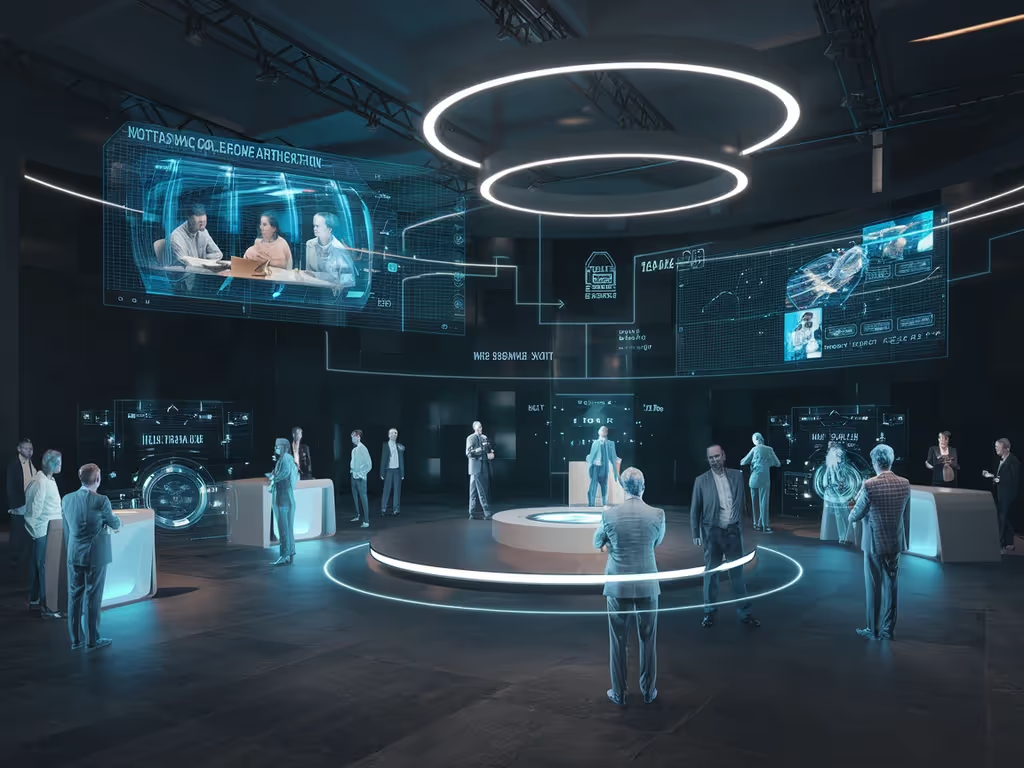
Hybrid studios are becoming essential for producing immersive and engaging content for both online and on-site audiences.
- Advanced virtual production: 180° or 360° curved LED walls will enable the creation of immersive visual environments, ideal for dynamic presentations.
- Spatial tracking and augmented reality: Multi-point optical systems will integrate participants into interactive virtual environments in real time.
- Advanced directional audio: Beamforming technology combined with AI will suppress background noise while accurately capturing your voice.
These studios become multifunctional spaces, capable of meeting the varied needs of conferences, product launches, or hybrid cultural events.
Maximizing engagement through interaction technologies
One of the biggest challenges of hybrid events is capturing and maintaining the attention of participants, whether they are attending in person or remotely. In 2025, three key innovations will play a decisive role:
- Metaverse spaces: Event platforms will move toward immersive 3D environments, where participants can interact via personalized avatars. These spaces will enhance collaboration and active participation.
- Real-time AI translation: Artificial intelligence systems will support up to 50 languages, with 90% accuracy and latency reduced to one second, facilitating communication at international conferences.
- Predictive analytics: Analyzing participant behavior in real time will enable content or interactions to be adjusted to meet audience expectations, thereby increasing their satisfaction.
These technologies will increase the number of touchpoints with participants and maximize their engagement throughout the event.
Immersive technologies for captivating experiences
Hybrid events in 2025 will increasingly incorporate immersive technologies, offering participants unprecedented experiences:
- Augmented reality (AR): This will enrich experiences by superimposing digital information onto real environments. For example, participants will be able to scan a booth to access interactive data or view products in 3D.
- Virtual reality (VR): Online events will be able to transport participants into immersive worlds, perfect for interactive training or virtual tours.
- Holographies: Holographic projectors will display presenters or objects in 3D in physical space, creating a sense of closeness even at a distance.
According to a recent study, 58% of organizers plan to incorporate these immersive technologies into their events by 2025, highlighting their growing importance.
Sustainability and technological innovation
Environmental considerations are becoming a key issue in event planning. By 2025, technological solutions will need to combine performance and sustainability:
- Clean energy: Renewable energy storage systems and optimized equipment to reduce energy consumption.
- Eco-friendly materials: Stands and equipment will be made from recyclable or biodegradable materials.
- Reduced carbon footprint: The use of digital platforms will reduce travel and document printing, making events more environmentally responsible.
At the same time, the inclusion of environmental indicators in post-event reports will become standard practice for assessing and improving ecological impact.
Smart, connected conference spaces
Physical spaces will evolve to meet the demands of hybrid events:
- Smart audio systems: They will automatically adjust the sound based on the size and layout of the room.
- Collaborative touchscreens: These devices will allow participants to interact in real time, whether they are on site or remote.
- Modular and connected furniture: Adjustable chairs and tables will incorporate wireless chargers and sensors to optimize space.
These innovations will transform spaces into smart environments, promoting collaboration and flexibility.
Enhanced connectivity and cybersecurity
Since hybrid events involve the constant exchange of sensitive data, connectivity and security become priorities:
- Ultra-fast networks: WiFi 6E and 5G will support massive connections, offering low latency even for large-scale events.
- Advanced cybersecurity: Real-time detection systems will prevent cyberattacks, protecting data flows and participants' sensitive information.
- Network monitoring: Proactive management will ensure service continuity and connection quality.
These technologies will ensure a reliable and secure connected experience for all participants.
Increased customization and interactivity
Participants expect tailor-made experiences that are tailored to their interests. In 2025, organizers will use:
- AI platforms: Analyzing participant data, they will offer personalized recommendations (sessions, speakers, content).
- Dedicated mobile applications: Providing personalized calendars, reminders, and direct messaging features.
- Interactive tools: Online polls, quizzes, and live Q&A sessions to capture attention at any time.
These innovations will strengthen engagement and provide a unique and memorable experience.
Hybrid events are redefining the events industry by combining innovation, sustainability, and personalization. With connected infrastructure, immersive technologies, and an engagement-oriented approach, organizers can create captivating experiences for global audiences.
This hybrid model, supported by technological advances and eco-friendly practices, represents the future of events, where every detail counts in delivering inclusive and memorable experiences.